Perplexity AI: Complete Guide 2026
Discover Perplexity AI - the AI search engine combining LLMs with real-time web search. Learn features, pricing, and how it's changing search.
Direct Answer: Perplexity AI is an AI-powered search engine founded in 2022 that processes over 780 million queries monthly. Unlike traditional search engines that return links, Perplexity synthesizes comprehensive answers using LLMs combined with real-time web search, citing sources directly. It offers free and Pro ($20/month) tiers, uses the Sonar model (based on Llama 3.3), and is valued at $20 billion as of 2025. Key features include real-time web search, source citations, and integration with multiple AI models.
Perplexity AI has emerged as one of the most innovative and controversial AI-powered search engines in the market today. Founded in 2022, this San Francisco-based company has rapidly grown to process over 780 million queries per month, positioning itself as a serious competitor to traditional search engines like Google and AI chatbots like ChatGPT. This comprehensive guide explores everything you need to know about Perplexity AI, from its founding story and core technology to its features, pricing, controversies, and future prospects.
What Is Perplexity AI?
Perplexity AI, Inc., commonly known simply as Perplexity, is an American privately held software company that offers a web search engine powered by artificial intelligence. Unlike traditional search engines that return lists of links, Perplexity processes user queries and synthesizes comprehensive responses using large language models (LLMs) combined with real-time web search capabilities.
The platform provides answers based on current internet content while citing sources, making it an "answer engine" rather than a traditional search engine. Perplexity distinguishes itself by offering a free public version alongside paid Pro and Enterprise subscriptions that provide access to more advanced language models and additional features.
The Founding Story: How Perplexity AI Came to Be
Perplexity AI was founded in August 2022 by four engineers with extensive backgrounds in back-end systems, artificial intelligence, and machine learning:
- Aravind Srinivas - CEO and co-founder, previously held research positions at OpenAI, Google Brain, and DeepMind
- Denis Yarats - Co-founder with expertise in machine learning
- Johnny Ho - Co-founder specializing in back-end systems
- Andy Konwinski - Co-founder with AI and infrastructure experience
The company launched its main search engine on December 7, 2022, and quickly gained traction. By February 2023, Perplexity reported two million unique visitors. The platform has since expanded to include Google Chrome extensions and native apps for iOS, Android, macOS, and Windows.
Rapid Growth and Valuation
Perplexity AI's growth trajectory has been nothing short of remarkable. By April 2024, the company had raised $165 million in funding, achieving a valuation of over $1 billion. The momentum continued, and by June 2025, Perplexity closed a $500 million funding round that elevated its valuation to $14 billion.
As of September 2025, the company reached a valuation of $20 billion, making it one of the most valuable AI startups in the world. The company's investors include high-profile names such as Jeff Bezos, Tobias Lütke (Shopify CEO), Nat Friedman (former GitHub CEO), Nvidia, and Databricks.
During Bloomberg's Tech Summit 2025, CEO Aravind Srinivas revealed that Perplexity processed 780 million queries in May 2025 alone, experiencing more than 20% month-over-month growth and processing around 30 million queries daily.
Core Technology: How Perplexity AI Works
Perplexity AI operates on a sophisticated architecture that combines multiple large language models with real-time web search capabilities. At its most basic level, Perplexity takes user questions, runs them through complex algorithms powered by artificial neural networks, and generates comprehensive answers.
The AI Models Behind Perplexity
Perplexity uses its own in-house model called Sonar, which is based on Llama 3.3. However, the platform also integrates third-party models, including:
- GPT-5 and GPT-4.1 from OpenAI
- Claude Opus and Claude Sonnet from Anthropic
- Gemini 2.5 Pro from Google
- Grok 4 from xAI
- o4-mini from OpenAI
The company post-trains these third-party models, meaning it applies a second phase of development to optimize them for question-answering rather than conversational interactions. This makes Perplexity's versions of these models less conversational and more focused on providing accurate, well-sourced answers.
Real-Time Web Search Integration
Unlike traditional chatbots that rely solely on their training data, Perplexity actively searches the web in real-time to provide current information. When you ask a question, Perplexity:
- Analyzes your query using advanced natural language processing
- Searches the web for relevant, up-to-date information
- Synthesizes information from multiple sources
- Generates a comprehensive answer with citations
- Presents related questions and additional resources
This real-time search capability ensures that Perplexity can answer questions about current events, recent news, and rapidly changing information that static AI models cannot access.
Key Features and Products
Perplexity AI offers a comprehensive suite of products and features designed to enhance the search and research experience:
Perplexity (Free Version)
The free version of Perplexity provides access to the core search functionality with some limitations:
- Five Pro searches per day (searches that involve more sources)
- Limited access to deep research features
- Limited file uploads
- Access to the Sonar model only
- Ability to create Spaces (topic hubs)
- Voice chat functionality
- Access to Comet browser
- Data training opt-out not available
Perplexity Pro
The Pro subscription ($16.67 per month when billed annually, or $20 per month) unlocks significant additional capabilities:
- Over 300 Pro searches per day
- Unlimited access to deep research
- Unlimited file uploads
- Access to popular LLMs (GPT-5, Gemini 2.5, Claude Opus, etc.)
- Access to Perplexity Labs
- Image and video generation capabilities
- Perplexity Pro Perks (deals on third-party products)
- Ability to opt out of data training
Perplexity Max
The Max tier ($200 per month) provides enterprise-level features:
- Enhanced access to video generation
- Priority support
- Unlimited access to Perplexity Labs
- Unlimited Pro searches
- Early access to new Perplexity products
- Full selection of models, including advanced ones like Claude Opus 4.1 and OpenAI's o3-pro
Internal Knowledge Search
Pro and Enterprise Pro users can simultaneously search across web content and internal documents. Users can upload and search through Excel, Word, PDF, and other common file formats. Enterprise Pro users can upload and index up to 500 files, making it ideal for organizations that need to search both public and private information sources.
Search API
Perplexity's Search API provides AI developers with programmatic access to the company's search infrastructure. The September 2025 release includes a software development kit, an open-source evaluation framework called search_evals, and comprehensive documentation detailing the API's design and optimization.
Shopping Hub
Launched in November 2024 with backing from Amazon and Nvidia, Perplexity's Shopping Hub is an online shopping platform that provides AI-generated product recommendations. Users can purchase products directly through Perplexity's interface, combining search and commerce in a seamless experience.
Finance Features
In October 2024, Perplexity introduced finance-related features, including real-time stock price lookups, company earnings data, industry peer comparisons, and basic financial analysis tools. The platform sources its financial data from Financial Modeling Prep, providing users with comprehensive market insights.
Perplexity Assistant
Launched in January 2025, the Perplexity Assistant is an AI-powered tool designed to enhance the functionality of the search engine. It can perform tasks across multiple apps, such as hailing a ride or searching for a song, and maintains context across actions. The assistant is also multi-modal, meaning it can use a phone's camera to provide answers about the user's surroundings or on-screen content.
Comet Browser
In July 2025, Perplexity launched Comet, an AI browser based on Chromium. Initially limited to premium subscribers, the browser was released for free download in October 2025. Comet integrates the Perplexity search engine directly into the browsing experience, allowing users to generate article summaries, describe images, conduct research, and compose emails without leaving their browser.
User Interface and Experience
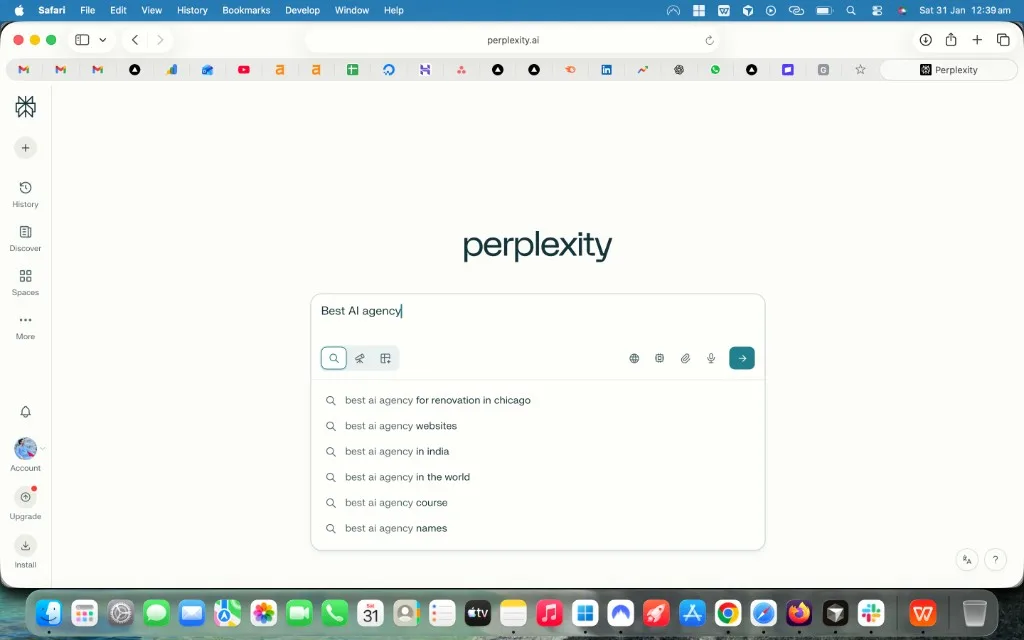
Perplexity's interface is designed to prioritize search functionality over conversational interactions. The home page features a central text field for prompts, with a left-hand sidebar providing access to account settings, Discover (a curated news feed), search history, and Spaces.
The central text field includes toggles for:
- Changing AI models
- Creating projects
- Dictating text
- Deep research mode
- Targeting specific sources
- Uploading files
- Voice chat
Discover and Spaces
The Discover tab provides a curated news feed based on user interests, including trending stocks, weather, and news across five categories: arts & culture, entertainment, finance, tech & science, and sports.
Spaces are central hubs for specific topics. Users can create custom Spaces or choose from Perplexity's premade templates. Each Space provides easy access to previous searches, uploaded files, and custom instructions that guide the AI's behavior.
Web Search Interface
Perplexity's web search interface is widely regarded as one of the best in the industry. When you search, relevant article tiles, images, and videos appear at the top of the response. Tabs above offer additional related images, videos, sources, and a "Steps" tab that shows Perplexity's thinking process.
The platform excels at sourcing, with in-text links that you can hover over to learn more. Related questions populate at the bottom of responses, making it easy to continue your research journey.
Deep Research Capabilities
Perplexity offers a deep research tool that generates comprehensive reports on complex topics. However, the depth and quality of these reports vary compared to competitors:
- Perplexity's Research: Takes a few minutes and generates reports similar to Claude's approach, spending more time researching than basic web search but not as extensively as ChatGPT
- ChatGPT's Research: Takes around 10 minutes and generates significantly longer, more detailed reports with dozens of pages
- Grok 4's Research: More like a glorified web search with slightly more sources
Perplexity's research interface mimics the web search interface, featuring link tiles, tabs for images and sources, and clear differentiation between sources that were reviewed and those that weren't.
Creative and Media Generation
Image Generation
Perplexity supports AI image generation, though it's not always clear which model is actually being used. When you select Sonar for image generation, Perplexity may route the query to different models. The platform generates images relatively quickly (half the time or less compared to ChatGPT), but quality can vary.
Video Generation
Perplexity can generate videos using third-party models, likely Google Gemini's Veo 3, though the company doesn't explicitly disclose which model is used or whether post-training is applied. Video generation performance is similar to Veo 3, with strengths and weaknesses mirroring that model.
File Processing
Users can upload various file types to Perplexity for processing, including images and documents. The platform can parse images, read documents, and analyze content. However, performance varies by model, with Sonar sometimes struggling with complex document analysis compared to GPT-5.
Creative Writing
Perplexity can handle various types of creative writing, from screenplays to speeches. The platform performs well with poetry generation, incorporating proper punctuation, capitalization, enjambment, and line breaks. However, it may read more like prose in some sections compared to more specialized creative writing tools.
Complex Reasoning and Problem Solving
Perplexity's Sonar model performs less effectively on complex reasoning tasks compared to specialized thinking models. When tested on undergraduate exam questions from Harvard, MIT, and Stanford across computer science, math, and physics, Sonar answered most questions incorrectly, while GPT-5 Thinking models got significantly more correct.
This is expected, as Sonar is an all-purpose model, while GPT-5 Thinking is specifically designed to take time and tackle complicated prompts. For complex reasoning tasks, users may want to select more advanced models available in Pro or Max subscriptions.
Voice Chat and Assistant Features
Perplexity features both text-to-speech for dictation and voice chat functionality. Voice chat is available on both Perplexity's apps and the web, and it works well enough, though the AI voices have a slightly robotic quality.
The voice chat does better at having organic, conversational interactions compared to text chat, which specializes in providing answers to questions. However, voice chat can be glitchy at times, and you can't share your camera or screen during voice chats, unlike ChatGPT and Gemini.
On Android and iOS, Perplexity's voice chat goes beyond simple chatting and can function as an assistant, similar to Siri. You can use it to create reminders, respond to messages, write emails, and more. However, performance is uneven, and it may not always function as expected.
Pricing and Subscription Tiers
Perplexity offers a freemium model with several paid tiers:
Free Tier
- Unlimited basic searches
- Five Pro searches per day
- Limited deep research access
- Limited file uploads
- Sonar model only
- Spaces creation
- Voice chat
- Comet browser access
- No data training opt-out
Perplexity Pro
- Price: $16.67/month (annual) or $20/month (monthly)
- Over 300 Pro searches per day
- Unlimited deep research
- Unlimited file uploads
- Access to GPT-5, Gemini 2.5, Claude Opus, etc.
- Perplexity Labs access
- Image and video generation
- Perplexity Pro Perks
- Data training opt-out available
Perplexity Max
- Price: $200/month
- Enhanced video generation
- Priority support
- Unlimited Perplexity Labs access
- Unlimited Pro searches
- Early access to new products
- Full model selection including Claude Opus 4.1 and o3-pro
Education and Enterprise Plans
Educators can access Education Pro, which includes free access to the standard Pro plan, a study mode for creating interactive flashcards and quizzes, and additional features. Students can get a free one-year trial after verification.
Enterprise plans (Enterprise Pro and Enterprise Max) include features such as dedicated support, user permissioning, enhanced security, and data protection.
Controversies and Legal Challenges
Perplexity AI has faced significant legal scrutiny and controversies throughout its growth:
Copyright and Trademark Infringement Allegations
In June 2024, Forbes publicly criticized Perplexity for using their content. According to Forbes, Perplexity published a story largely copied from a proprietary Forbes article without mentioning or prominently citing Forbes. CEO Aravind Srinivas responded that the feature had "rough edges" but maintained that Perplexity only "aggregates" rather than plagiarizes information.
In October 2024, The New York Times sent a cease-and-desist notice to Perplexity, claiming copyright violation by scraping data from its website. Dow Jones and New York Post filed a lawsuit in June 2024, alleging copyright infringement and claiming that Perplexity harmed their brand by attributing hallucinated quotes to articles that didn't include them.
On January 31, 2025, Perplexity was sued for alleged trademark infringement by Perplexity Solved Solutions (PSS), a software firm founded in 2017. The lawsuit claims that Perplexity AI's use of the name "Perplexity" violates PSS's federally registered trademark.
In June 2025, UK broadcaster the BBC threatened legal action, demanding that Perplexity stop unauthorized scraping, delete retained BBC material, and provide financial compensation. In August 2025, Japanese newspaper companies Yomiuri Shimbun, The Asahi Shimbun, and The Nikkei sued Perplexity for alleged copyright infringement.
In October 2025, Reddit sued Perplexity in federal court in New York, alleging that it and three other companies unlawfully scraped its data.
Stealth Web Crawlers
In June 2024, investigations by Wired and web developer Robb Knight found that Perplexity does not respect the Robot Exclusion Protocol (robots.txt) standard, despite claiming otherwise. Perplexity lists IP address ranges and user agent strings of their web crawlers publicly, but according to investigations, it uses undisclosed IP addresses and spoofed user agent strings when ignoring robots.txt.
In August 2025, Cloudflare published research finding that Perplexity was using undeclared "stealth" web crawlers to bypass web application firewalls and robots.txt files. Cloudflare's CEO Matthew Prince tweeted that Perplexity acts "more like North Korean hackers" than a reputable AI company. Perplexity publicly denied the claims, calling it a "charlatan publicity stunt."
Privacy and Data Security
Perplexity's privacy policy outlines significant data collection, including:
- Questions you ask Perplexity
- Device data (IP address, location data)
- Information from third parties (employment websites, consumer marketing databases)
- Information to "better customize advertising and marketing"
The company promises not to sell your data but reserves the right to disclose information to various service providers. By default, Perplexity uses your data to train its AI models, though premium subscribers can opt out—a policy that stands out as gating user privacy behind a paywall.
Perplexity has not been the victim of any major data breaches, leaks, or hacks in recent history. However, vulnerabilities in its Comet browser are cause for concern, especially given the amount of data Perplexity collects.
Comparison with Competitors
Perplexity vs. ChatGPT
Perplexity Advantages:
- Superior web search interface with better sourcing
- Real-time information access
- More comprehensive source citations
- Better integration of images, videos, and related content
ChatGPT Advantages:
- More conversational and natural interactions
- Better deep research capabilities (longer, more detailed reports)
- Superior complex reasoning
- Better image generation quality
- More reliable file processing
Perplexity vs. Google Search
Perplexity Advantages:
- Synthesized answers instead of link lists
- Better for complex, multi-part questions
- Cites sources directly in answers
- More conversational query interface
Google Advantages:
- More comprehensive index
- Better for local searches
- More reliable for commercial queries
- Better integration with Google services
Perplexity vs. Gemini
Perplexity Advantages:
- Better search interface
- More comprehensive sourcing
- Better for research tasks
Gemini Advantages:
- Better integration with Google ecosystem
- Includes 2TB Google Drive storage
- Better for creative tasks
- More reliable for complex reasoning
Use Cases and Applications
Perplexity AI excels in several specific use cases:
Research and Information Gathering
Perplexity is ideal for quickly gathering information on complex topics, especially when you need current information with sources. The platform's ability to synthesize information from multiple sources makes it valuable for research tasks.
Competitive Intelligence and Brand Visibility Tracking
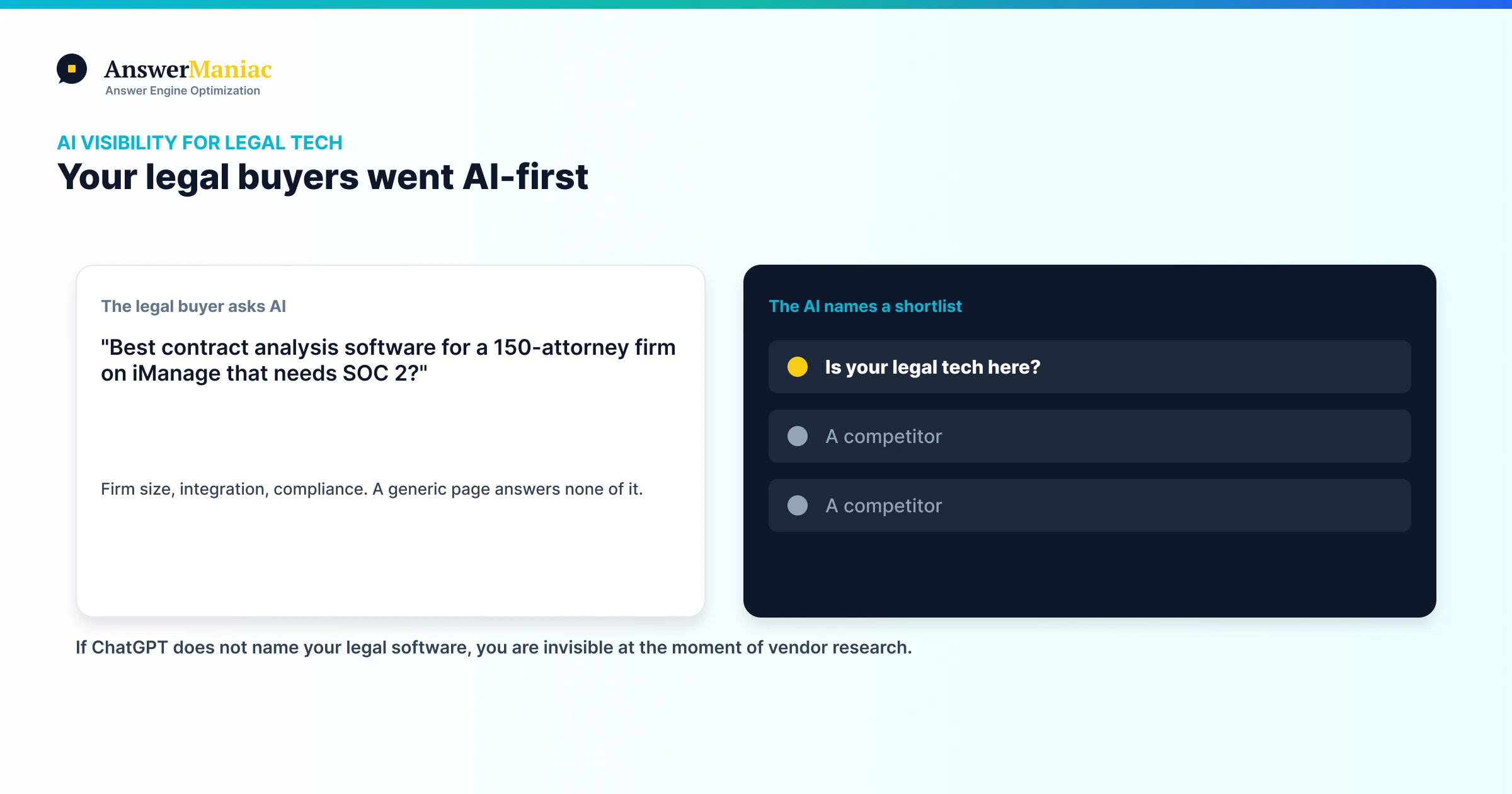
Business Pain Point: Companies struggle to track where their brand appears in AI search results and how they compare to competitors. Perplexity's citation system makes it possible to monitor brand visibility, but there's no built-in tracking dashboard.
The Gap: While Perplexity shows citations, businesses need tools to:
- Track which queries their brand appears in
- Monitor competitor visibility across thousands of queries
- Identify content gaps where competitors are winning
- Measure citation frequency and ranking positions over time
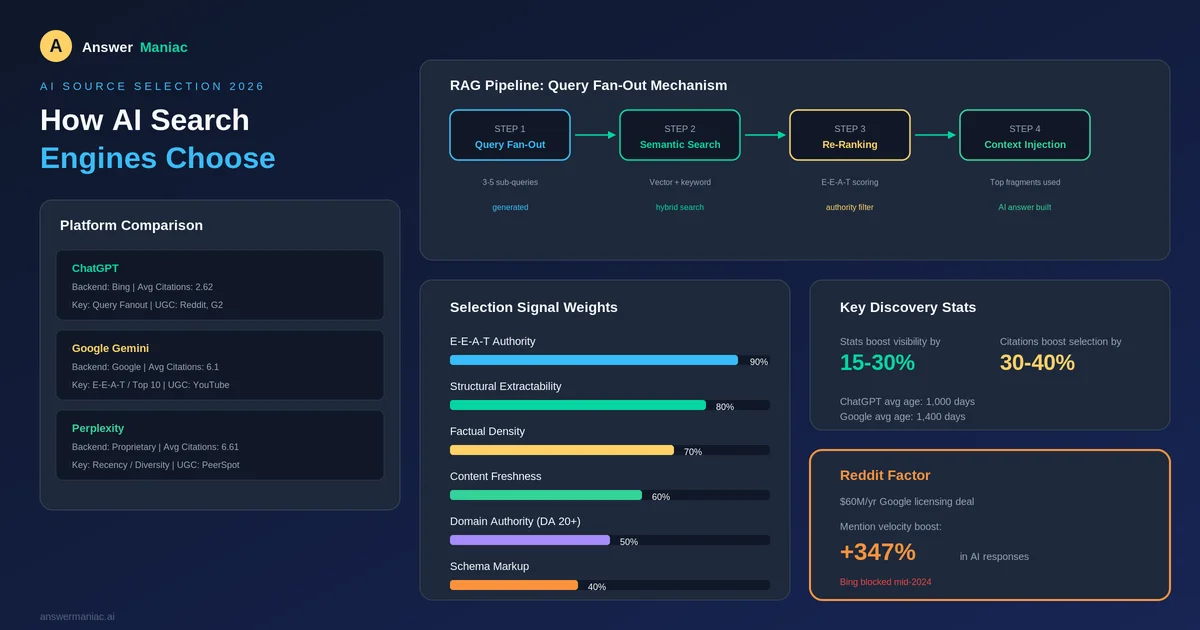
Solution: Third-party tools like AnswerManiac provide comprehensive visibility tracking across Perplexity, ChatGPT, and other AI platforms, helping businesses optimize their content for maximum AI search visibility.
Content Creation and SEO Optimization
Content creators can use Perplexity to research topics, gather facts, and find sources for articles, blog posts, and other content. The citation features make it easy to attribute information properly.
Pain Point: Traditional SEO focuses on Google rankings, but AI search engines like Perplexity have different ranking factors. Content optimized for traditional search may not perform well in AI search.
The Gap: Most SEO tools don't track AI search visibility. Content creators need to:
- Understand what content Perplexity cites most frequently
- Optimize for answer engine optimization (AEO) and generative engine optimization (GEO)
- Track citation performance across AI platforms
- Identify which content formats (articles, Reddit posts, forum discussions) get cited most
Academic Research
Students and researchers can leverage Perplexity's deep research capabilities and source citations to explore topics, though they should always verify information through primary sources.
Technical Problem Solving
Developers and technical professionals can use Perplexity to find solutions to coding problems, understand technical concepts, and research best practices.
Limitations and Considerations
While Perplexity is a powerful tool, it has several limitations that users should be aware of:
Accuracy Concerns
The Problem: Like all AI systems, Perplexity can make mistakes and present incorrect information confidently. The platform synthesizes information from multiple sources, but this doesn't guarantee accuracy.
Real-World Impact:
- Users may make business decisions based on incorrect information
- Students may cite inaccurate facts in academic work
- Content creators may spread misinformation
The Gap: There's no built-in fact-checking or accuracy scoring system. Users must manually verify all information through primary sources, which defeats the purpose of using an AI search engine for quick answers.
Best Practice: Always cross-reference Perplexity's answers with original sources, especially for critical decisions or factual claims.
Context Window Limits
The Problem: Perplexity has context window limits, though the exact size is unclear. The company announced file and image uploads with a context window of one million tokens, but the context window outside of uploads and across all models is not clearly specified.
Pain Point: Users working with long documents or complex research may hit these limits unexpectedly, causing incomplete answers or truncated responses.
The Gap: Lack of transparency about context limits makes it difficult for users to plan their queries or understand why some responses are incomplete.
Usage Limits and Pricing Barriers
The Problem: Free users are limited to five Pro searches per day, though basic searches are unlimited. File uploads have limitations for free users, though the exact restrictions aren't clearly documented.
Pain Points:
- Power users quickly exhaust their daily Pro search limit
- Unclear documentation makes it hard to understand what counts as a "Pro search"
- The jump from free to Pro ($20/month) is significant for casual users
- Enterprise pricing ($200/month for Max) is prohibitive for small businesses
The Gap: Many users need more than five Pro searches but can't justify $20/month, creating a pricing gap that competitors could exploit.
Model Transparency Issues
The Problem: It's not always clear which model Perplexity uses for specific tasks, especially for media generation. This lack of transparency makes it difficult to understand the capabilities and limitations of specific features.
Pain Point: Users can't optimize their queries for specific models or understand why certain tasks perform better or worse.
The Gap: Unlike ChatGPT (which clearly labels models) or Google (which shows model information), Perplexity keeps model selection opaque, making it harder for power users to get optimal results.
Privacy and Data Training Concerns
The Problem: By default, Perplexity uses your data to train its AI models, though premium subscribers can opt out—a policy that stands out as gating user privacy behind a paywall.
Pain Points:
- Free users' queries are used for training without explicit consent
- Sensitive business queries may be incorporated into training data
- No clear data retention or deletion policies
- Privacy is treated as a premium feature, not a right
The Gap: This creates a trust issue, especially for businesses handling sensitive information who may be reluctant to use Perplexity for competitive intelligence or proprietary research.
Content Restrictions and Censorship
The Problem: Perplexity forbids adult content and illegal activities, similar to other AI services. However, the filters aren't the strongest, and the platform is less censored than some alternatives but not as uncensored as Grok.
Pain Point: Inconsistent filtering can lead to:
- Legitimate research queries being blocked
- Inappropriate content slipping through
- Unclear guidelines on what's acceptable
The Gap: Users need clearer content policies and more consistent enforcement, especially for educational or research purposes.
Limited Business Intelligence Tools
The Problem: While Perplexity shows citations, it doesn't provide analytics or tracking tools for businesses trying to monitor their visibility.
Pain Points:
- No way to track which queries your brand appears in
- Can't monitor competitor visibility systematically
- No historical tracking of citation performance
- No alerts when your brand appears in new queries
- Can't export citation data for analysis
The Gap: This is a major opportunity for third-party tools. Businesses need comprehensive visibility tracking across AI platforms, which Perplexity doesn't provide natively.
Future Prospects and Developments
Perplexity AI continues to evolve rapidly. Recent developments include:
Strategic Moves
- In January 2025, Perplexity submitted a proposal for a merger with TikTok US, just before the impending U.S. ban on the social media app
- In August 2025, Perplexity made a bid to buy Chrome from Google for $34.5 billion, stating that the sale could remedy anti-trust litigation against Google
Product Expansion
- Continued development of Comet browser
- Expansion of Shopping Hub features
- Enhanced finance capabilities
- Development of enterprise solutions
Market Position
With 780 million monthly queries and 20% month-over-month growth, Perplexity is positioning itself as a major player in the AI search space. The company's $20 billion valuation reflects investor confidence in its potential to disrupt traditional search.
How to Get Started with Perplexity AI
Getting started with Perplexity is straightforward:
- Visit the Website: Go to perplexity.ai or download the mobile app
- Create an Account: While you can use Perplexity without an account, creating one unlocks additional features
- Start Searching: Begin asking questions and exploring the platform's capabilities
- Upgrade if Needed: If you need more Pro searches, advanced models, or enterprise features, consider upgrading to Pro or Max
Best Practices for Using Perplexity AI
To get the most out of Perplexity:
-
Be Specific: Clear, specific questions yield better results. Instead of "AI tools," ask "What are the best AI-powered search engines for research in 2026?"
-
Use Follow-up Questions: Leverage the related questions feature to dive deeper into topics and explore different angles.
-
Check Sources: Always verify important information by clicking through to cited sources. Don't trust AI-generated summaries blindly.
-
Use Spaces: Organize your research by creating Spaces for different topics. This helps maintain context across multiple queries.
-
Leverage Deep Research: For complex topics, use the deep research feature for comprehensive reports, though be aware it may take several minutes.
-
Try Different Models: Experiment with different AI models (GPT-5, Claude Opus, Gemini) to find what works best for your specific needs.
-
Optimize for Citations (For Content Creators): If you want your content cited by Perplexity:
- Write comprehensive, well-sourced content
- Use clear headings and structure
- Include authoritative sources and citations
- Focus on answering specific questions thoroughly
- Monitor your visibility using tools like AnswerManiac to track which queries cite your content
-
Track Your Brand Visibility (For Businesses): Use third-party tools to monitor:
- Which queries your brand appears in
- How often you're cited vs. competitors
- Content gaps where competitors are winning
- Trends in your AI search visibility over time
Conclusion: The Future of AI-Powered Search
Perplexity AI represents a significant evolution in how we search for and consume information online. By combining the power of large language models with real-time web search, Perplexity offers a unique value proposition that traditional search engines and AI chatbots struggle to match.
While the platform has faced controversies and legal challenges, its rapid growth and $20 billion valuation demonstrate strong market confidence. As AI technology continues to evolve, Perplexity is well-positioned to play a major role in shaping the future of search and information discovery.
Whether you're a researcher, content creator, business professional, or curious individual, Perplexity AI offers powerful tools to enhance your information gathering and research capabilities. As with any AI tool, it's important to use Perplexity as a starting point for research rather than a definitive source, always verifying critical information through primary sources.
The AI search revolution is here, and Perplexity AI is at the forefront. As the platform continues to evolve and improve, it will likely become an increasingly important tool in our digital toolkit, changing how we discover, understand, and use information in the years to come.
For more insights on AI search optimization, visit our homepage to learn about our AEO and GEO services that help brands improve their visibility across AI search platforms like Perplexity, ChatGPT, and Google AI Overviews.
Get AEO Insights Weekly
Join 500+ B2B marketers getting AI visibility tactics every Tuesday.
Ready to Get Your Brand Cited by AI?
See how your competitors show up in ChatGPT, Perplexity, and Gemini — and what it would take to get recommended.