What Is Perplexity AI? A Smarter Way to Search in 2026
Perplexity AI is an AI-powered conversational search engine that delivers precise, cited answers in real time. Learn how it works, key features, pricing, and how to get your brand cited.
Direct Answer: Perplexity AI is an AI-powered conversational search engine that delivers synthesized answers with real-time citations instead of a list of links. Founded in August 2022, it combines large language models (LLMs) with live web search to answer questions with verifiable sources. Key features include Quick Search for fast answers, Pro Search for deep research, Discover for personalized feeds, and Spaces for collaborative research. Pricing: Free tier available, Pro at $20/month, Enterprise for teams.
Perplexity AI is an AI-powered conversational search engine that answers your questions with precise, well-sourced responses and real-time citations. Unlike traditional search engines that return lists of links, Perplexity AI synthesizes information from the web and delivers a single, coherent answer—with numbered footnotes so you can verify or explore each source. Founded in August 2022 by Aravind Srinivas, Denis Yarats, Johnny Ho, and Andy Konwinski, Perplexity AI has grown into one of the most used answer engines, with adoption across education, research, and business. This guide explains what Perplexity AI is, how it works, its key features—including Discover and Spaces—pricing, limitations, and how to get your brand cited when users ask Perplexity.
Table of Contents
- Key Takeaways
- What Is Perplexity AI?
- How Perplexity AI Works
- The Perplexity AI Search Experience
- Discover: Curated Feed and Personalization
- Spaces: Organize Research and Collaborate
- Key Features and Tiers
- Pricing: Free, Pro, and Enterprise
- Use Cases: Research, Business, and Real-Time Info
- Limitations and What to Watch For
- Getting Cited by Perplexity AI
- FAQ
Key Takeaways
- Perplexity AI is a conversational answer engine that returns synthesized answers with real-time citations instead of a list of links.
- Quick Search and Pro Search cover fast answers and deeper research; Pro and Enterprise add advanced models, file uploads, and Spaces.
- Discover offers a personalized feed (For You, Tech, Finance, etc.); Spaces let you upload files, set AI instructions, and collaborate on research.
- Accuracy depends on source quality; verify critical information. Perplexity is built for search, not long conversational chat.
- To get cited by Perplexity AI, structure content with clear answers, factual density, and strong E-E-A-T so the engine can trust and quote you.
What Is Perplexity AI?
Perplexity AI is an AI-powered search engine designed to give you precise, well-sourced answers to your questions. It uses large language models (LLMs) and natural language processing (NLP) to understand queries, pull data from the internet in real time, and deliver a single response backed by verifiable sources.
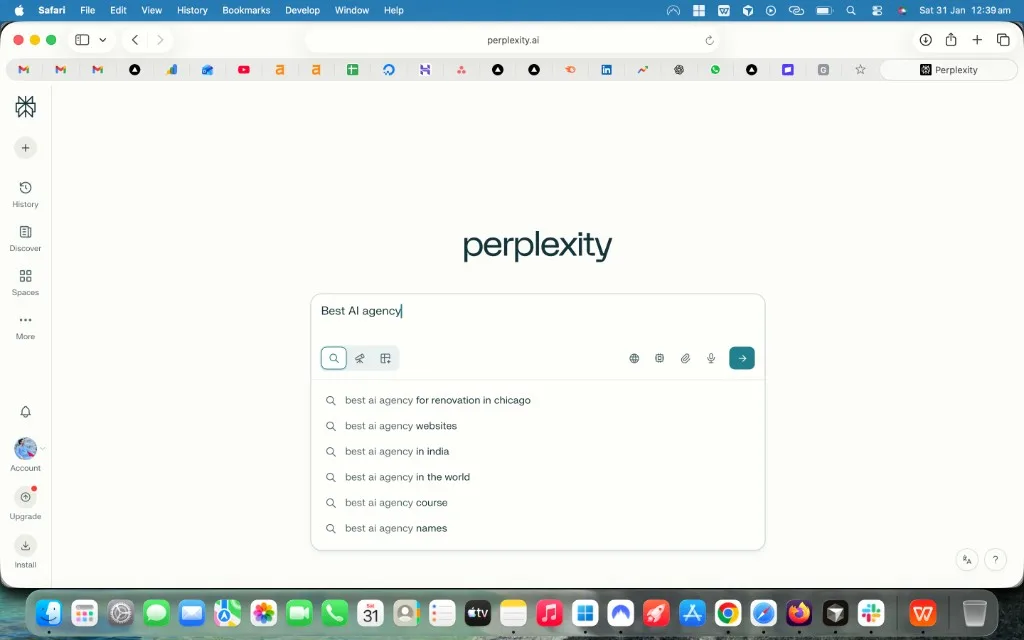
Unlike chatbots that rely only on training data, Perplexity searches the web live—so you get answers about current events, product launches, and niche topics (e.g., “best AI agency for renovation in Chicago”) with citations you can click. That makes it an answer engine: the goal is to answer the question and show where the answer came from, not to send you off to ten different tabs.

The home screen is built around one central search bar. You type a question—from simple facts to complex, multi-part research—and Perplexity returns an answer with in-text citations and a Links tab that lists the sources (articles, tools, and platforms) it used. You can then ask follow-up questions, switch to Images or Places for visual or local results, and dive deeper without leaving the page.
How Perplexity AI Works
Perplexity AI runs on a clear pipeline: understand the query, search the web, process and synthesize, cite sources, and deliver a structured response.
- Understanding the query – Perplexity uses NLP to detect intent, context, and key details so it can choose the right sources and depth (Quick Search vs. Pro Search).
- Web search – It retrieves relevant pages from articles, journals, news sites, and other live sources.
- Information processing – The system extracts insights, filters redundant or low-quality data, and generates a clear, concise answer.
- Citing sources – Each answer includes numbered footnotes and a Links tab (and often Images) so you can verify or explore.
- Response delivery – You get a readable answer plus related follow-up questions and linked sources.

When you run a query, Perplexity often shows a “Thinking” and “Searching” state and may suggest related queries (e.g., “AI powered home renovation platform Chicago,” “virtual remodeling AI interior design Chicago”) so you can refine or broaden your research. That makes it easy to go from a broad question to a specific, actionable result.
The Perplexity AI Search Experience
Once Perplexity has enough information, it returns an Answer with in-text citations. Above the answer you’ll see tabs: Answer, Links, Images, and sometimes Places.
The Links tab is where Perplexity lists the sources it used—press releases, news articles, product pages, and tools. For queries like “AI powered home renovation platform Chicago,” you might see results from PR Newswire, Axios, Chicago Agent Magazine, Spacely, Collov AI, and similar sources. Each result shows a title, snippet, and link, so you can judge credibility and dig deeper.

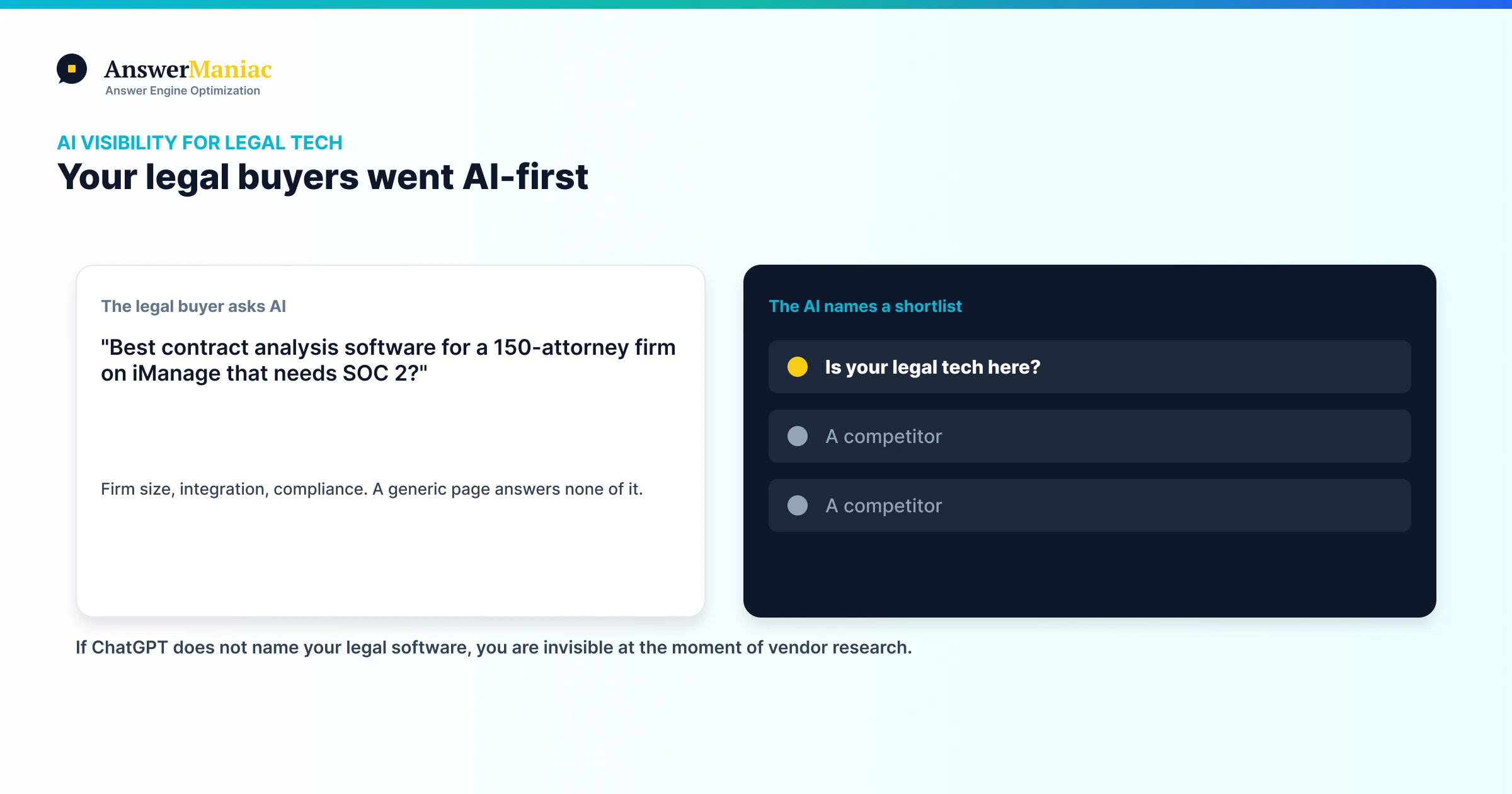
This layout is one of Perplexity’s strengths: you get a synthesized answer and transparent sourcing. For brands and publishers, appearing in the Links tab means your content is being read and cited by one of the most used answer engines—which is why answer engine optimization (AEO) and generative engine optimization (GEO) matter for Perplexity visibility.
Discover: Curated Feed and Personalization
Beyond the search bar, Perplexity offers Discover: a curated feed of articles and topics so you can stay updated without typing a query.
Discover uses tabs like For You, Top, Tech & Science, Finance, Arts & Culture, and Sports. The For You feed is personalized; you can tune it with Make it yours by selecting interests (Tech & Science, Finance, Arts & Culture, Sports, Entertainment). That way, your home experience blends search and discovery.

This is useful for keeping up with trends, news, and thought leadership in your industry—and for understanding what kind of content Perplexity surfaces when it isn’t answering a direct query. For content strategists, Discover is a reminder that Perplexity isn’t only a search box; it’s also a feed that rewards clear, authoritative, well-structured content.
Spaces: Organize Research and Collaborate
Spaces are Perplexity’s hubs for organizing research, uploading documents, and collaborating with others.
Inside a Space you can:
- Upload files – Add documents; Perplexity will answer detailed questions using them.
- Set AI instructions – Turn complex material into easy-to-use formats (e.g., FAQs, briefing docs).
- Collaborate – Add resources and share the Space to build a shared knowledge base.

Spaces are ideal for ongoing projects, competitive intelligence, or team research. They also show how Perplexity is positioning itself for workflow: not just one-off searches, but persistent, context-aware research. If your content is clear and structured, it’s more likely to be used both in direct search and inside Spaces when users (or your team) ask related questions.
Key Features and Tiers
- Quick Search – Fast answers for straightforward questions; free tier includes unlimited quick searches.
- Pro Search – Deeper research, more sources, conversational follow-up; free tier gets a limited number per day; Pro gets 300+ per day.
- Models – Free tier uses Sonar; Pro and Enterprise can use GPT-4, Claude, and other advanced models.
- File uploads – Pro and above support uploads; Perplexity can answer questions using your documents.
- Perplexity Pages – Turn research into shareable articles (Pro and above).
- Incognito mode – Search without saving query history.
- Voice search – Available in the Perplexity app on mobile.
- API – Integrate Perplexity’s search into your own products.
- Sonar – Perplexity’s generative search API (e.g., Sonar Pro) is tuned for factuality and is used in benchmarks and production search.
Enterprise tiers add Pro Search, internal knowledge bases, security (e.g., SOC2), and user management so teams can use Perplexity on sensitive or proprietary topics.
Pricing: Free, Pro, and Enterprise
- Free – Unlimited quick searches; limited Pro searches per day; limited file uploads; Sonar model; access to Spaces and basic features.
- Perplexity Pro – Around $20/month (or lower when billed annually): many more Pro searches per day, unlimited file uploads, choice of advanced models, Perplexity Pages, and improved support.
- Enterprise Pro / Enterprise – Per-seat pricing (e.g., $40/month/seat or annual options); custom pricing for large orgs; deeper research, internal knowledge bases, and stricter security and compliance.
Pricing and limits are updated on Perplexity’s site; check there for current numbers.
Use Cases: Research, Business, and Real-Time Info
- Real-time information – Sports, elections, weather, news. Perplexity uses live data feeds so answers stay current.
- Education and teaching – Lesson planning, syllabus creation, and in-class Q&A with cited sources.
- Research and academics – Finding and summarizing peer-reviewed work, with citations for verification.
- Business – Market trends, competitor intel, and industry reports; Perplexity’s shopping and product features support commercial queries too.
- Design and innovation – Research on user preferences, UX, and tools (e.g., AI design or renovation platforms) with linked sources.
Because Perplexity cites sources, it’s a strong fit for any use case where you need both an answer and proof—whether you’re a student, professional, or brand tracking how often you’re quoted.
Limitations and What to Watch For
- Source quality – Accuracy depends on the sources Perplexity finds. Misinformation or bias in those sources can appear in the answer; verify critical facts.
- Conversation style – Perplexity is built for search and follow-up, not long, open-ended chat like ChatGPT. Use the right tool for the job.
- Legal and copyright – Perplexity uses content from the web; publishers have raised concerns about scraping and attribution. This may affect which sources are available over time.
- Multimodal limits – Image and document understanding are improving but may not match specialized vision or document AI tools.
Understanding these limits helps you use Perplexity wisely and set the right expectations for when your own content gets cited.
Getting Cited by Perplexity AI
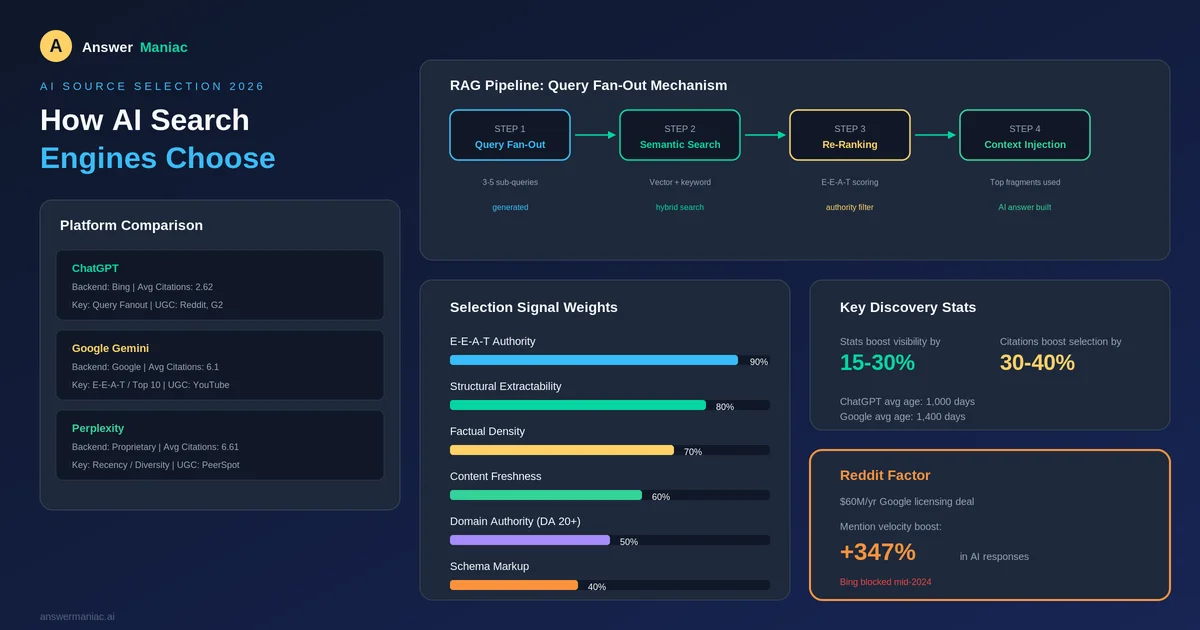
Perplexity (and other answer engines) prefer content that is clear, factual, and easy to extract. If you want your brand to show up in answers and in the Links tab, you’re really doing answer engine optimization (AEO) and GEO: structure your expertise so AI can trust and cite you.
Want your brand to show up when people ask Perplexity?
Perplexity and other AI answer engines cite sources that are consistent, specific, and authoritative. We help SaaS and content-led brands close the AI Visibility Gap—so your content becomes a go-to reference for Perplexity AI, Google AI Overviews, and ChatGPT. See how we do it or run a free AI visibility audit to see where you stand today.
Practical steps:
- Be consistent – Use a clear voice and terminology so Perplexity can recognize and classify your content.
- Be specific – Answer real questions with concrete data, definitions, and examples.
- Be citable – Use clear headings, lists, and takeaways so key claims are easy to extract.
- Prioritize quality over volume – A smaller set of strong, comprehensive guides often outperforms many thin articles in both traffic and citations.
The payoff is visibility inside the answer itself—not just a link on a results page—which supports brand authority and long-term AI visibility.
FAQ
What is Perplexity AI?
Perplexity AI is an AI-powered conversational search engine that answers questions using real-time web search and large language models. It returns a single, synthesized answer with numbered citations and a Links tab so you can verify sources—making it an answer engine rather than a traditional link-based search engine.
How does Perplexity AI differ from ChatGPT?
Perplexity AI is built for search: it focuses on precise, cited answers and real-time information. ChatGPT is built for conversation and long-form dialogue. For research and fact-checking, Perplexity is often better; for brainstorming, drafting, and extended chat, ChatGPT is often better. Many users use both.
How does Perplexity AI differ from traditional search engines?
Traditional search engines return a list of links and snippets. Perplexity AI returns one coherent answer plus citations and tabs (Answer, Links, Images, Places). You get a direct answer and the option to dig into sources, which can save time on complex or multi-part questions.
What are Perplexity Discover and Spaces?
Discover is Perplexity’s curated feed (For You, Top, Tech, Finance, etc.) that you can personalize with “Make it yours.” Spaces are topic-based hubs where you can upload files, set AI instructions, and collaborate with others on research—turning Perplexity into a research workspace, not just a search bar.
Is Perplexity AI free?
Yes. Perplexity offers a free tier with unlimited quick searches and a limited number of Pro (deeper) searches per day. Paid tiers (Pro, Enterprise) add more Pro searches, advanced models, file uploads, and collaboration features.
How can I get my content cited by Perplexity AI?
Structure your content so it’s clear, factual, and easy for AI to extract: use consistent terminology, direct answers, and strong E-E-A-T (experience, expertise, authoritativeness, trustworthiness). Focus on quality over volume and on answer-first formats. That aligns with answer engine optimization (AEO) and generative engine optimization (GEO), which increase the chance that Perplexity and other AI engines cite your brand.
Related Articles
- AEO Optimization Strategy: 10 Tactics to Rank in Answer Engines
- How to Rank in Answer Engines: Complete Step-by-Step Guide
- GEO Optimization Guide: How to Dominate Generative Engine Search
- Perplexity AI: Complete Guide 2026
- AI Adoption Statistics 2025
- AEO & GEO Services
- AI Search Ranking Services
References
Ready to show up when users ask Perplexity? Run a free AI visibility audit or explore AEO and GEO services to make your content the source Perplexity AI cites.
Get AEO Insights Weekly
Join 500+ B2B marketers getting AI visibility tactics every Tuesday.
Ready to Get Your Brand Cited by AI?
See how your competitors show up in ChatGPT, Perplexity, and Gemini — and what it would take to get recommended.