How to Create Listicles for SEO: Complete Guide
Learn the exact process for building SEO listicles that rank higher and engage readers. Get a clear framework for better content.
Direct Answer: The best way to write an SEO listicle is to pick a clear list format that matches search intent, optimize headings and structure for featured snippets, add real expertise (E-E-A-T signals), and promote it as a linkable asset. Focus on keyword research first, then structure each list item under its own subheading with concise, practical text.
The best way to write an SEO listicle is to pick a clear list format that matches what people are searching for, then optimize every part for both readers and search engines. This approach works because most people skim content, and a list gives them quick answers.
A solid listicle keeps people reading, shows Google your content is organized, and can bring in more visitors. If you're ready to turn rough ideas into something that actually gets traffic, the steps below will show you exactly how to do it. Keep reading for the full plan.
Key Takeaways
- Pick a listicle format, like a "best of" ranking or a step-by-step guide, that fits the user's search intent.
- Write each list item under its own clear header, using short, practical text to make it easy to read and crawl.
- Share your finished listicle as a useful reference to get backlinks and reach more people on different platforms.
Why Listicles Are a Top Choice for Search Results
Check a search page. You'll find lists for top tools, common mistakes, and step-by-step guides. They are common because they work. Most people skim articles before reading. A numbered list is built for skimming. It respects a reader's time.
"Search engines like Google prioritize user experience, and listicles offer a straightforward, user-friendly structure." — Siberoloji
For search engines, this format is helpful. It makes content easy to understand and sort. When Google or other tools look for information, a clear list provides specific answers. This can help your page get featured snippets, which are the quick answers at the top of search results. A listicle is a direct answer to a question.
Picking the Right Listicle Format for Your Goal
Not every list is the same. The format you choose should depend on what the person searching actually wants. Picking the wrong one is a good way to get a high bounce rate. Think about where the user is in their journey. Are they just learning, or are they ready to buy?
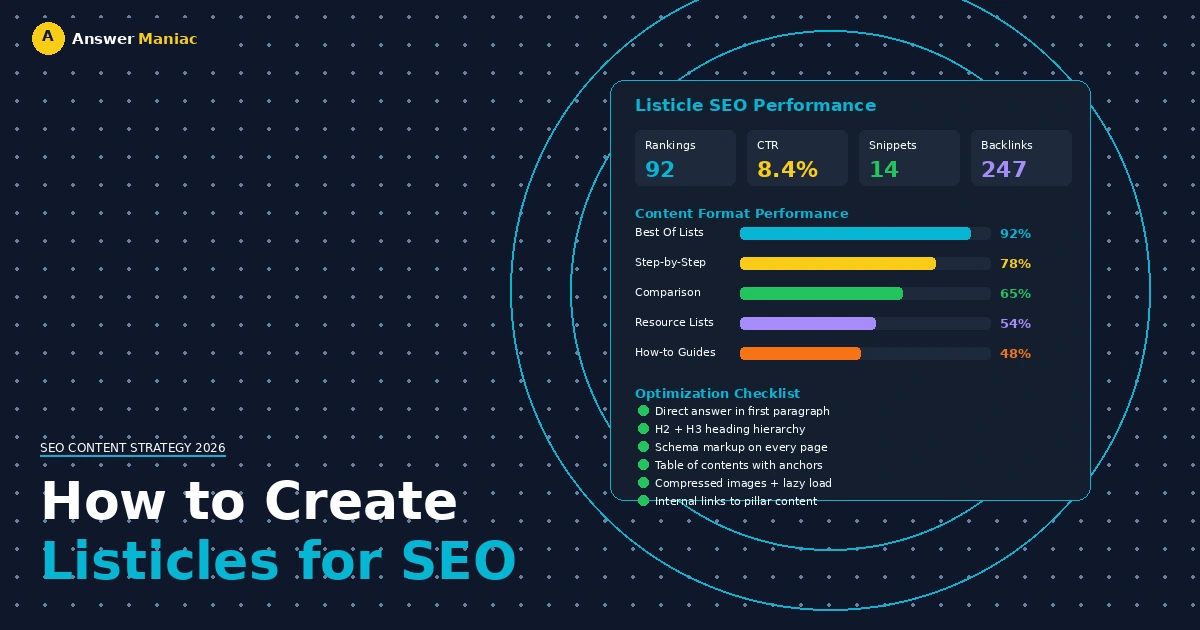
| Listicle Type | Best Use Case | Main SEO Benefit |
|---|---|---|
| Extended List | Deep-dive tutorials or "How-to" guides | Builds high topical authority on a subject |
| Simple List | Quick resource collections (e.g., "50 Tools") | Gets shared often on social media |
| "Best of" Ranking | Product comparisons and reviews | Drives conversions from ready-to-buy users |
| Step-by-Step Guide | Explaining a clear process | High potential to win a featured snippet |
A user at the beginning of their search, just looking for information, needs an extended list that teaches them. A user at the end, ready to make a choice, needs a "Best of" ranking to help them decide.
Google's focus now is on rewarding real experience. In 2024, they partnered more with platforms like Reddit to highlight user experiences. So your list should feel informed by real use, not just theory.
Finding Keywords That Work With Lists
You need a topic people are searching for. Start with a core idea in your field. Use keyword tools to see what questions people ask about it.
Look at the search results. If the top pages are all lists, you know the format is right. Your goal is to find a specific angle. Target longer, more specific phrases. They often have less competition and are easier to rank for.
Follow this basic process:
- Start with a main keyword from your business.
- Use "People Also Ask" and search suggestions to find question-based phrases.
- Look at competing pages to see their list style and length.
- Choose a keyword with a difficulty level you can handle.
- Use a specific number in your title, as odd numbers sometimes get more clicks.
The On-Page SEO Checklist for Your Listicle
Writing the list is one part. You must also build the page so search engines and users can navigate it easily.
"Use subheadings for each list item, and make sure they stand out. This gives your article a cleaner layout and helps search engine crawlers understand your structure." — Addlly.ai
Put your main keyword in the page title, the URL, and near the beginning. This tells Google the page's topic. Structure the list so each numbered point has its own subheading. This creates a clear hierarchy that helps search engines and makes the page easy to read on a phone.
Focus on these key technical points:
- A clickable table of contents that links to each section.
- Proper schema markup added to the page to qualify for rich results.
- Compressed images so the page loads quickly.
- Internal links with descriptive text to guide users to related content.
Google rewards clear, well-organized pages. A listicle with these elements is more likely to be used as a source by both traditional search and AI answer engines.
Making Your Listicle Trustworthy and Authoritative
Many lists online are generic. To stand out, your list needs to feel reliable. Google looks for content that shows Experience, Expertise, Authoritativeness, and Trustworthiness (E-E-A-T).
Show you know the topic. Instead of stating "these are the best tools," explain "I tested these ten tools on projects for six months." Use your own experience. Include original data or quote real people. Link to your sources. Write as a person who has used the items, not a company.
Google's guidelines focus on trust. When people see you as a reliable source, they start searching for your brand with the topic. This activity can help your page rank higher for general searches too.
Promoting Your Listicle to Build Links and Traffic
Publishing the article is just the start. A good listicle is a "linkable asset." It's a resource so helpful that other sites may link to it. A strong listicle can get more backlinks than a regular blog post because it acts as a reference guide.
Begin promotion by telling any brands or experts you mentioned positively. They may share it. Then, reuse the content in other formats. The list can become a short video, an infographic, or a social media post. This helps you reach people on different platforms.
A few promotion methods work well:
- Turn the list into a slide deck and post it on LinkedIn.
- Send the article to industry newsletters that share weekly links.
- Find places online that mention your brand without a link, and suggest your listicle as a resource.
- Help journalists by creating a "statistics" summary from your list for their articles.
FAQ
How do I choose the best listicle format for SEO and search intent?
Start by matching your listicle format to what users want to find. Use keyword research tools, Google autosuggest, and keyword search data to spot popular list posts with strong search volume. Focus on clear list-based structures that answer specific questions. This improves search engine optimization, boosts search rankings, and makes content easier for AI engines and search engines to understand.
What makes list posts more engaging than regular blog post formats?
List posts are easier to scan and match short attention spans. Using bulleted or numbered lists, clear header tags, and a structured layout improves user experience and visual engagement. Skimmable articles help readers find value faster, which increases user engagement, supports content marketing goals, and improves SEO rankings across traditional and AI-driven search results.
How can keyword modifiers improve listicle search performance?
Keyword modifiers help target specific search intent and reduce keyword difficulty. Adding words like "best," "step-by-step," or "examples" to list post titles attracts users ready to act. This supports content strategy by improving search ranking, capturing long-tail searches, and driving more qualified traffic through better alignment with how people search online.
Should listicles include internal links, visuals, and table of contents?
Yes, strong content organization matters. A table of contents with anchor links improves navigation and responsive design. Visual elements boost visual engagement, while internal and external links support search engine optimization and user trust. Together, these features create a structured layout that keeps readers longer and improves overall content marketing performance.
A Final Word on SEO Listicles
A good SEO listicle starts with knowing what the searcher wants. It ends with a piece of content that's useful and well-organized. The format works because it helps people find information quickly and gives search engines clear data to process.
When you use the right format, do keyword research, optimize the page, and show real knowledge, you create an asset. This asset brings in visitors, earns links, and builds your authority over time.
If you want a systematic way to create content that answers questions and captures search intent, you can explore the tools at AnswerManiac.
References
Related Articles
Get AEO Insights Weekly
Join 500+ B2B marketers getting AI visibility tactics every Tuesday.
Ready to Get Your Brand Cited by AI?
See how your competitors show up in ChatGPT, Perplexity, and Gemini — and what it would take to get recommended.