AI Search Engine Optimization: The New SEO for 2026
AI SEO complements and extends traditional SEO. A strategic guide to staying visible in ChatGPT, Perplexity, and AI-driven search in 2026.
AI Search Engine Optimization, or AI SEO, is the strategic adaptation of traditional SEO for an era where artificial intelligence models generate answers. It's about optimizing your digital presence to be the source AI cites, not just the link it ranks. By 2026, this shift will have dramatically accelerated, but traditional ranking signals still influence AI citations.
If you're not structuring your content for AI retrieval and citation, you're becoming invisible to a growing segment of your audience. The principles are different, the tactics are new, and the race for visibility starts now. Keep reading to understand the framework that will keep your brand relevant.
Key Takeaways
- AI SEO prioritizes becoming a citable source for AI models over ranking for specific keywords, focusing on entity recognition and semantic relevance.
- Emerging standards like llms.txt, combined with structured data, can improve AI crawlability, though adoption varies.
- Measuring success requires new metrics like citation authority and AI referral traffic, moving beyond traditional analytics to track your "Share of Model."
What is Generative Engine Optimization (GEO)?
Generative Engine Optimization, or GEO, is the practice of making your content easily found and confidently cited by AI models like ChatGPT, Perplexity, and Google's AI Overviews. It's less about keyword placement and more about semantic relevance and technical accessibility.
These AI agents, which already drive about a third of organic web activity, don't just list links. They synthesize information from multiple sources to create a direct answer. Your goal is to be one of those sources.[1]
Think of it as preparing a meal for a sophisticated chef, not a customer. You provide the high-quality, well-labeled ingredients (your content and data) so the chef (the AI) can use them reliably in a final dish (the generated answer). The core of GEO is built on a few key pillars.
- Semantic Understanding: AI models parse meaning and relationships between concepts, not just keyword matches.
- Direct Citability: Content must be structured in clear, authoritative blocks that an AI can extract and reference.
- Technical Crawlability: Your site must be built for non-traditional bots like GPTBot and ClaudeBot to access and interpret data in real-time.
This is a fundamental shift from chasing algorithmic updates to building a library of trusted reference material.
How does AI retrieval differ from traditional search ranking?
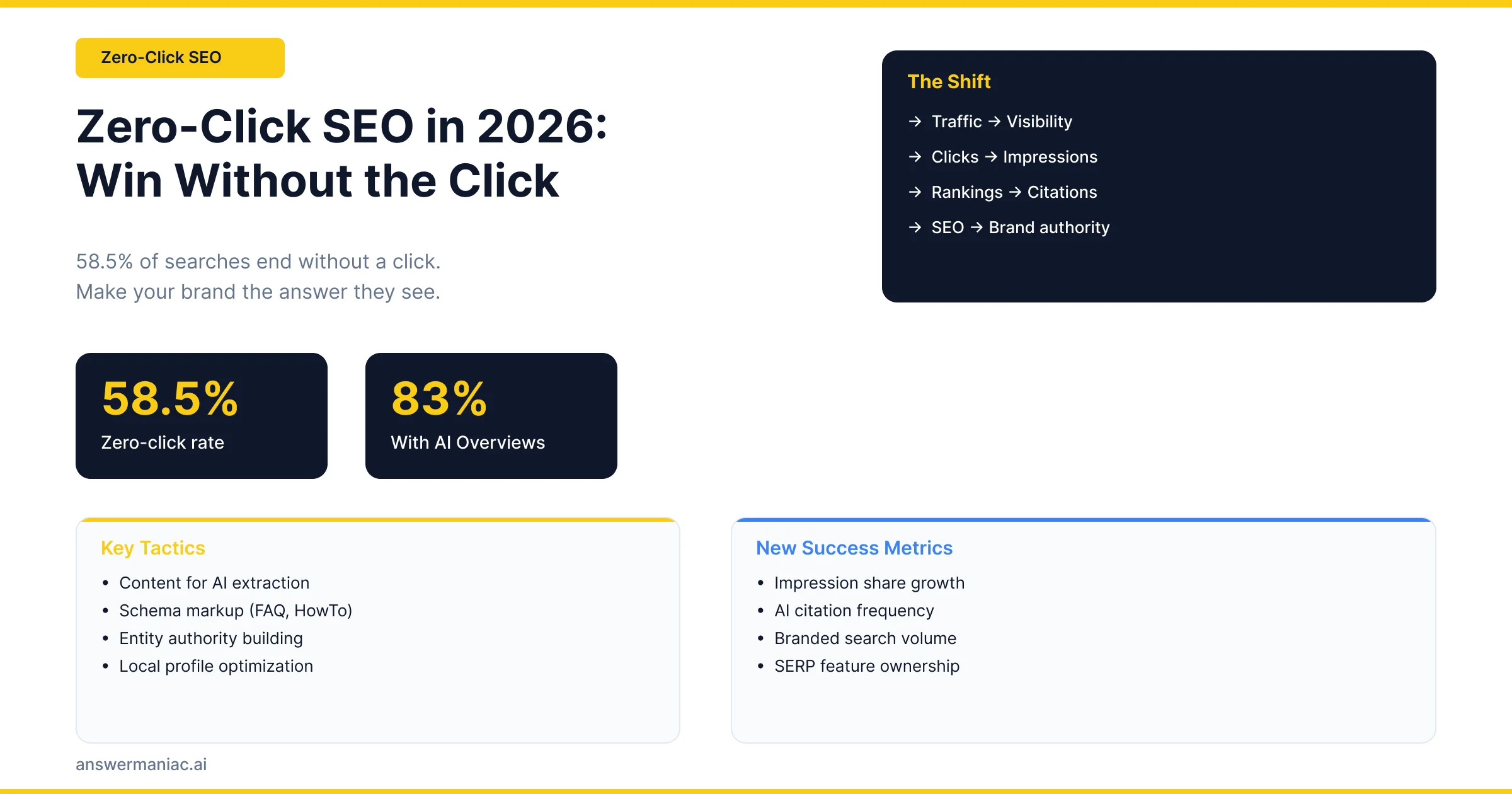
The difference is in the fundamental goal. Traditional SEO aims for the top of the search results, hoping for a click. Because AI retrieval embeds brand mentions directly into generated answers, success is especially on platforms where direct answers reduce clicks, making AI visibility tracking critical for understanding how often your brand appears even when users never visit your site.
"Search has shifted from being a pure performance channel to being a branding channel. AI isn't just surfacing links, it's making recommendations and that means your brand equity decides whether you show up." — Mike King, iPullRank.[2]
AI models use entity recognition. They don't just see "running shoes," they understand the entity "brand X's stability running shoe for overpronation." They map relationships. Your success depends on how clearly you define these entities and their attributes through structured data and topical authority. Backlinks still matter, but as a signal of authority for the AI to trust your data, not just as a ranking factor.
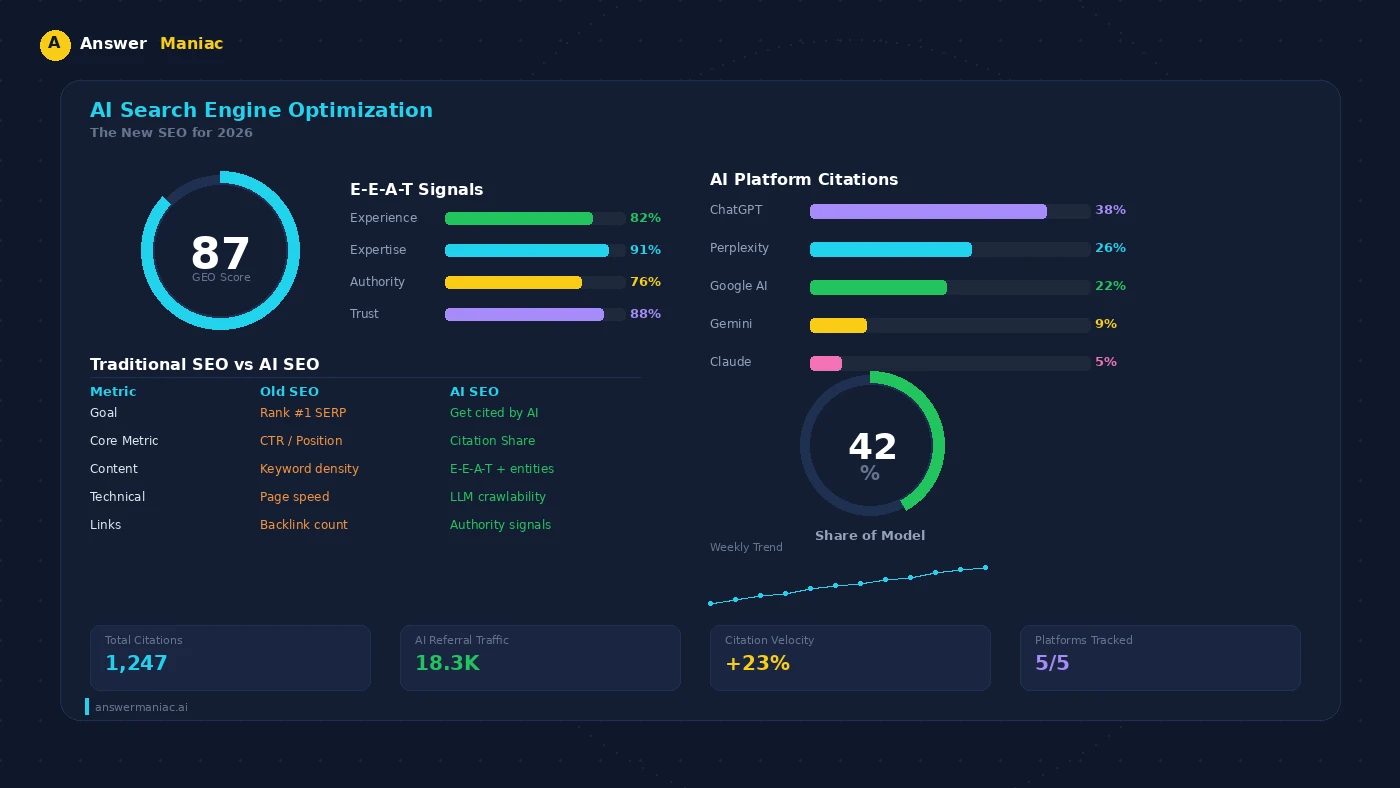
| Feature | Traditional SEO | Generative Engine Optimization |
|---|---|---|
| Primary Goal | Rank #1 in SERP links | Become the cited source in AI responses |
| Core Metric | Click-Through Rate (CTR) | Citation Share & Brand Mentions |
| Content Focus | Keyword density and volume | E-E-A-T signals and unique insights |
| Technical Focus | Mobile-friendliness, page speed | LLM crawlability, structured data, clean architecture |
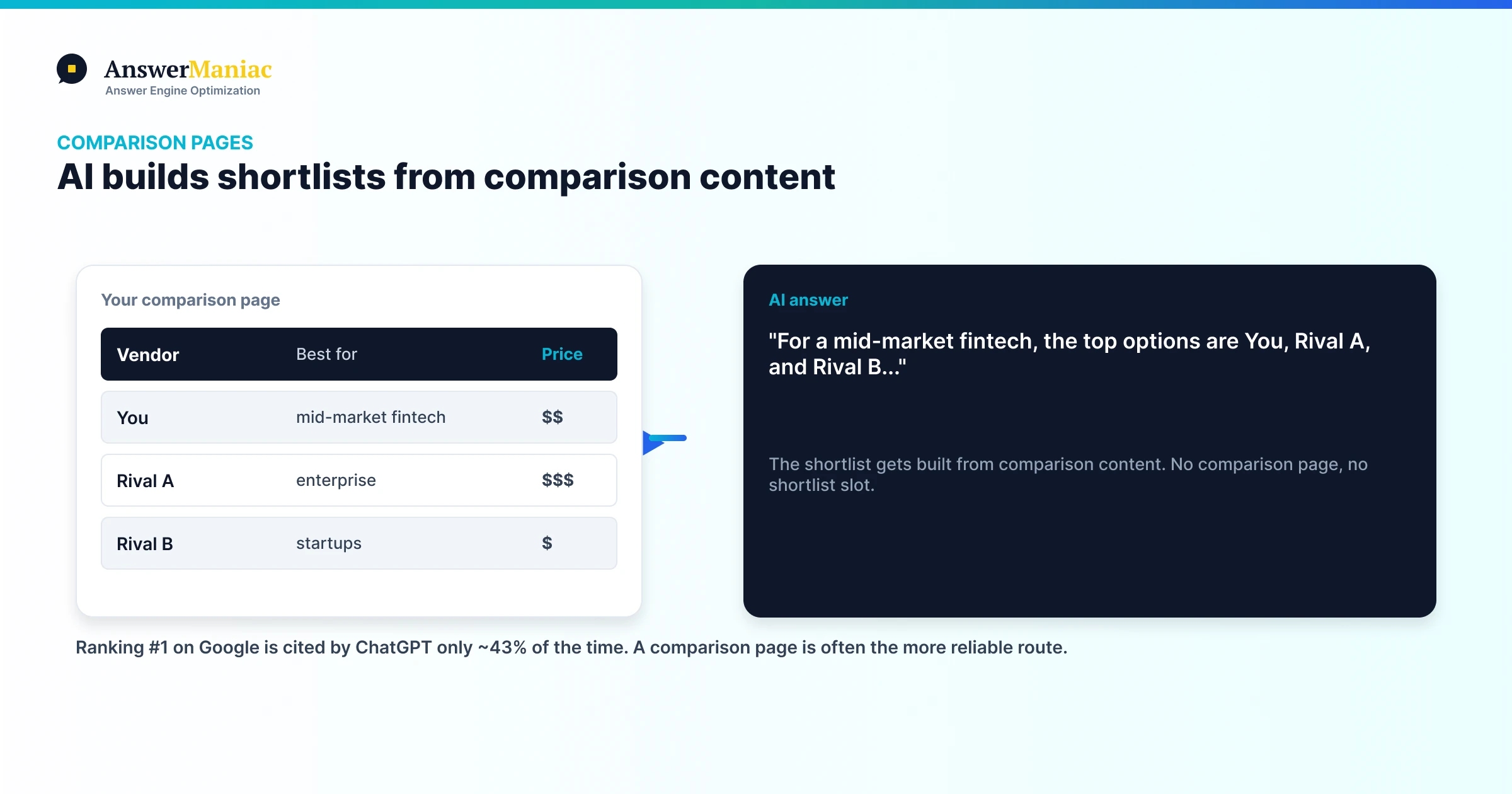
The old model was about standing out in a list. The new model is about being indispensable to a conversation happening between a user and an AI. Content with clear, answer-focused structure and proper schema markup sees a significant lift in citability, by about 43% according to some analyses. You are optimizing for a footnote in an AI answer, not just a blue link.
Why is E-E-A-T the primary ranking factor for 2026?
Here's the simple reason: AI models need to avoid making things up. They're looking for reliable, human-created information to learn from and share. In a sea of AI-generated text, they prioritize sources that show real experience and depth.
How do you show this to the AI?
- Expertise: Go beyond surface facts. Offer deep analysis or original research that shows you truly understand the nuances.
- Experience: Use case studies with specific results, or share first-hand stories about what you've actually done.
- Authoritativeness: Cover a topic completely. Become the go-to resource someone would bookmark.
- Trustworthiness: Cite your data clearly, link to respected sources, and show who wrote the content.
For AI, these are guardrails. They help it decide if your information is safe, accurate, and useful. Without them, your content is just more noise in the system. Build E-E-A-T, and you build trust, both with readers and the algorithms that serve them.
What technical foundations enable AI bot crawlability?
https://www.youtube.com/watch?v=QPz9J6RI1WQ
Credit: Henry Purchase
Think of it like building a library with clear signs and wide aisles, not just stacking books in a closet.
The main technical steps for AI crawlability are:
- Speed and Clarity: Core Web Vitals are crucial. AI bots have timeouts. A slow site will be skipped. Fast load times improve crawlability and user experience, aiding both traditional and AI search visibility. Avoid complex JavaScript that hides your main text, as many AI crawlers can't read it well.
- Clear Structure: A clean site hierarchy is key. AI models favor sites where information is organized logically (like having a main pillar page and related cluster pages). This helps them understand your content's relationships.
- Direct Guidance: You can actively guide AI crawlers.
- Use an llms.txt file (like a robots.txt for large language models) to point them to your most important pages and data feeds.
- Implement structured data (Schema.org markup) to label your content clearly, like price, author, or review rating, so the AI knows exactly what it's looking at.
- Allow Access: Make sure key AI crawlers (like GPTBot) are allowed in your robots.txt file and aren't blocked by server rules. They are your new, essential visitors.
This technical work is the essential plumbing. Without it, your great content has nowhere to go.
Once AI crawlers can reliably access and parse your content, an AI citation tracking dashboard allows teams to validate whether that technical foundation is translating into real citations across AI answers.
How to Measure Your "Share of Model" in 2026
Forget the old dashboard. In the AI search era, impressions and traffic are lagging metrics, which is why AI visibility tracking has become essential for understanding how often your brand is cited without a click.
Your content can be cited inside an AI answer without a single click. The new benchmark is your "Share of Model", how deeply your brand is woven into the generative ecosystem. You measure it by tracking three things.
1. Run a Prompt Audit. Each month, test commercial queries like "best tools for [your problem]" across ChatGPT, Gemini, and Claude. Note if you're mentioned, how you're described, and who else is listed. This shows how AI perceives your authority.
2. Track Your Citations. Count how often your URL appears as a source in Google's AI Overviews or Perplexity answers. New tools can automate AI citation monitoring across Google AI Overviews and Perplexity, though manual prompt testing still provides valuable qualitative insight. Also, configure GA4 to spot referral traffic from AI platforms (it often hides under unusual hostnames).
3. Rethink Attribution. The last-click funnel is broken. When an AI agent does the research, the brand cited in its summary gets the first touch, building awareness long before a site visit. Value these mentions as a top-funnel metric. Remember, earned media and strong external signals often contribute to citation authority, and digital PR, which AI trusts for validation.
FAQ
What is AI search engine optimization, and how is it different from traditional SEO?
AI search engine optimization focuses on how AI systems generate answers, not just rank links. It includes generative engine optimization and answer engine optimization. This approach relies on semantic SEO, entity recognition, and conversational content. The goal is clear user intent matching for informational intent and transactional queries across multimodal search and AI overview ranking results.
How do GEO strategies and AEO tactics help content appear in AI answers?
GEO strategies and AEO tactics help AI systems find clear, direct answers. They use an answer-first structure and human-first writing. Content is built around conversational queries and zero-click optimization. Strong topical authority, topic clusters, and content depth signals help AI trust and reuse the information across Search Everywhere Optimization channels.
What technical setup helps AI bots crawl and understand a website?
AI bot crawlability depends on proper access and clean structure. Sites should allow GPTBot access and define rules in ClaudeBot robots.txt files. An llms.txt file helps guide AI crawlers. Fast Core Web Vitals, strong site speed AI signals, and clean site architecture matter. JavaScript barriers should be minimized. Structured data markup, including FAQ schema, FAQPage schema, and Organization schema, improves understanding.
How do brands build authority and visibility in AI-driven search?
Brand authority building requires clear E-E-A-T signals and experience expertise, authoritativeness and trustworthiness. Pages should show author bylines and human-written content. Unique insights, case studies, and original data frameworks improve credibility. Brand entity optimization, PR mentions citations, and SEO PR integration increase citation authority metrics and long-term AI visibility.
How can teams measure and improve performance in AI search results?
Teams should run an AI visibility audit to find gaps. Track share of voice AI and conversation share metrics to compare presence. Monitor Perplexity citations, Gemini monitoring, and prompt testing ChatGPT results. Measure AI referral traffic with GA4 AI tracking and first-touch attribution. Improve performance using pillar pages, subtopic linking, internal link clusters, and omnichannel SEO strategies.
The Path Forward in AI Search
The transition to AI search isn't coming, it's already here. Traditional SEO alone no longer wins visibility. Today's AI systems reward brands built on GEO principles, deep E-E-A-T, and agent-friendly technical foundations. You are no longer optimizing for one algorithm; you are publishing a reference AI can trust, cite, and reuse.
The brands that win will be fundamentally useful, structured, and semantically clear. The ANSWER Framework was built to operationalize this shift by identifying the entities and signals that make brands citable. Start with a free AI visibility audit and see where you stand.
References
Related Articles
Get AEO Insights Weekly
Join 500+ B2B marketers getting AI visibility tactics every Tuesday.
Ready to Get Your Brand Cited by AI?
See how your competitors show up in ChatGPT, Perplexity, and Gemini — and what it would take to get recommended.