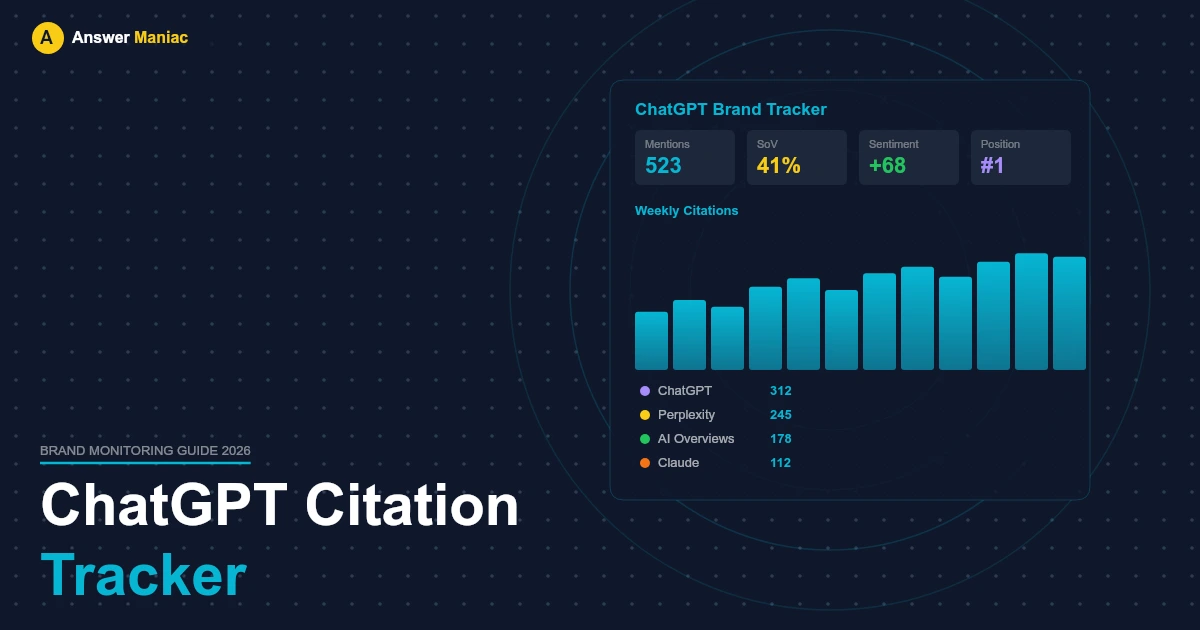
ChatGPT Citation Tracker: How to Monitor Your Brand Mentions in 2026
Learn how to track brand mentions in ChatGPT to understand visibility, sentiment, and AI-driven reputation trends with practical methods and tools.
Direct Answer: A ChatGPT citation tracker monitors when and how your brand appears in AI-generated answers. Track this by running structured prompts weekly, logging mention frequency, sentiment, and competitor positioning. Combine manual checks with automated tools and proxy metrics like branded search lift for a complete picture of your AI visibility.
Get a free AI visibility audit to see where your brand stands in ChatGPT
A ChatGPT citation tracker helps us monitor when and how our brand appears in AI-generated answers, so we can understand visibility, accuracy, and reputation in generative search results. AI answers now shape buying decisions, research paths, and trust signals across industries.
This makes AI visibility a real measurement, not a theory. When we track citations, we gain clarity on how models describe us and where that information comes from. Keep reading to learn how we can track, analyze, and improve brand mentions in ChatGPT with confidence.
Key Takeaways
- We can measure brand visibility in ChatGPT by tracking prompts, mentions, and sentiment over time.
- Monitoring citations helps us manage reputation risks and content gaps early.
- Structured tracking supports stronger AI visibility and long-term topical authority.
How Can You Improve And Optimize ChatGPT Brand Visibility?

We improve visibility by publishing authoritative content, strengthening source alignment, refreshing reviews, and supporting signals AI systems rely on for accuracy. Authoritative content answers clear questions in simple language. This includes FAQs, guides, and structured pages that explain who we are and what we do.
"Adding relevant statistics, quotations and citations can boost content visibility in generative engines by up to 40%, according to a recent research paper." - Search Engine Land[1]
Reviews and ratings matter because AI systems often reflect public consensus. Some analyses suggest positive reviews may correlate with stronger AI visibility, but this varies by context. Participation in relevant forums and knowledge bases supports consistency. These platforms often act as indirect training signals for AI outputs.
Improvement works best when content, SEO, and reputation teams align around shared signals.
- Update cornerstone pages with clear definitions and structure
- Encourage recent, honest reviews on trusted platforms
- Maintain consistent brand descriptions across sources
These steps strengthen AI visibility without relying on short-term tactics. For a detailed methodology on structuring content for AI citations, see our AEO optimization strategy guide.
Why Should Brands Monitor Mentions In ChatGPT Responses?
Monitoring brand mentions in ChatGPT reveals influence on decisions, flags reputation risks early, and shows which sources shape AI answers so we can adjust content and SEO strategy.
AI-generated answers often summarize complex topics into short statements. When our brand appears in these summaries, it gains instant credibility. Research highlights the specific tactics that drive this visibility.
"The tactic that worked the best... was adding citations from authoritative sources. ... the Cite Sources method led to a substantial 115.1% increase in visibility for websites ranked fifth in SERP." - Search Engine Journal[2]
This increases the weight of each AI mention. Before looking at specific benefits, we should clarify how monitoring connects to daily decision making.
Consistent monitoring supports several practical outcomes that matter to content and brand teams.
- Early detection of misleading or outdated descriptions
- Awareness of competitor positioning in shared prompts
- Insight into which sources influence AI answers
By monitoring regularly, we stay informed about how AI systems present our brand in real-world search behavior. This connects directly to broader AI visibility tracking strategies that cover multiple AI platforms beyond just ChatGPT.
How Can You Manually Track Brand Mentions In ChatGPT?
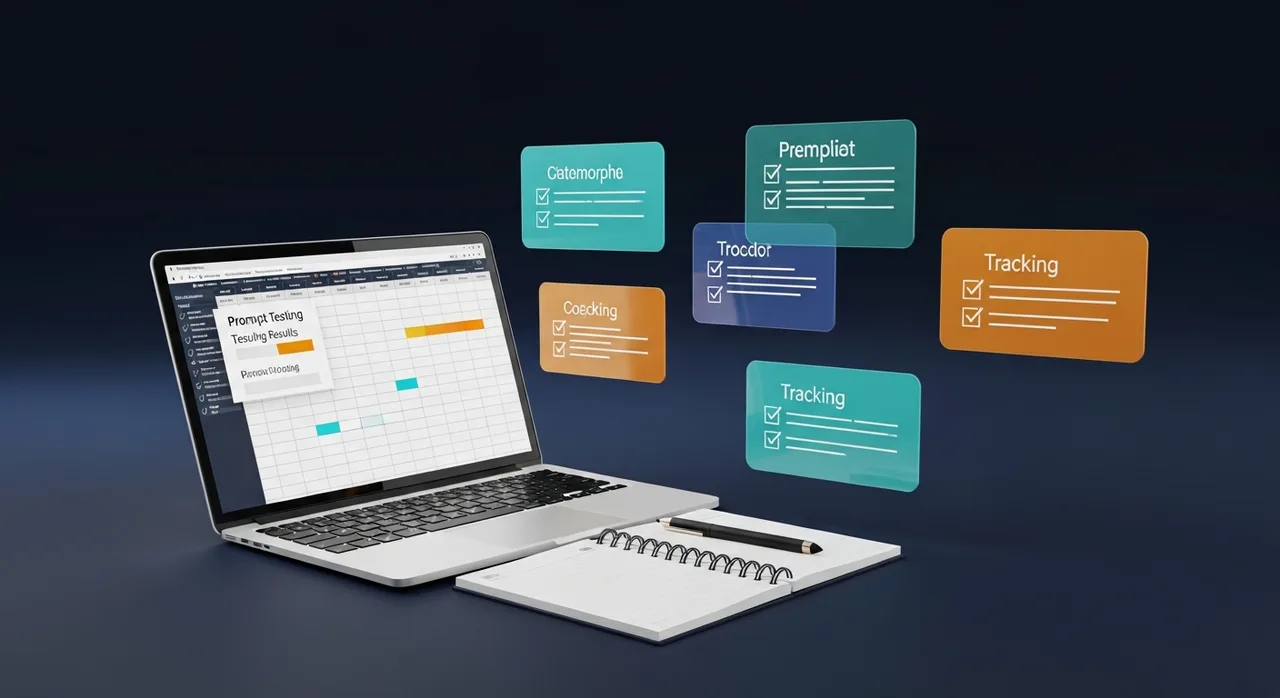
Manual tracking, when informed by strategies in how to track AI citations, ensures that prompts capture genuine user intent.
Manual tracking uses defined prompts tested in ChatGPT, records brand presence and alternatives, and saves dated outputs to build a reliable baseline for comparison. We start by collecting real questions from support tickets, forums, and search features like People Also Ask. These questions reflect actual user intent rather than internal assumptions.
Each prompt is tested directly in ChatGPT, and the response is saved with the date, model version, and context. This creates a clear snapshot of AI behavior at that time. Teams often track 10 to 20 core prompts per audience segment. This provides enough coverage without creating noise.
Manual tracking works best when we follow a repeatable process that reduces bias.
- Group prompts by intent such as comparison, recommendation, or explanation
- Test brand name variations, product names, and common misspellings
- Ask for structured outputs like tables to simplify review
- Save results in a dated spreadsheet to establish a baseline
This process turns manual testing into a usable dataset rather than scattered notes. For a framework on which content types get cited most frequently, see The AI Citation Playbook: 23 Content Types.
Which Automated Tools Track ChatGPT Brand Citations?
Several automated tools can track when your brand is mentioned in ChatGPT and similar AI. They work by running your predefined questions on a schedule, capturing the AI's responses, and logging the details for you.
For a detailed look at the best AI citation tracking tools, including features and comparisons, these platforms simplify ongoing monitoring.
These tools usually fit into a few categories:
- Core Prompt Testers: These run your scheduled searches and save every answer. Good for building your historical log. (Typically paid, some have trials.)
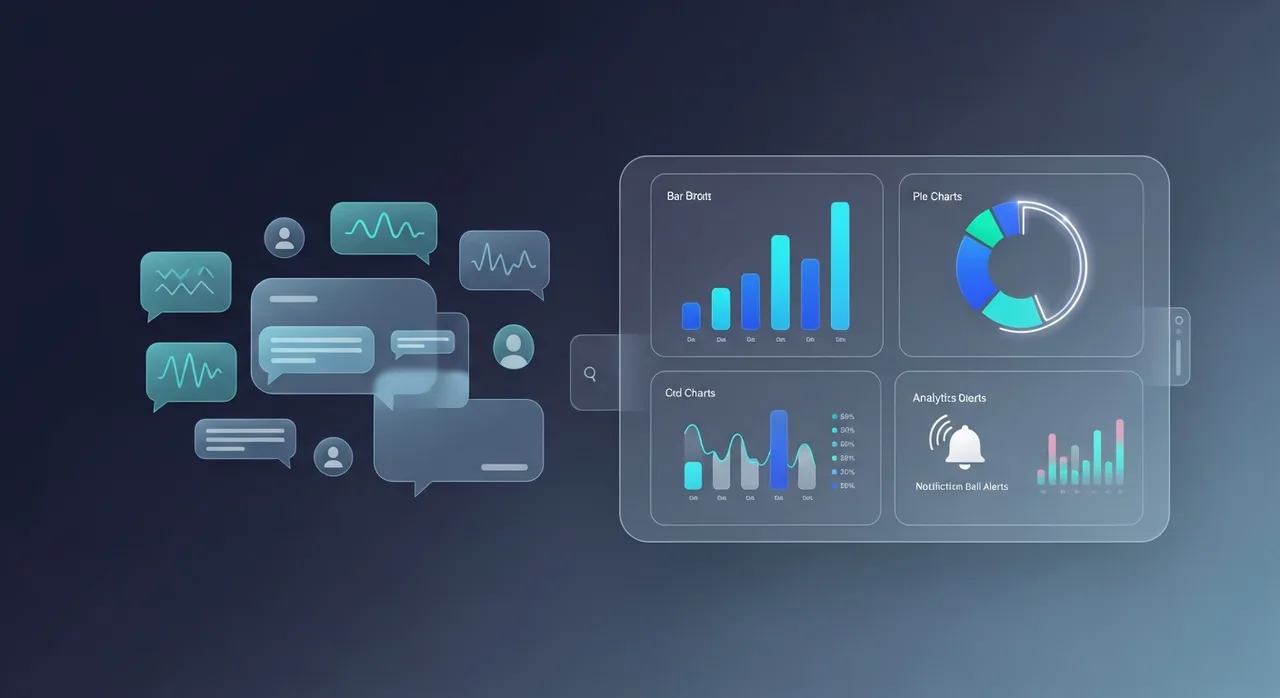
- Visibility Dashboards: They turn your data into charts and graphs, highlighting trends and sending alerts. (Usually a paid feature.)
- Sentiment Analyzers: These add a layer of analysis by judging if mentions are positive, neutral, or negative. (Often a paid add-on.)
| Tool Type | Core Features | Access Model |
|---|---|---|
| Prompt testing platforms | Scheduled prompts and response logs | Trial or paid |
| Visibility dashboards | Trend tracking and alerts | Paid |
| Sentiment monitors | Tone and framing analysis | Paid |
| Baseline trackers | Historical citation logs | Free or trial |
The tool does the heavy lifting, but you still need to check in and interpret what the patterns mean for your strategy.
How Do You Analyze Sentiment, Sources, And Competitors?
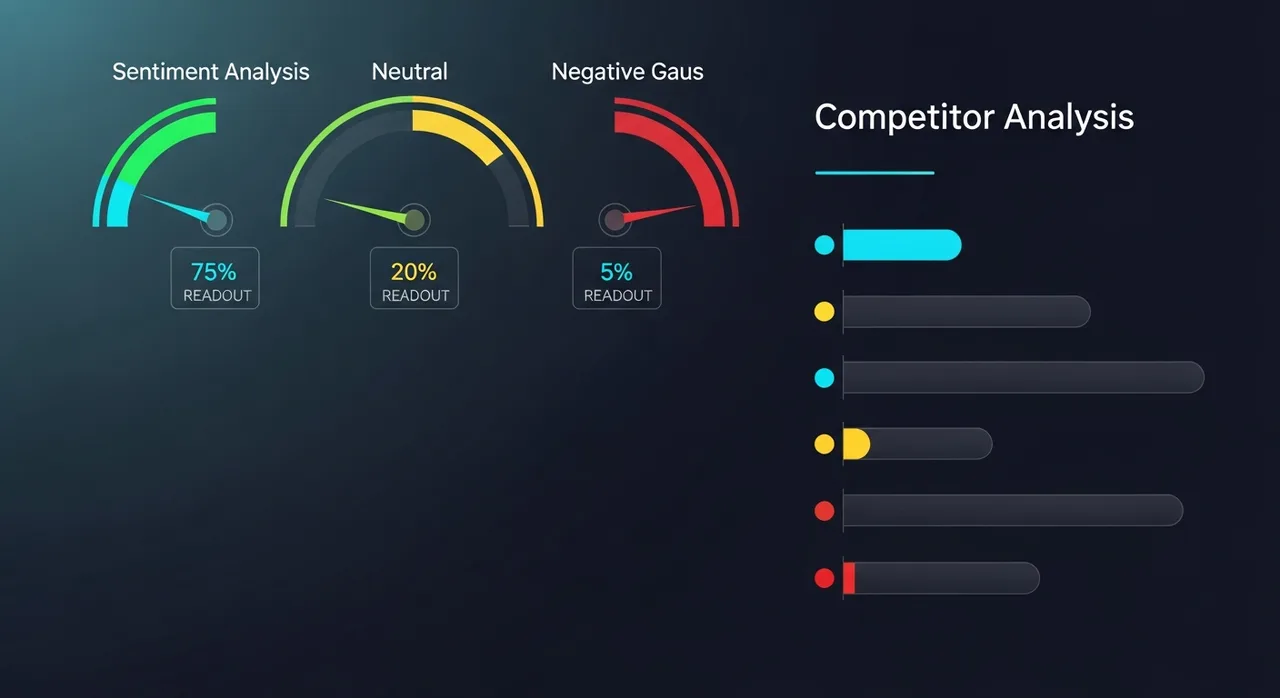
Analysis reviews tone, accuracy, and cited sources in AI answers, then compares mention frequency and framing to find positioning gaps. Sentiment analysis focuses on whether our brand is described positively, neutrally, or negatively.
Even neutral language can signal weak positioning if competitors are praised more clearly. Using AI visibility tracking helps quantify where our brand stands versus competitors and which sources influence AI summaries the most.
Source analysis looks at which sites or references AI models rely on most. In many cases, 3 to 5 dominant sources shape the majority of responses. Competitor context matters because AI answers often list multiple options together. If our brand appears lower or lacks detail, that signals an optimization opportunity.
Reviewing the same prompts over time helps separate short-term fluctuation from real trends.
- Track sentiment changes across identical prompts
- Note recurring source domains influencing responses
- Compare descriptive depth between our brand and alternatives
This approach helps us focus on actionable improvements rather than isolated results. Understanding entity optimization and knowledge graphs is key here, as AI systems rely on entity relationships to determine which brands to cite and in what context.
How Often Should You Monitor ChatGPT Brand Mentions?
https://www.youtube.com/watch?v=YhHpPR-k_Dk Credits: Exploding Topics
Think of it like checking the weather. You don't watch the sky all day, but you look more often when a storm is coming. For tracking your brand mentions in ChatGPT, a simple rhythm works best.
How Often Should You Check?
The frequency depends on what's happening with your brand.
Weekly checks are for active phases. This includes product launches, major marketing campaigns, or big news events. During these times, visibility can change quickly. A weekly review helps you catch sudden shifts and understand immediate impact. The metric that measures this rate of change is citation velocity.
Monthly checks are for steady tracking. When things are calm, a monthly review is sufficient. It helps you establish a reliable baseline and spot longer-term trends, separating meaningful growth from random noise.
This balanced approach keeps the process manageable. Most teams analyze their data over 4 to 12-week periods to confirm whether a change is a temporary blip or a real trend. Sticking to a clear schedule prevents you from reacting to every minor fluctuation and helps you make decisions based on consistent patterns.
FAQ
How does an AI citation tracker support brand mentions monitoring?
An AI citation tracker helps brands monitor mentions by scanning AI-generated content for brand references across platforms like ChatGPT, Perplexity, and Gemini. It tracks mention frequency, historical citation logs, and sentiment over time. Using automated scanning, it provides real-time alerts, weekly mention reports, and trend analysis, enabling effective reputation management and ensuring brands stay informed about their presence in AI outputs.
How can AI visibility tracking improve SEO without traditional clicks?
AI visibility tracking improves SEO by measuring where your brand appears in AI-generated answers, even without direct website clicks. It identifies zero-click citation opportunities and featured snippet placements. Insights from content optimization, schema markup, topical authority, and E-E-A-T signals help brands maintain strong recall in AI responses and improve visibility in conversational queries.
What metrics matter most for tracking brand recall in AI responses?
Key metrics include mention volume, citation frequency, brand positioning within responses, and sentiment scoring. These metrics, combined with brand sentiment analysis, reveal how audiences and AI systems perceive the brand. Tracking baseline metrics over time enables trend spotting, crisis detection, and visibility benchmark comparisons, providing actionable insights for ongoing AI response monitoring.
How do teams verify citations and reduce AI hallucinations?
Teams verify citations by cross-referencing AI responses against authoritative sources and known brand information. Running prompt tests across scenarios and using structured output parsing provide clear audit trails. Regular testing helps identify when AI models generate inaccurate statements about your brand, allowing teams to address the root content gaps that cause hallucinations.
How can competitors be compared using AI response monitoring?
AI response monitoring allows brands to compare competitors by analyzing who appears in shared prompt categories. Using alternative brand queries and comparison-style prompts, teams map competitive positioning across AI answers. Insights from content gap analysis, source authority, and visibility benchmarking inform strategic decisions and track presence relative to rivals across multiple AI platforms.
ChatGPT Citation Tracker: How to Monitor Your Brand Mentions Effectively
The goal of tracking isn't just to collect data. It's to see a clear path from being occasionally mentioned to becoming the default, trusted answer. This is the shift from passive monitoring to active optimization, shaping the conversation by building authority and creating content designed for AI to cite.
For teams ready to take control of their AI visibility, The ANSWER Framework provides the methodology: Audit, Navigate, Structure, Write, Earn, Refine. Or get a free AI Visibility Audit from AnswerManiac to see where you stand today.
References
Get AEO Insights Weekly
Join 500+ B2B marketers getting AI visibility tactics every Tuesday.
Ready to Get Your Brand Cited by AI?
See how your competitors show up in ChatGPT, Perplexity, and Gemini — and what it would take to get recommended.