We Analyzed 500 AI Responses: Here's What Gets Cited (And What Gets Ignored)
Learn which content AI platforms cite most, based on our analysis of 500 AI responses. See how to structure your articles for better visibility.
Direct Answer: We analyzed 500 AI-generated answers to see where they get their information. The results show a clear pattern: AI tools like Google AI Overviews and ChatGPT prefer structured, authoritative sources. To get your content cited, you need to adapt. This is crucial in fields like fintech, where appearing in an AI answer can define your success. We explain the data and give you a specific framework to use.
Get a free AI visibility audit to see where your brand stands
We ran 500 queries across ChatGPT, Perplexity, Gemini, and Google AI Overviews. Not hypothetical. Actual prompts a B2B buyer would type. "Best payroll software for mid-size companies." "Which fraud prevention tools do fintechs use." "Top CRM for sales teams under 50 people."
Then we tracked every source each platform cited. Every domain, every page type, every content format. The goal was simple: figure out what gets picked and what gets skipped.
Three patterns showed up immediately.
Key Takeaways
- The platform dictates the source. Google's AI leans on top-ranked web pages. ChatGPT pulls from a wider pool of clear, current articles.
- Your opening is key. Answer the question directly in the first 100 words with data or expert statements to establish authority. This is what content intro optimization is built around.
- Use a defined process. Applying a Generative Engine Optimization framework, which emphasizes factual density and technical markup, systematically improves your chances of being cited by AI.
AI Overviews vs ChatGPT Source Selection: A Data-Driven Breakdown
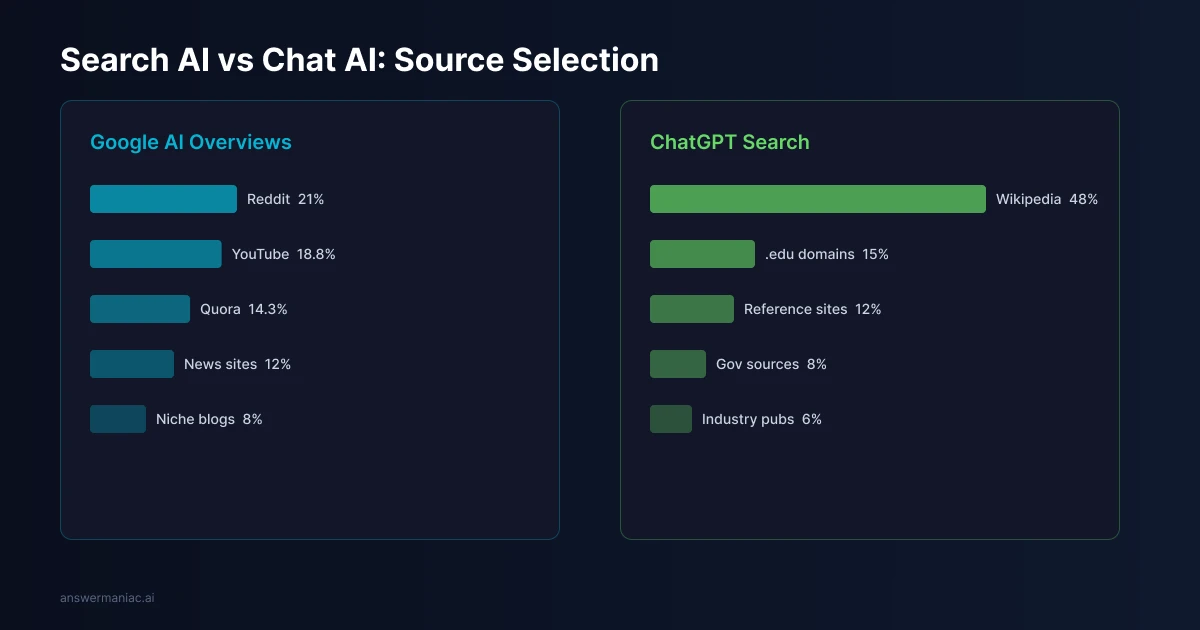
Our citation analysis shows clear differences between Google AI Overviews and ChatGPT Search. Both use large language models, but their source logic differs.
Google AI Overviews:
- Pull mostly from first-page Google results
- Favor strong Domain Authority
- Prefer established first-party websites
- Freshness matters, but authority comes first
ChatGPT Search:
- Uses broader web crawling
- Values clarity and structure
- Prioritizes freshness
- Extracts direct answers from well-formatted pages
This reflects different goals. Google AI builds on traditional ranking signals. ChatGPT focuses more on readable, structured answers. Understanding these differences is core to AI visibility tracking across platforms.
Here's a comparison from our data:
| Selection Factor | Google AI Overviews | ChatGPT Search |
|---|---|---|
| Primary Influence | Existing page rank and domain authority | Content clarity and freshness |
| Source Pool | Top 10 Google results | Broad web crawl |
| Freshness Priority | Secondary to authority | High priority |
| Structure Preference | Standard SEO-friendly content | Extremely clear, parseable lists and definitions |
The practical takeaway: you need a dual-path strategy. For Google, continue building traditional SEO strength. For ChatGPT, give the answer first, explain second, and remove filler. Both paths feed into the ANSWER Framework.
Content Intro Optimization for AI: The 100-Word Rule
AI platforms scan fast. If your answer is unclear in the first 100 words, your citation chance drops. Our data found a 40% higher citation rate for pages that:
- Start with a direct definition or statistic
- Include clear attribution statements
- Use structured formatting early
- Reference recent, named sources
We've written a full breakdown of this in The First 30% Rule, but the short version: structure your intro like this:
- Clear definition of the topic
- One data-backed claim
- A short list or subheading
- Recent source reference
By structuring content this way, you help large language models extract concise, citable answers from your pages. That's the difference between showing up in AI responses and being invisible.
AI Search Visibility in Fintech: A Case Study in Authority
Fintech content faces higher scrutiny from AI systems. YMYL categories (Your Money, Your Life) trigger stricter evaluation. AI platforms prefer trust signals, especially in regulated sectors.
Cited fintech pages in our analysis consistently included:
- Clear references to regulations (SEC, PCI DSS, GDPR)
- Precise dates and specific citation references
- Structured tool comparisons with named products
- Data from identified studies, not vague claims
Instead of "AI is transforming fintech," the pages that got cited said things like "Stripe processed $1 trillion in payments in 2024, a 25% increase from 2023." Specificity wins. Vague claims lose.
We cover this category in depth in AI Visibility for FinTech. If you're in financial services, RegTech, or payments, that's the guide to read.
What is Generative Engine Optimization: The Systematic Approach
Generative Engine Optimization improves visibility in AI platforms. It builds on traditional SEO but focuses on citation contexts and extraction quality.
"With 900 million weekly active users and 81% of the generative-AI market, ChatGPT now cites roughly four unique sources per search-triggered response, but fewer than 1% of those citations are consistent across repeated queries." - Whitehat SEO Blog
Five core stages:
- Prompt research using real user queries, not just keyword volume
- Build content with expert quotes and original data
- Implement schema markup (FAQ, Article, HowTo) to help AI parse your pages
- Use short paragraphs and clear headings that match conversational search intent
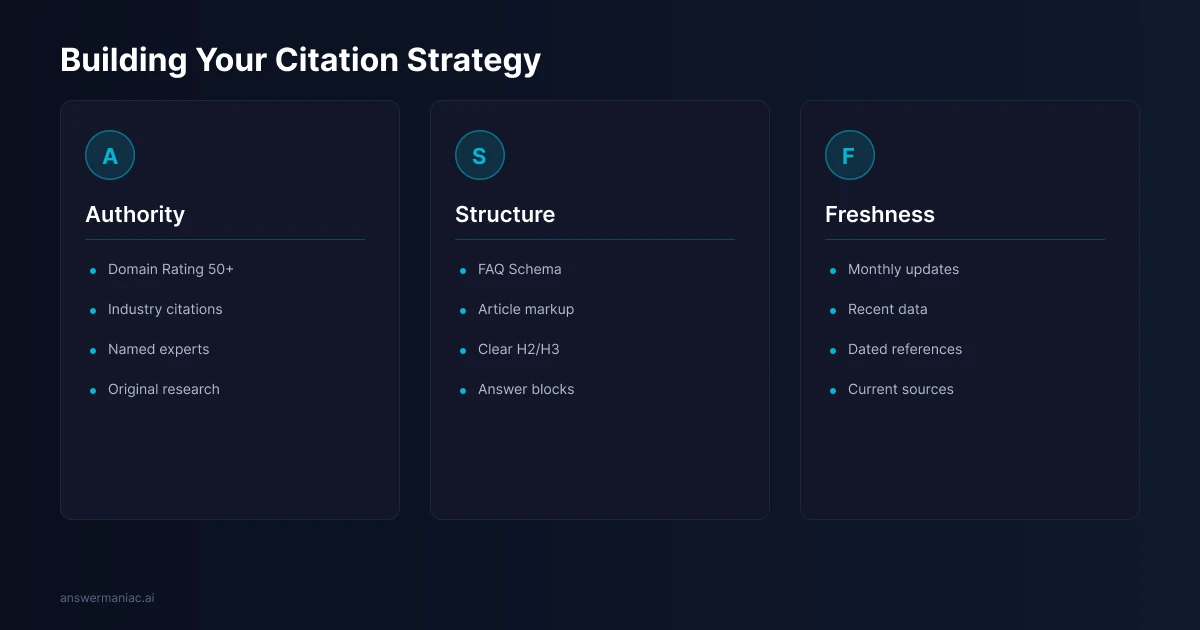
- Monitor AI citation patterns monthly to track what's working
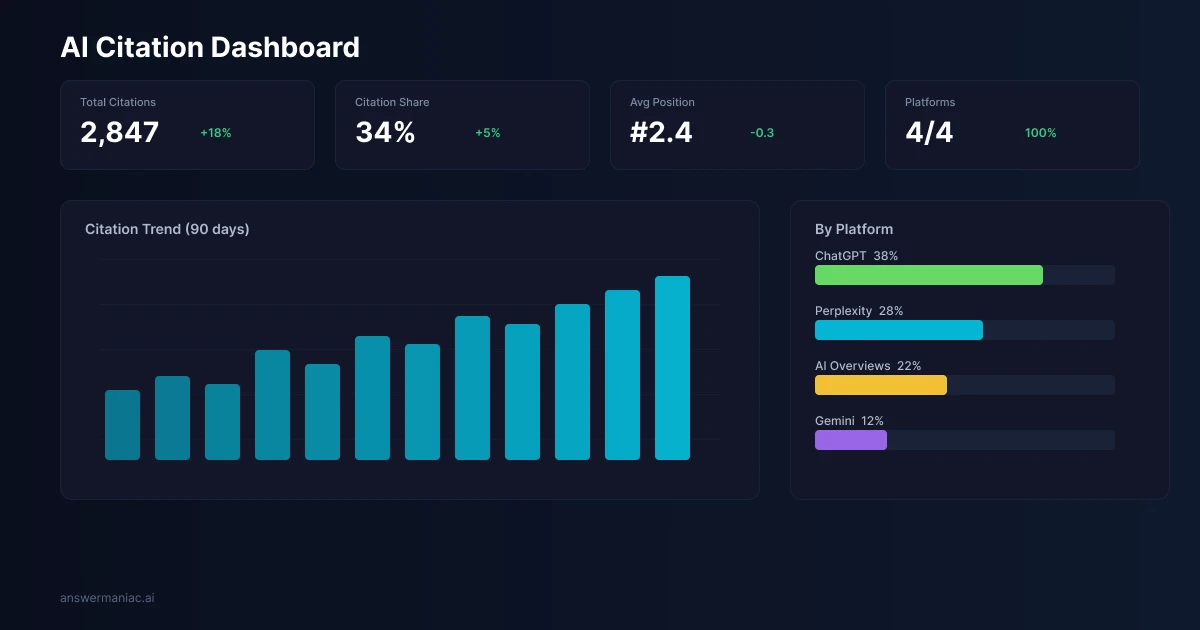
There is no fixed AI rank. Track citation frequency across Google AI Overviews, ChatGPT, Perplexity, and Claude. GEO turns guesswork into a repeatable process.
Building Your Citation Strategy
AI visibility requires planning. Here's where to start:
"12% of industry-funded papers have a high citation impact as measured by h5-index, compared to 4% of non-industry-funded and 2% of non-funded papers." - arXiv Blog
Start with a gap analysis:
- Test five core queries your buyers would ask
- Check which competitors get cited
- Compare citation frequency and source patterns using citation velocity as your benchmark
Next, improve high-performing pages:
- Rewrite introductions to answer the query directly
- Add structured markup (FAQ and Article schema at minimum)
- Strengthen authority signals with named sources and data
Focus on depth. One complete guide often earns more AI citations than many short posts. AI models reward clarity, structure, and verifiable claims. Consistent updates and data-backed writing drive long-term visibility.
FAQ
How does AI improve citation analysis accuracy?
AI improves citation analysis by using machine learning and neural network models to detect citation patterns across large datasets. Natural language processing helps systems understand citation contexts, not just raw counts. This allows better identification of supporting citations, contrasting citations, and citation quality. The result is more precise insights into which content types and formats earn AI recommendations.
What data sources are best for an AI citation analysis study?
Strong studies rely on structured queries run across multiple AI platforms simultaneously. Running the same prompt through ChatGPT, Perplexity, Gemini, and Google AI Overviews reveals which domains and page types each platform favors. Cross-platform comparison reduces bias. Using consistent prompts over time produces a more reliable analysis of citation patterns and trends.
How can brands measure citation patterns beyond simple mention counts?
Raw mention count is limited. A deeper citation analysis examines citation context, sentiment, and positioning within AI responses. Tools powered by natural language processing can classify whether a citation is a primary recommendation, a supporting mention, or a contrasting reference. Tracking share of voice across AI platforms reveals influence quality, not just volume.
What role does AI regulation play in citation trends?
AI regulation shapes citation patterns, particularly in YMYL categories like finance, healthcare, and legal services. When new regulatory frameworks emerge, AI platforms increase their preference for sources that reference specific compliance standards. Pages citing GDPR, SOC 2, or PCI DSS requirements tend to earn more citations in regulated verticals than generic explainer content.
The Path Forward for AI Citations
AI citation is not random. It follows clear signals. Platforms reward structured content, strong authority, and direct answers. When you align your introductions, improve formatting, and apply a defined GEO process, your visibility increases systematically.
The same framework powers the tools behind AnswerManiac. We help teams discover real search questions and build structured, citation-ready content at scale.
References:
Get AEO Insights Weekly
Join 500+ B2B marketers getting AI visibility tactics every Tuesday.
Ready to Get Your Brand Cited by AI?
See how your competitors show up in ChatGPT, Perplexity, and Gemini — and what it would take to get recommended.