How to Build an AI-First Content Strategy From Scratch
Build an AI-first content strategy that organizes content clearly, boosts visibility, and works with both search engines and AI tools.
Quick Answer
An AI-first content strategy is built by organizing every page around direct, extractable answers instead of keywords. Start by auditing existing content and identifying which pages actually answer questions versus which ones just target search terms. Restructure each page so the main answer appears in the first one to two sentences of every section, followed by supporting evidence. Use hierarchical headings that match real queries, add schema markup, and break content into standalone blocks that AI can cite independently. The unit of optimization shifts from the page to the individual answer. Each well-structured answer becomes a citation asset that AI systems can reference, and when those answers align with your knowledge graph signals, your brand becomes the consistent source AI trusts across multiple queries.
An AI-first content strategy works by making content easy to read and reuse. The focus is on short, clear answers and simple structure. AI tools like HubSpot can help speed up drafting, but humans still need to review and shape the content. Pages that answer questions directly are more likely to be cited or referenced in AI results.
What Matters Most in an AI-First Content Strategy
The key points are simple:
- Give clear answers that anyone, or any system, can understand
- Use AI tools to draft, but rely on human editing for accuracy and clarity
- Track which content gets cited or used, not just page visits
How Is AI-First Content Strategy Different From Traditional SEO?
An AI-first content strategy focuses on writing content that machines can read and use easily. Traditional SEO focuses on getting pages to rank in search results.
SEO grew around search engines like Google, using keywords, backlinks, and page position. Those factors still matter, but they don't explain how AI now selects and reuses content.
AI-first content is built in smaller, standalone sections. Each section gives a clear answer so readers, or AI, can understand it quickly without reading the entire page.
As noted by Texta.ai:
"AI-First Content Strategy is the practice of creating content primarily with AI models as the audience in mind. Instead of writing only for human readers and hoping AI systems interpret it well, this approach shapes content so it is easier for AI-generated answers to understand, extract, summarize, and cite."
| Aspect | Traditional SEO | AI-First Strategy |
|---|---|---|
| Focus | Keywords | Clear answers |
| Output | Rankings | Citations |
| Format | Long text | Short sections |
| Authority | Backlinks | Evidence + data |
The workflow changes as well. Structure is planned first, and each section has a single purpose. This keeps content focused, clear, and easy for both people and AI to use.
Why Does AI-First Content Improve Visibility and Performance?
AI-first content gets picked up more often because it is easier to use.
AI systems, including those from OpenAI, look for sections they can pull into answers. If the wording is clear, it has a better chance of being used.
Publishing speed also improves. More content means more chances to cover useful topics.
What helps:
- Simple structure that is easy to follow
- Straight answers without extra wording
- Enough detail to show the topic is covered well
This applies across formats. Blog posts, FAQs, and short pages all benefit from clear structure. As more people rely on AI tools, content needs to be easy to lift, not just easy to read.
What Are the Core Principles of an AI-First Content Strategy?
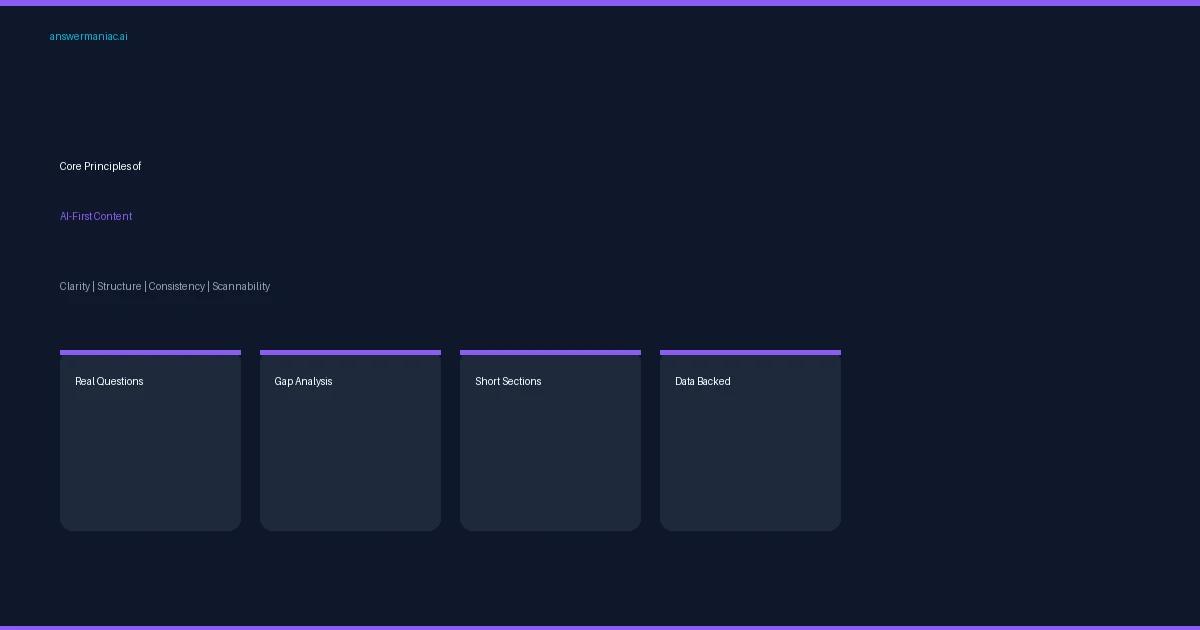
AI-first content starts with real questions and answers them in a clear way.
The process begins with what people search for. Then, the content fills gaps with direct answers. Each section stays focused on one idea.
Core principles:
- Use real questions to guide content
- Cover gaps across key topics
- Keep headings clear and sections short
- Support claims with data or examples
Each part has a purpose. Clear sections help machines read the page. Proof makes the content more reliable.
This approach also keeps content steady across channels. The same structure can be reused without changing the message. Teams weighing an AI SEO agency versus building it in-house often rely on this consistency to keep output aligned as content scales.
What Are the Key Steps to Build an AI-First Content Strategy?
You build an AI-first content strategy by tightening how content is planned and written.
Start with a simple review. Some pages still do their job. Others miss the point or bury the answer. Fix those first.
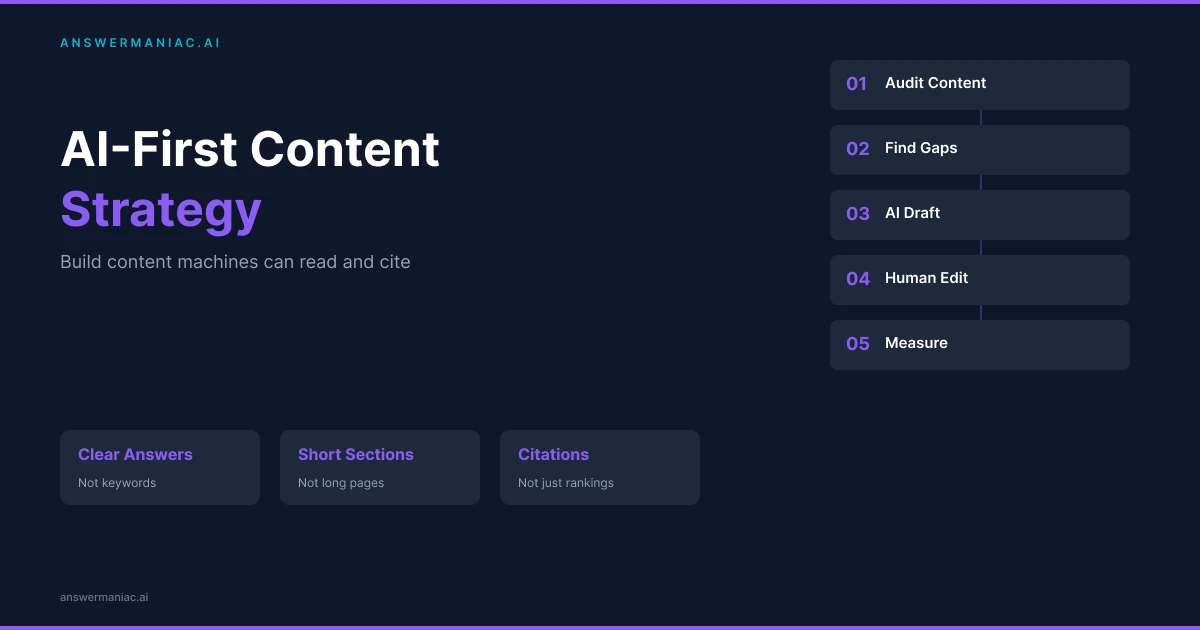
Steps:
- Check existing pages. Keep what answers clearly, remove or rewrite the rest
- Group topics and spot gaps
- Use AI to draft, then edit line by line
- Break content into short sections, one idea per section
- Revisit pages that get little traction and adjust
A brief helps. One main question, one clear goal. No extras.
This keeps the process steady and easier to manage as content grows. It also makes it easier to track AI search ROI, since a clear structure helps measure what content actually performs and gets reused.
How Do You Structure Content for AI Comprehension?
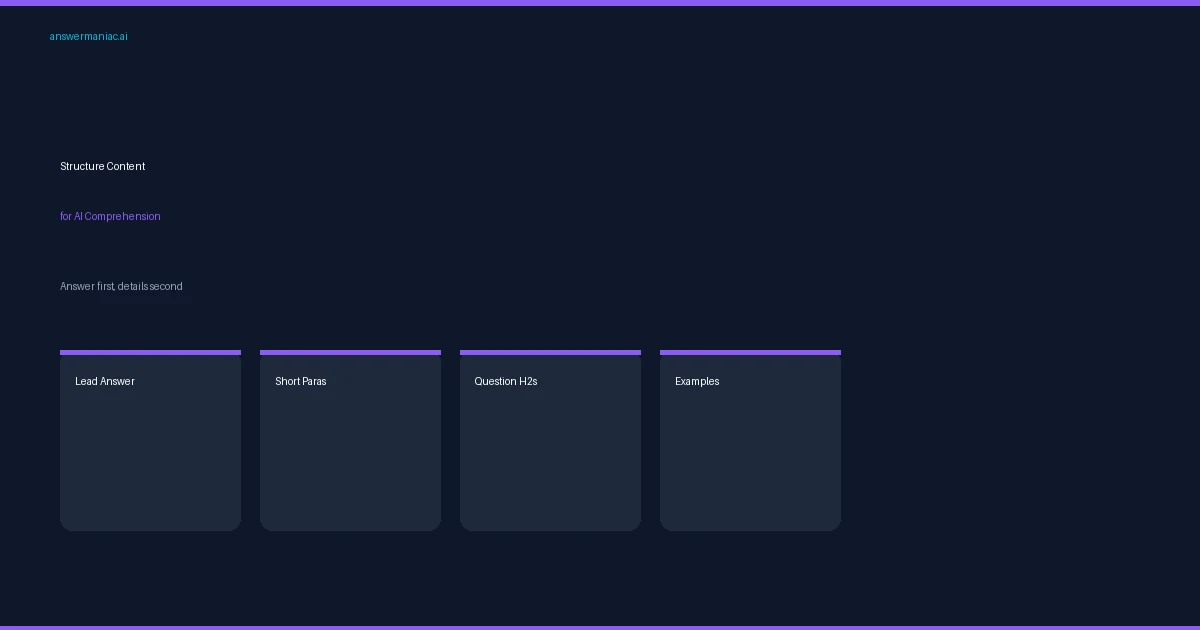
Content is easiest to use when the main answer comes first. Both readers and AI can quickly understand it.
Ways to structure content clearly:
- Lead with the answer at the start of each section
- Keep paragraphs short and focused
- Use headings that match real questions
- Add simple examples or data to support the answer
As highlighted by Wellows:
"An effective AI search content strategy helps systems understand your topic, identify context, and confidently use your content in AI-generated answers. This goes beyond classic SEO and requires AI SEO insights that focus on meaning, structure, and intent instead of keywords alone."
Avoid long introductions or build-ups. Answer first, then add details. A clear, organized layout helps AI pick up the content while keeping it readable for humans.
What Are Real Examples of AI-First Content in Action?
Some teams already use this in everyday work.
HubSpot uses AI to speed up writing for blogs and emails. Coca-Cola uses it to test different versions of campaign content. The American Marketing Association uses AI to sort and send content based on user interest.
Examples:
- HubSpot speeds up content output with AI support
- Coca-Cola tests content variations in campaigns
- The American Marketing Association organizes and delivers content with AI
The pattern is simple. AI helps with speed, but people still decide what goes out.
What Are the Biggest Challenges and Failures in AI-First Strategies?
AI-first strategies fail when too much gets published without enough editing.
The pattern is common. Content starts to repeat itself, reads flat, and answers very little. Some teams also see traffic dip after pushing out large batches of AI-written pages.
Common problems:
- Pages feel similar and add little new
- Traffic drops after scaling too fast
- Teams get stuck trying to keep output high
This usually traces back to one thing: a weak review. Drafts go live before they are shaped into something useful.
AI can help write. It does not decide what should stay or go. That call still sits with the team. This becomes more sensitive in areas like AI search optimization in healthcare, where accuracy and clarity directly affect how content is trusted and reused.
How Reddit, Quora, X, and YouTube Reveal How AI Is Used
Checking Reddit, Quora, X, and YouTube shows how teams really use AI. One thing is obvious: when AI does almost all the work, the content usually drops in quality.
Platform examples:
- Reddit: posts can be messy, workflows feel uneven
- Quora: answers stay structured, readable, and useful
- X: Short, punchy posts grab more attention than long threads
- YouTube: creators struggle to keep ideas fresh when they rely too much on AI
A lot of AI-focused videos keep reusing the same examples. That's a sign that overreliance on AI makes content less original. Speed increases, but originality suffers.
The takeaway: AI can make writing faster, but humans still need to guide it. Without that direction, content can feel flat, repetitive, or shallow.
Why Are Niche Forums Silent on AI-First Content Strategy?

In smaller forums, discussions about AI-first content are quiet. Most teams are still experimenting. Few have a process worth sharing yet.
Reasons include:
- AI-first content is new for many industries
- There's no single approach that works everywhere
- Building reliable workflows takes time and trial
That quiet period can actually be helpful. Teams that experiment early often figure out what works before competitors notice. They learn which parts of AI help, which parts fail, and how humans need to steer the process.
Even if the conversation is quiet, one thing is clear: AI can speed things up, but it cannot replace judgment or creativity. The most effective teams use AI as a tool, not a replacement.
FAQ
How does AI content strategy improve content creation and content performance?
An AI content strategy improves content creation by using data instead of guesswork. It studies search behaviour, identifies content gaps, and tracks content performance clearly. It also supports content optimization and better content formats. With AI tools, teams can adjust content quickly, improve content visibility, and match real content consumption habits across different platforms and audiences.
What role do content gaps play in AI-driven content strategy planning?
Content gaps show topics that your audience is searching for but cannot find. In an AI-driven content strategy, these gaps guide content outlines and content briefs. AI search and data analysis help identify these gaps faster and more accurately. Filling these gaps improves search traffic, strengthens SEO optimization, and makes website content more useful and relevant for users.
How can content workflows and content calendars support AI content marketing?
Content workflows organise tasks, while a content calendar schedules when content is published. In AI content marketing, both systems support content drafting, content publication, and content distribution. They also improve social media planning and content promotion. This structure ensures consistent output, helps teams track progress, and makes the overall content marketing process more efficient and manageable.
Why is structured data important for AI search optimization and visibility?
Structured data helps search engines understand the meaning of your website content more clearly. It supports AI search optimization by providing organised information through schema markup. This improves content visibility and strengthens search engine optimization. It also aligns content with search engine trends and user intent, which increases the chances of appearing in rich and relevant search results.
How do content pillars and content variations improve content distribution?
Content pillars define the main topics in a content strategy and guide content creation. From these pillars, teams create content variations such as visual content, social media captions, and different content formats. This approach improves content distribution across platforms. It also supports content promotion, keeps messaging consistent, and helps reach different audience segments effectively.
Where Your AI-First Content Strategy Goes Next
An AI-first content strategy works best when it stays clear and useful. Focus on real questions and give simple answers fast. Skip the extra fluff. Over time, the pages that stay direct are the ones people keep coming back to. Keep checking what gets used, not just what gets clicks.
Tighten what works and fix what slows down. Add your own input where it counts. If you want to see this approach in action, take a look at AnswerManiac and how it turns real questions into clear, helpful answers.
References:
Related Articles:
Get AEO Insights Weekly
Join 500+ B2B marketers getting AI visibility tactics every Tuesday.
Ready to Get Your Brand Cited by AI?
See how your competitors show up in ChatGPT, Perplexity, and Gemini — and what it would take to get recommended.