How to Track AI Citations: Complete Guide to Monitoring Your Brand 2026
Track AI citations with clear methods, metrics, and workflows for monitoring brand visibility in AI-generated answers across ChatGPT, Perplexity, and Google AI Overviews.
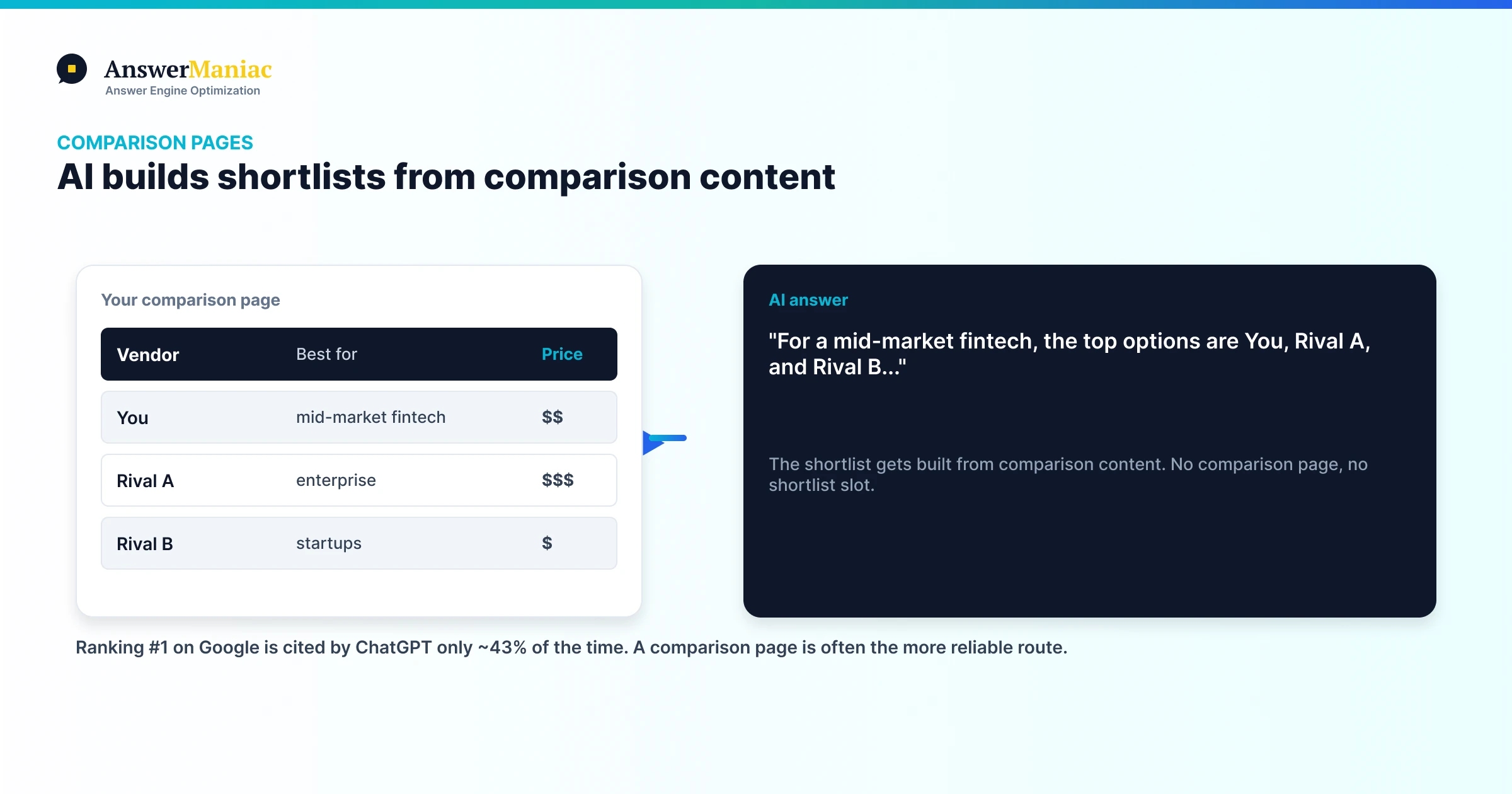
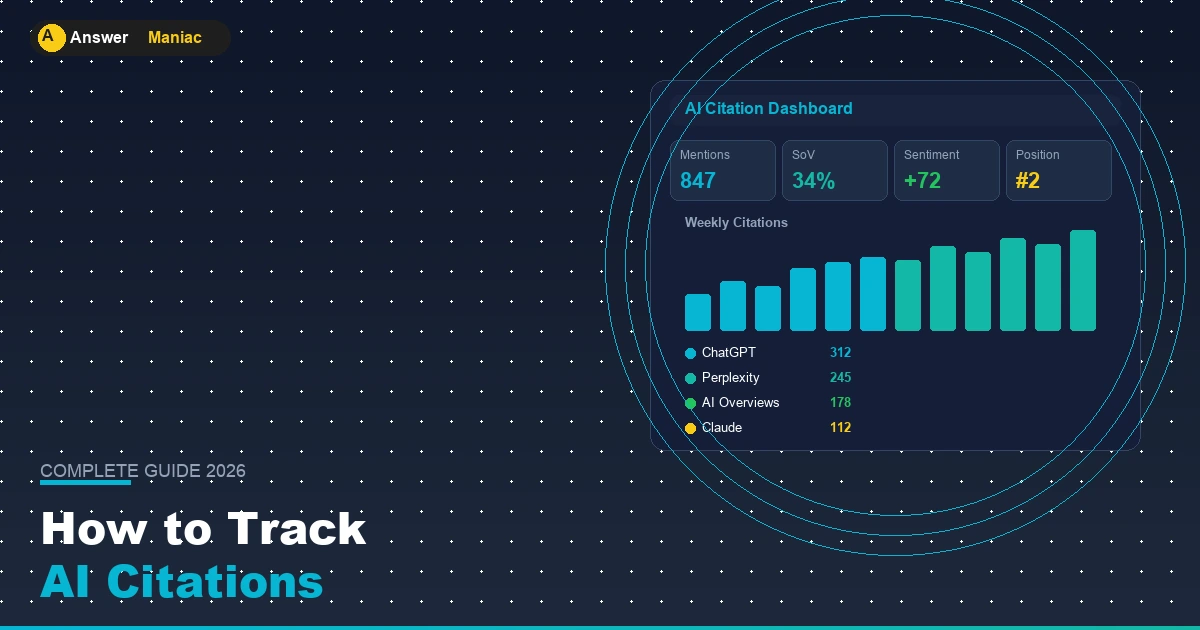
Direct Answer: Track AI citations by running weekly prompt tests across ChatGPT, Perplexity, and Google AI Overviews, logging mention frequency, share of voice, sentiment, and response position. Combine manual checks with proxy metrics like branded search lift and AI referral traffic for a complete picture. Scale with citation tracking tools when your prompt list exceeds 50 queries.
So, your brand's name pops up in an AI chat answer — how do you even know? That's AI citation tracking. It's about measuring when and how your brand appears in those generated responses, because a lot of online research now happens right there, without a single click to a traditional website.
You track this to understand your visibility, your influence, and any potential risks as AI-driven search keeps growing. This guide walks you through clear methods, practical metrics, and workflows you can actually use starting today. Stick around to build a system you can manage week to week.
Key Takeaways
- We track AI citations to understand brand visibility where users now research without clicking traditional search results.
- Core metrics include mention frequency, share of voice, sentiment, and response position across AI answers.
- A combined approach using manual checks, proxy metrics, and structured monitoring gives reliable visibility over time.
Why Should Brands Track AI Citations?
You need to know if your brand shows up in AI answers. Why? Because people are asking AI tools for advice, not just clicking on search results anymore. If you're not in that conversation, you're invisible.
Here's the breakdown in plain terms.
The core reason to track this is simple:
- Visibility without a click. AI summarizes info right in the chat. A mention is your new impression.
- Silent risk. If you're not mentioned, you lose out. There's no SEO ranking drop to alert you — it just happens.
- Competitor intelligence. See who the AI does talk about instead of you.
- Narrative control. AI can shape your brand story using old or incomplete data. Tracking lets you correct it.
How it's different from traditional SEO: forget links for a second. AI cares about mentions and sources. Authority isn't just backlinks; it's about clear, fresh, well-structured information. The game changed from getting a top search result to being a trusted source inside an answer. For a deeper look at how these metrics compare, see our AI visibility vs SEO breakdown.
What Metrics Define AI Citation Visibility?
Research from Adobe suggests that these metrics are part of a broader shift:
"Generative engine optimization (GEO) centers on understanding how LLMs interpret brand content and making strategic improvements to increase how often and accurately your brand appears in AI-generated responses... Tracking tools record when your brand and competitors appear as citations (linked sources) or mentions (text references), enabling share of voice calculations across all competitors." - Adobe Business Blog[1]
Here's what you need to count and compare over time.
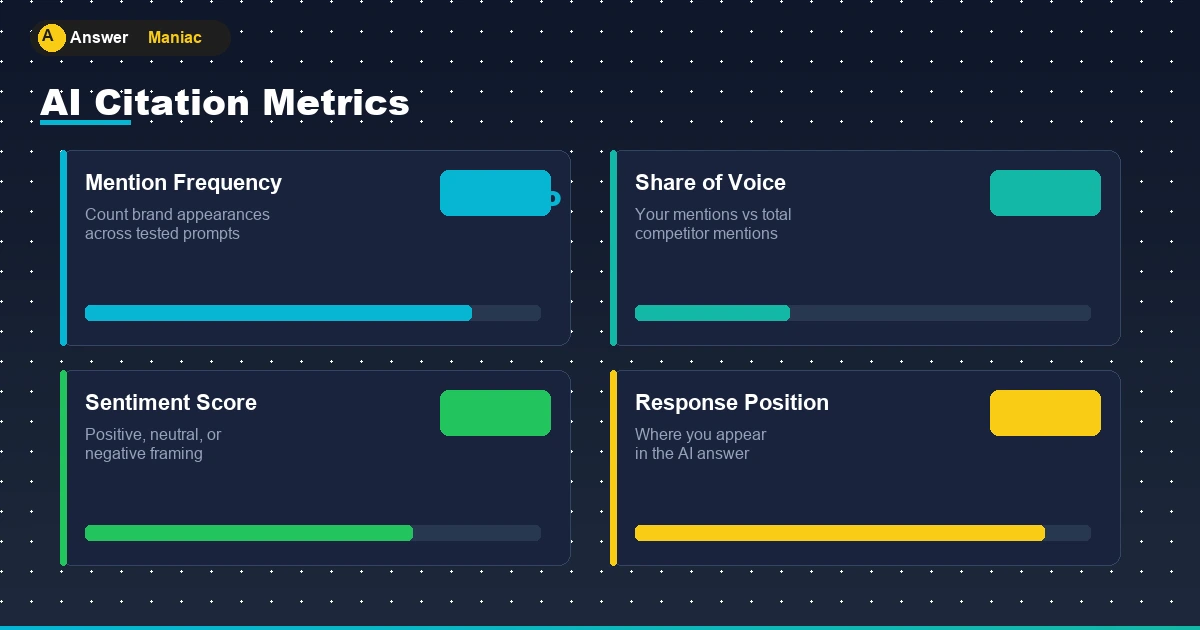
The four key metrics
- Mention frequency: How many times your brand name pops up across a set of tested prompts.
- Share of voice: Your brand's mentions as a percentage of all brand mentions in the same AI answers. (Your mentions / Total mentions) x 100.
- Sentiment: The tone — positive, neutral, or negative — of how the AI describes you.
- Response position: Where your mention lands in the answer. Early is better; users focus on the first things they read.
This calculation allows comparison across weeks and topics. It works best when prompt sets remain stable. Over time, trends matter more than single data points. For the metric that tracks how fast your citations grow, see our guide on citation velocity.
How Can We Manually Track AI Citations Across Platforms?
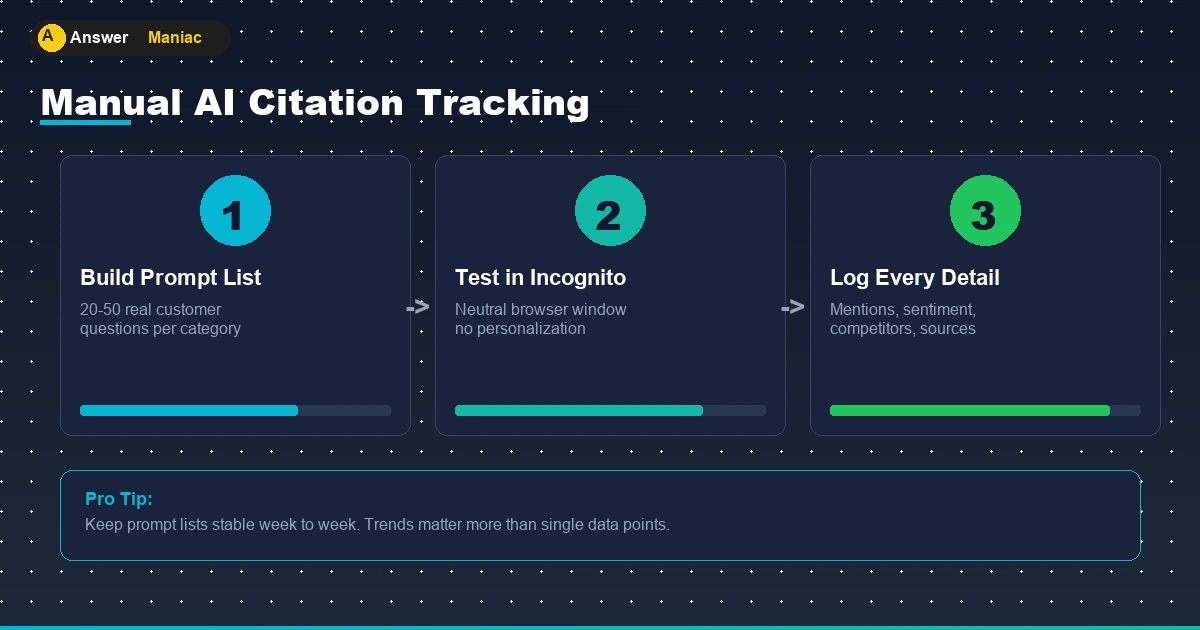
Manual tracking is just that — you do it yourself. It's the hands-on way to see how your brand actually appears in AI chats before scaling into LLM citation monitoring that captures mentions, sentiment, and competitive presence across multiple models.
You test a set of questions and write down what you find. Using a structured tracker can streamline this process and help you see patterns emerge more clearly over a few weeks.
Your weekly manual tracking plan
- Create a prompt list. Start with 20-50 real questions customers would ask. Mix category searches ("best budget laptops"), comparisons, and problem-solving queries.
- Test in a neutral window. Always use an incognito or private browser. This reduces personalized results and gives you a cleaner, more general view.
- Log the details consistently. For every answer, note: if you were mentioned, the sentiment (positive/neutral/negative), which competitors appeared, and any sources the AI cited (like a news article or blog).
This method is transparent and teaches you how the systems work. But it's slow, and answers can shift daily. It's a solid start, not a forever solution.
What Proxy Metrics Indicate AI Citation Impact?
You can't always see the direct traffic from an AI mention, but you can look for clues. Using AI visibility tracking helps teams monitor trends across multiple AI platforms, connecting AI mentions with downstream signals like branded search lift, referral patterns, and conversion behavior.
Key proxy metrics to watch
- Traffic from AI referrers. Check your analytics for visits from domains associated with AI tools.
- Changes in branded search. Are more people suddenly searching for your exact brand name? A spike can follow increased AI visibility.
- Shifts in conversion rates. After a period of strong AI mentions, do you see more conversions from users who already know your brand?
These metrics are especially useful early on. If your direct citation volume is low, they help show if your efforts are making an impact elsewhere. Over time, they connect your AI visibility to real business outcomes. This ties directly into how answer engine optimization measures success through citations and assisted outcomes rather than clicks alone.
Which Tools Track AI Citations At Scale?
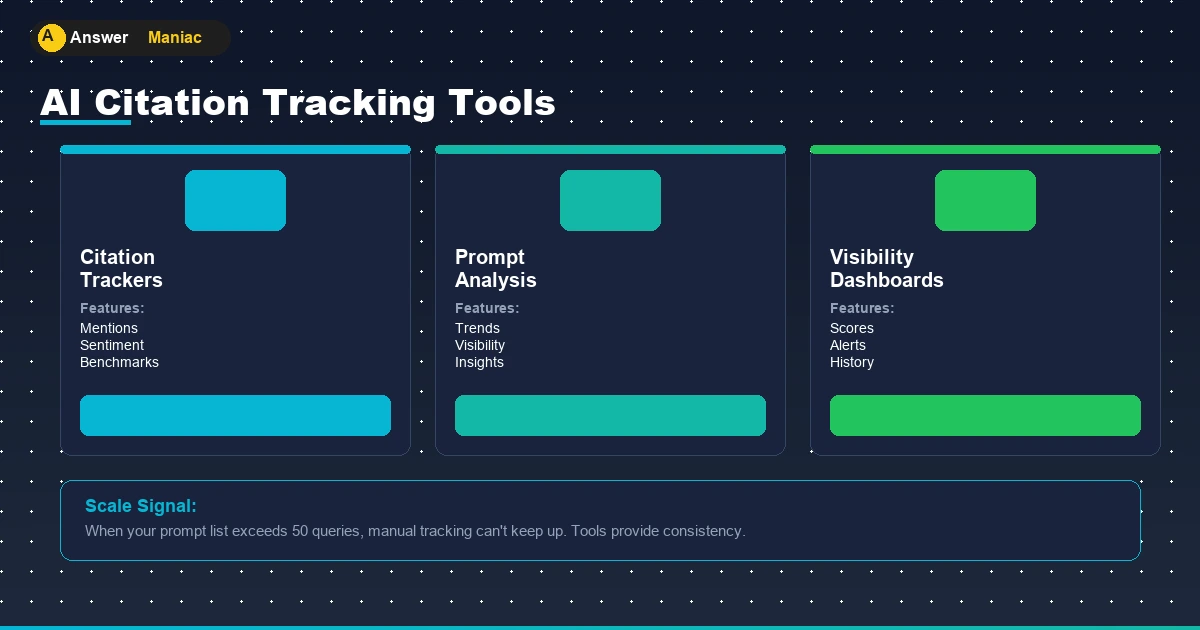
When your prompt list grows beyond fifty questions, it's time to consider a tool. Manual checks can't keep up — that's where citation tracking tools handle repetitive prompt testing, citation logging, and visibility comparisons across multiple AI systems at once, giving teams consistent metrics across models.
The right tool gives you consistent data and clear dashboards, turning a weekly chore into a quick review.
A look at common tracking tools
- Citation trackers. These are the workhorses. They automatically run your prompts, log every brand mention, gauge sentiment, and show how you stack up against competitors. Use them for your core weekly monitoring.
- Prompt analysis tools. They go deeper into the questions themselves. You'll see which prompts are most common and how visibility shifts for different topics. This is great for refining your research strategy.
- Visibility dashboards. These tools simplify everything into a single score or grade. They're built for alerts and high-level reporting, making it easy to share progress or spot sudden changes.
The table below summarizes common tool capabilities at a high level.
| Tool Type | Core Features | Coverage | Best Use Case |
|---|---|---|---|
| Citation trackers | Mentions, sentiment, benchmarks | Major AI systems | Ongoing monitoring |
| Prompt analysis tools | Prompt trends, visibility insights | Multiple models | Research planning |
| Visibility dashboards | Scores, alerts, history | Broad coverage | Executive reporting |
How Do We Optimize And Operationalize AI Citation Monitoring?
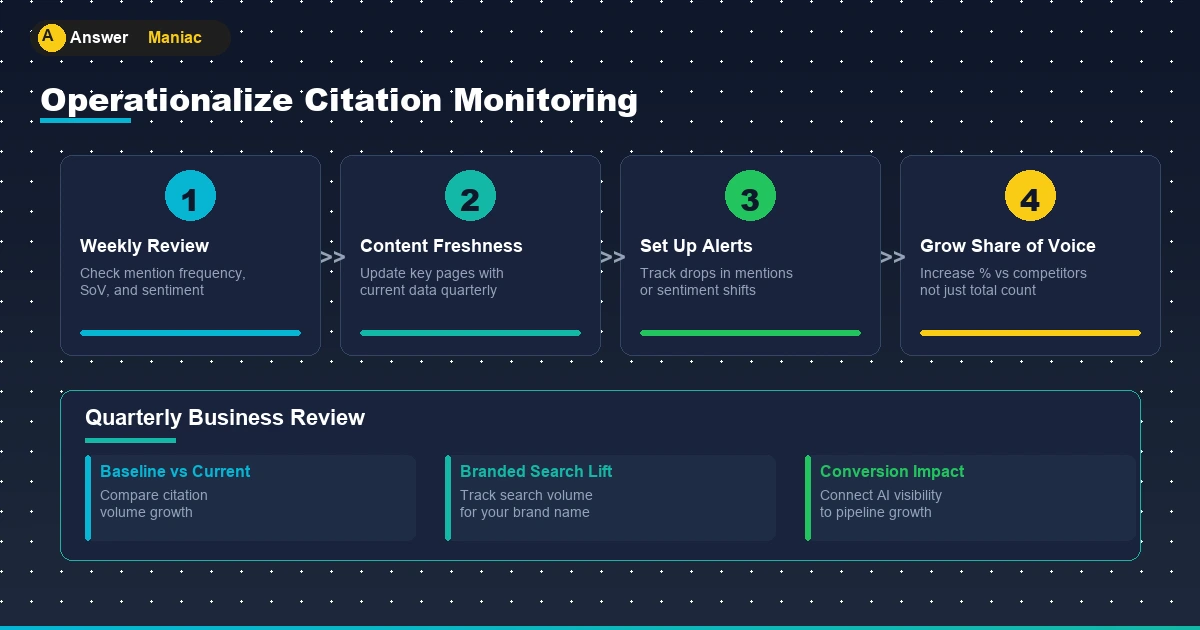
To make AI citation monitoring work, you need a simple, repeatable routine. However, optimization isn't just about frequency; it's about transparency and authority. Providing clear signals helps AI models cite you more reliably.
As noted in Frontiers:
"In 2026, an internal AI citation policy isn't just bureaucracy; it's your brand's ethical compass in the digital wild. Standardizing your AI citation format provides enough information for transparency, while implementing clear disclosure mechanisms, like footnotes or dedicated 'About This Article' sections, ensures that AI tools recognize your content as trustworthy and relevant." - Frontiers in Communication[2]
Key steps to operationalize tracking
- Set a weekly review. Block time to check your core metrics — mention frequency, share of voice, and sentiment. Consistency reveals trends.
- Prioritize content freshness. AI systems often favor newer information. Regularly update your key product and service pages with current details.
- Create alerts for major changes. Set up notifications for significant drops in mentions or negative sentiment shifts so you can respond quickly.
- Focus on share of voice. Over time, aim to grow your percentage of mentions compared to competitors, not just your total count.
To connect this work to real business value, do a quarterly review. Look back at your baseline from before you started monitoring and compare it to conversions and branded search trends. This ties your efforts to actual outcomes, keeping the process grounded.
The content you optimize for AI tracking should follow clear AEO optimization principles — direct answers, structured data, and entity clarity — so AI systems have clean material to cite. And if you're optimizing across multiple AI platforms, our generative engine optimization guide covers platform-specific tactics for Google AI Overviews, Perplexity, and ChatGPT.
FAQ
What is AI citation tracking and why does it matter for brand visibility?
AI citation tracking identifies where and how your brand appears in AI-generated answers. It measures mention frequency, sentiment, and citation sources across platforms like ChatGPT, Perplexity, and Google AI Overviews. This matters because users increasingly get answers without visiting websites. If you're not tracking citations, you won't know whether you're visible, being misrepresented, or completely absent from AI-driven conversations about your category.
How can I accurately measure AI search visibility across regions and competitors?
AI search visibility varies by location, prompt wording, and model behavior. Use incognito windows, VPN geo-testing, and consistent weekly query testing to collect reliable data. Track response position, how your mentions change over time, and which competitors appear instead of you. Keeping your prompt list stable across weeks is key — it lets you spot real trends instead of noise from prompt variation.
How does automated AI monitoring improve accuracy compared to manual tracking?
Automated monitoring runs structured prompts across multiple AI models on a schedule. It captures mention frequency, sentiment, and competitive positioning without manual effort. The data feeds dashboards showing visibility scores and citation trends over time. This eliminates the inconsistency of manual testing — same prompts, same timing, same format — and scales to hundreds of queries that would take hours to check by hand.
Why is sentiment analysis important when monitoring AI brand citations?
Sentiment analysis evaluates how AI systems describe your brand, not just whether you're mentioned. A mention framed negatively ("Brand X has had quality issues") is worse than no mention at all. Tracking whether AI portrays you positively, neutrally, or negatively helps you identify content gaps, outdated information, or competitor narratives that need addressing. It's the difference between being visible and being visible in the right way.
How do AI citations influence traffic, conversions, and long-term ROI?
AI citations drive awareness through high-intent queries where users are actively looking for solutions. You can track downstream impact through AI referral traffic, branded search volume changes, and conversion rates from users who arrive already knowing your brand. The connection isn't always a direct click — it's often a user who sees your brand in an AI answer, then searches for you separately. That's why branded search lift is one of the strongest proxy signals for citation ROI.
How to Track AI Citations and Monitor Your Brand Effectively
Tracking AI citations needs a weekly habit: count mentions, check sentiment, and measure your share of voice. This routine shows if you're visible where people now ask questions, reducing your risk of being invisible.
It turns a vague worry into clear control. For teams ready to become the answer AI recommends, The ANSWER Framework provides the methodology: Audit, Navigate, Structure, Write, Earn, Refine. Or get a free AI Visibility Audit from AnswerManiac to see where you stand today.
References
Get AEO Insights Weekly
Join 500+ B2B marketers getting AI visibility tactics every Tuesday.
Ready to Get Your Brand Cited by AI?
See how your competitors show up in ChatGPT, Perplexity, and Gemini — and what it would take to get recommended.