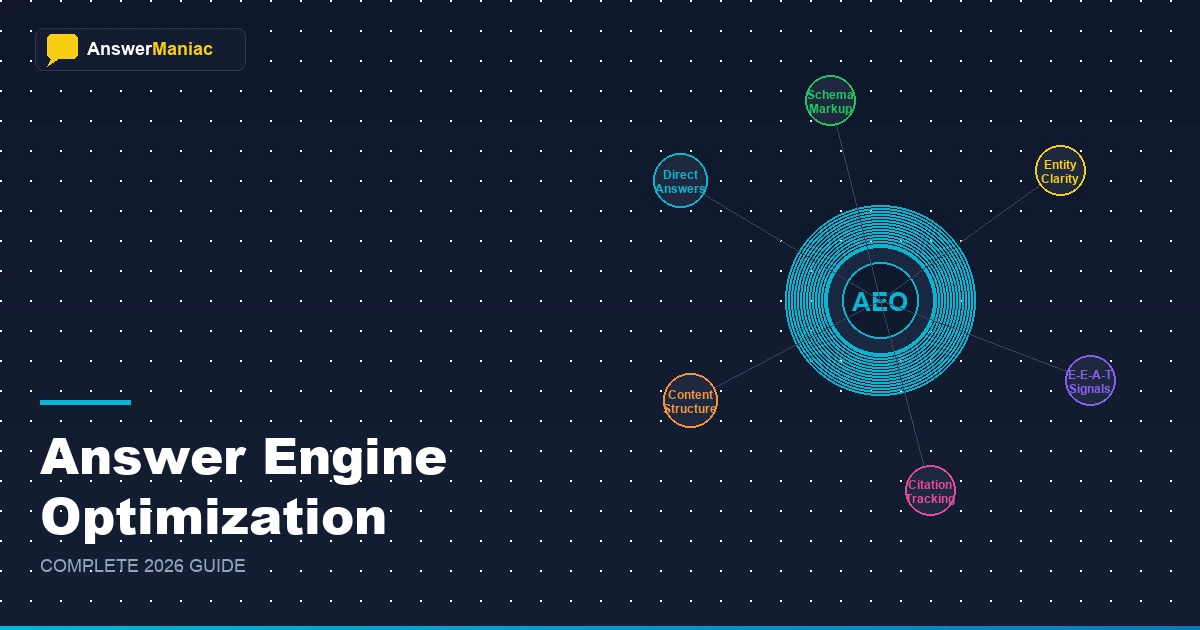
Answer Engine Optimization: Complete 2026 Guide to Ranking in AI Search
Answer engine optimization is the practice of structuring content so AI systems find, trust, and cite it as direct answers. This 2026 guide covers AEO strategy, GEO tactics, LLM ranking, and measurement.
Direct Answer: Answer engine optimization is the practice of helping AI systems find, trust, and reuse your content as direct answers. Key principles include: leading with direct answers in the first 40-60 words, structuring content with question-based headings and schema markup, maintaining entity consistency across pages, and measuring success through AI citations and on-screen visibility rather than clicks alone.
Answer engine optimization is the practice of helping AI systems find, trust, and reuse your content as direct answers. Instead of optimizing only for clicks and blue-link rankings, you optimize for visibility inside AI summaries, answer panels, and conversational search tools.
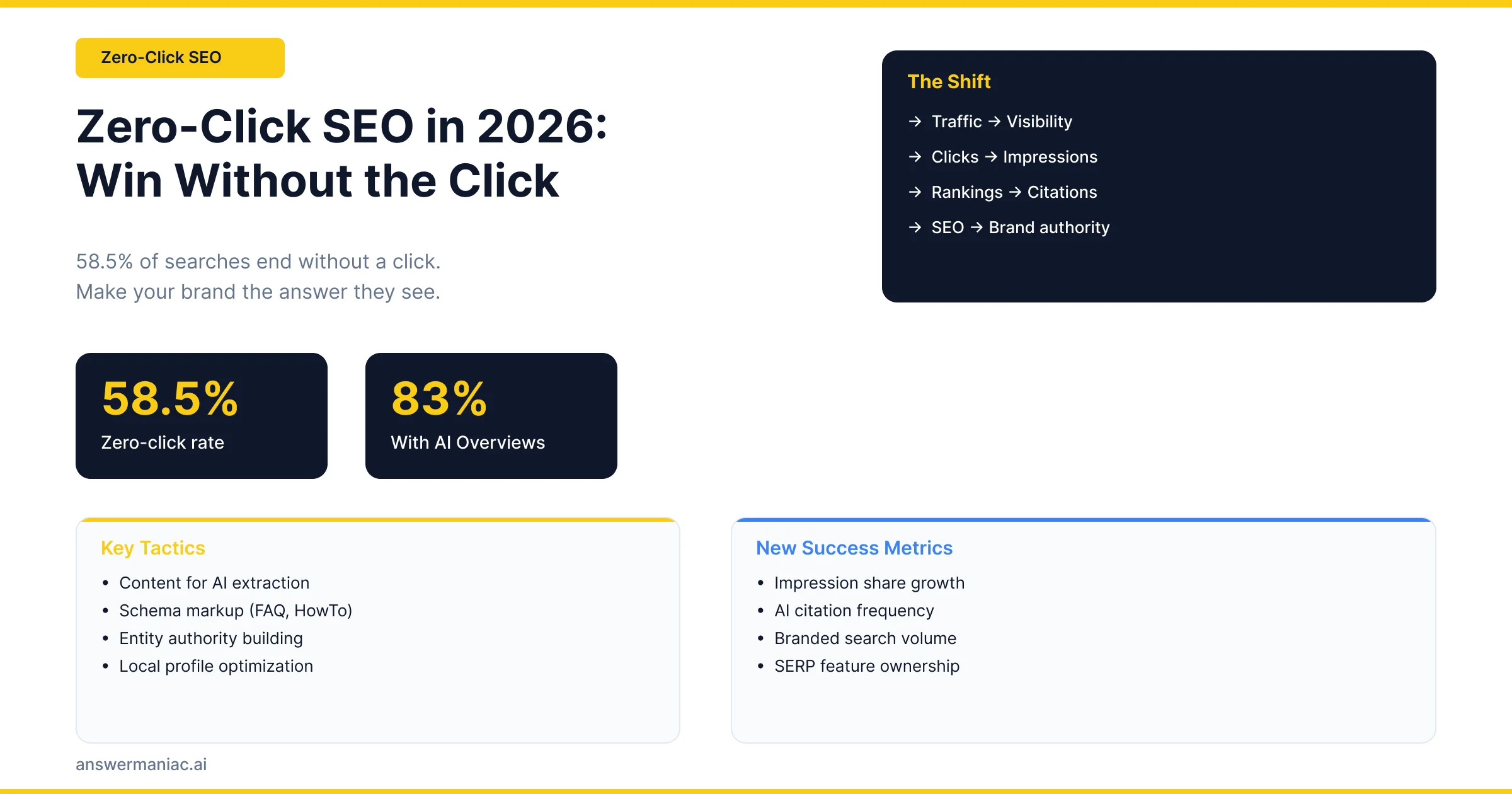
Zero-click behavior is growing across many query types, especially on mobile, which means influence increasingly comes from being cited or paraphrased on the results screen, not only from traffic sessions.
In this 2026 guide, you'll see how answer-driven search works, how AEO differs from classic SEO, and how to build content that AI systems can quote accurately over time. Keep reading.
Key Takeaways
- We design content for direct, reusable answers, not page views or long sessions.
- We align data, entities, and search intent so answer engines can verify and cite our work.
- We measure success through AI citations, on-screen visibility, and assisted outcomes, not just rankings.
Answer Engine Optimization
Answer engine optimization is the process of making content easy for AI systems to parse, check, and reuse as direct answers. As AI overviews, featured snippets, and instant answers expand, a larger share of searches now resolve directly on the results page.
This trend is most visible on mobile and for informational queries, where users often get what they need without visiting a site. That's why our strategy focuses on making content easy to extract and understand. We lead with the answer, use clean structure, and highlight clear topics and entities.
Some publishers and SEO teams report that answer-first formatting improves how often their content is surfaced or referenced in AI-generated results, even when traditional click-through traffic declines. In these environments, visibility increasingly includes citations, paraphrased reuse, and assisted discovery rather than sessions alone.
To do this well, we rely on:
- Short, simple paragraphs
- Direct definitions
- Clear topic boundaries
These choices help AI systems quickly recognize what a page is about and which questions it can answer.
Answer engines often surface content that has:
- Strong answers near the top
- Structured data for questions, steps, and key entities
- Steady signals of expertise and trust
Answer engine optimization doesn't replace SEO. It builds on it, reflecting how people search today and how AI systems increasingly deliver results. For a tactical breakdown of specific AEO techniques, see our AEO optimization strategy guide.
How to Optimize for Answer Engines
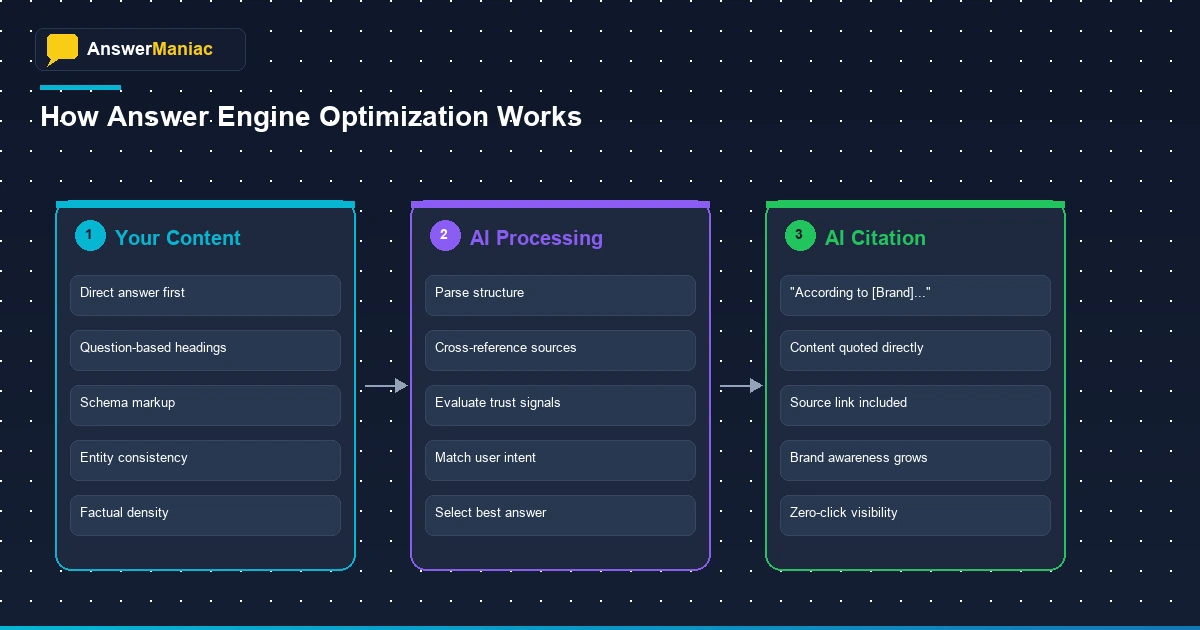
Optimizing for answer engines starts with writing for resolution, not exploration. AI tools often extract short, self-contained answer blocks near the top of a page.
Our basic pattern for each page:
- Start with a direct answer in simple language.
- Follow with context, examples, and data.
- Support the main answer with clear structure and labels.
Answer-first layouts often perform better in AI-driven search environments. Formatting is a core part of this shift. We rely on:
- Question-based headings to show intent
- Short, clear sentences to limit ambiguity
- Lists and tables to pack data into machine-readable blocks
Structure now matters more than length. A long page with weak structure is harder for AI systems to reuse. A focused page, with clean sections and clear signals, creates less friction between your meaning and the model's interpretation. When meaning is easy to extract, reuse becomes more likely.
For step-by-step ranking tactics, see our guide on how to rank in answer engines.
AEO Optimization Strategy
An AEO optimization strategy focuses on authority, clarity, and repeatability across a topic. Interest in AI-driven search optimization has grown across the SEO industry.
Our strategy begins with topic ownership, not one-off posts. Instead of scattered articles, we build answer hubs:
- One core hub per topic
- Supporting pages that cover related questions
- Internal links that connect subtopics back to the hub
This depth helps AI systems connect our domain with specific subjects. For a deeper dive into building these systems, our answer engine optimization strategy guide covers the full framework.
We also refresh key content about once a quarter. Updating stats, examples, and explanations signals that the page is still active and relevant. That ongoing care tends to improve trust.
We track outcomes beyond traffic:
- How often we are cited in AI answers
- Visibility across different question types
- Assisted conversions that start with AI-influenced queries
AEO works best when it is part of content planning from day one, not a patch added after publishing. This is why we built The ANSWER Framework: Audit, Navigate, Structure, Write, Earn, Refine.
Generative Engine Optimization
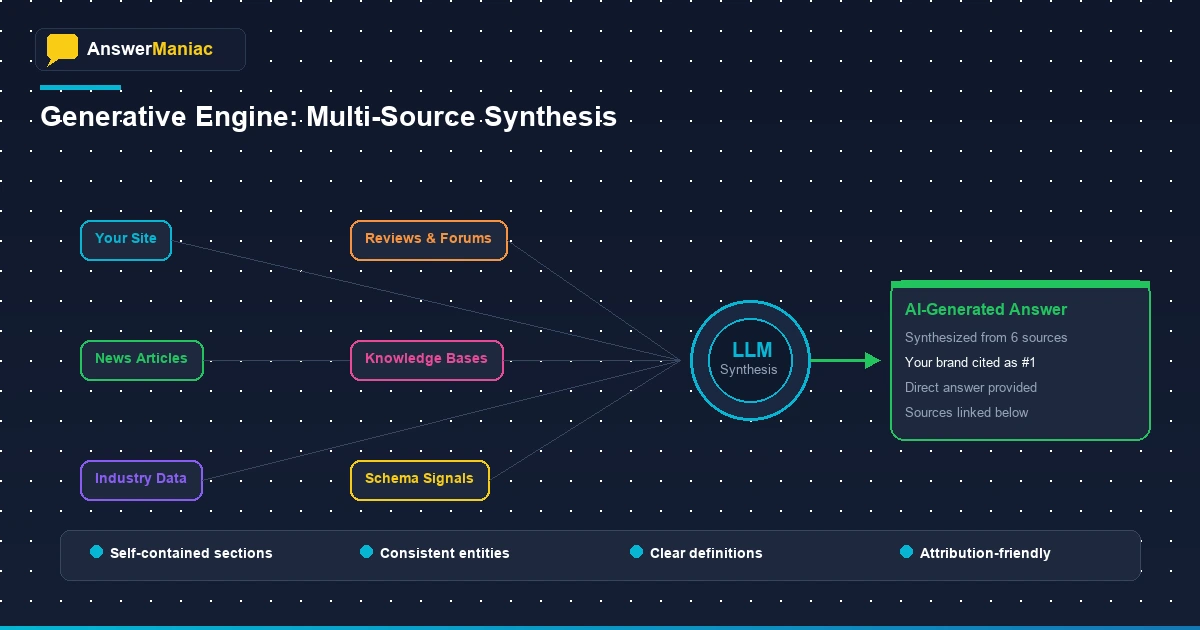
Generative engine optimization focuses on how large language models build answers from many sources. These systems don't just fetch pages; they combine text from multiple places, then write a new response. That makes clarity and attribution even more important.
We structure content so each section can stand alone as a reliable, self-contained unit. This usually means:
- Defining key terms in place
- Stating assumptions instead of hinting at them
- Avoiding context that only makes sense if you read the entire page
Clear definitions improve the likelihood of being reused in AI answers. For platform-specific GEO tactics (Google AI Overviews, Perplexity, ChatGPT), see our generative engine optimization guide.
We also keep entity descriptions consistent across pages:
- Same names
- Same roles
- Same relationships
This stability reduces confusion when models merge content from many sites. Our guide on entity optimization and knowledge graphs covers how to build this consistency at scale.
In practice, AI systems tend to reuse content that is clearly factual, attribution-friendly, and easy to quote out of context. Highly emotional or heavily promotional framing may be treated more cautiously when models assemble summary-style answers.
Generative engine optimization asks us to think like editors who organize information for reuse, rather than marketers chasing attention.
How to Rank in Answer Engines
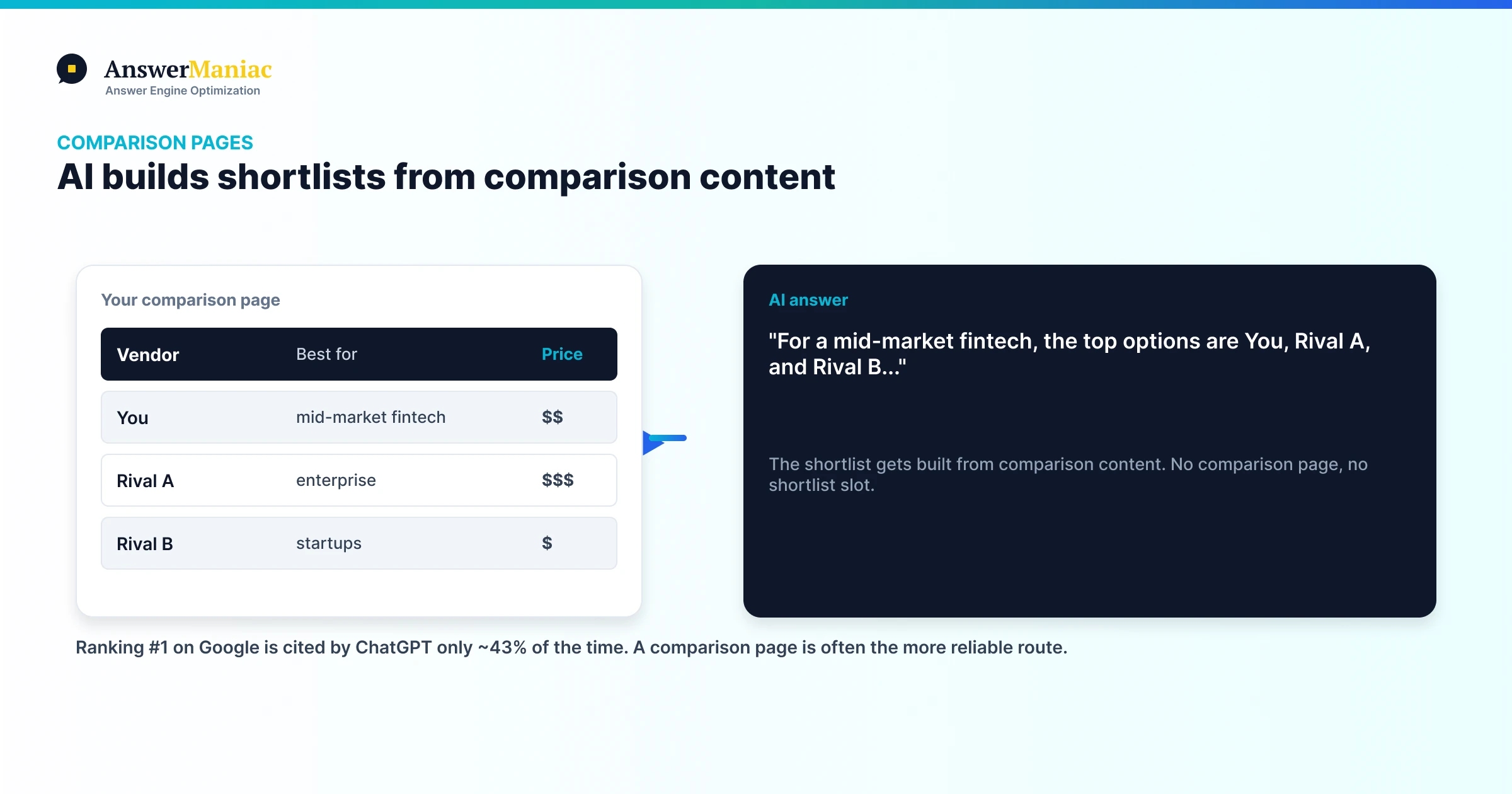
Indexing and ranking still matter, but in AI-mediated search, the visible outcome is often inclusion: being one of the sources that shapes the generated answer users see first. Traditional rankings fade behind AI summaries, and the key goal becomes being one of the sources that powers the answer.
We focus on questions with high resolution intent, where users want one clear answer instead of a long list of options. These queries often lead to stronger outcomes, even when users don't click.
Key practices include:
- Target question types that have a clear, concise response.
- Provide a complete answer before adding extra detail.
- Match user intent in both wording and framing.
We also verify all structured data. Structured data helps systems interpret key sections, such as FAQs, steps, and entities. While schema is not required for all AI reuse, errors or inconsistencies can reduce eligibility for certain SERP features and may weaken machine confidence in how content is labeled. For the specific schema types that AI crawlers actually use, see our schema markup for AI citations guide.
For ranking in answer engines, consistency tends to beat novelty:
- Data that matches other trusted references
- Page structures that don't change every week
- Clear authorship, revision dates, and source notes
The goal is not to trick the system but to be a stable, accurate source models can rely on repeatedly.
GEO Optimization Guide
This section looks at how to align content with the way AI tools interpret search intent. Instead of just mapping keywords, we map questions to outcomes and design each page to fully solve one core outcome.
Key parts of our GEO approach:
- Focus on conversational queries and long-tail questions.
- Match how people naturally ask AI assistants for help.
- Ensure each page resolves a single user outcome clearly.
AI search is becoming a common tool for problem solving. That shift favors pages that read well inside AI-generated answers. For competitive positioning tactics, see our GEO optimization guide.
We often use tables to handle complex comparisons. Tables help with:
- Compressing data into short, labeled cells
- Reducing narrative confusion
- Making column labels consistent across similar content
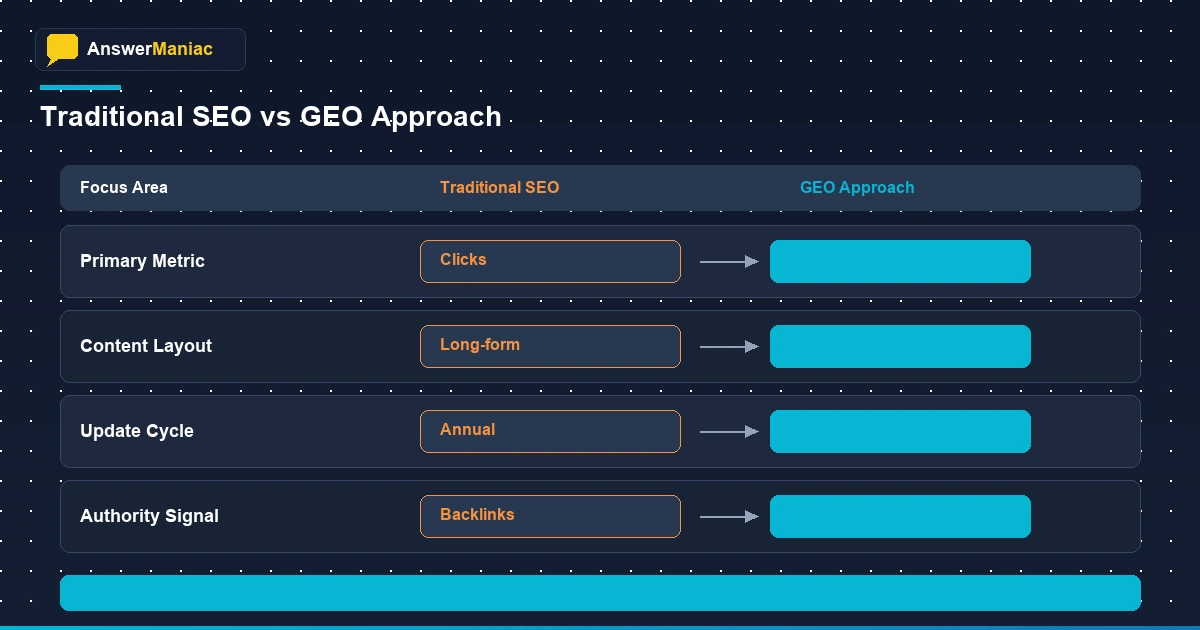
Here is a simple view of the difference between traditional SEO and GEO:
| Focus Area | Traditional SEO | GEO Approach |
|---|---|---|
| Primary metric | Clicks | Citations |
| Content layout | Long-form | Answer-first |
| Update cycle | Annual | Quarterly |
| Authority signal | Backlinks | Consistency and accuracy |
A strong GEO process is practical, trackable, and easy to repeat across topics.
LLM Ranking Optimization
LLM ranking optimization looks at how language models judge the reliability of sources they may quote or paraphrase. The goal is no longer just to rank, but to influence the final answer that users see on the screen.
"AEO shifts the goal from earning only a click to becoming part of the answer itself through reuse and citation." - Backlinko[1]
We typically emphasize factual density in each section:
- At least one verifiable data point, date, or definition
- Sources or context that a model can match against other references
Pages with concrete facts are often easier for AI systems to cite.
We also limit speculative or vague claims. Clear, evidence-based statements tend to perform better than broad, unsupported promises.
Core habits include:
- Using plain, direct language
- Avoiding exaggerated outcomes or dramatic framing
- Separating facts from interpretation through wording and structure
LLM ranking optimization rewards careful writing. It is less about creative slogans and more about building a record of accurate, stable information the models can safely reuse.
How to Optimize for LLM Search
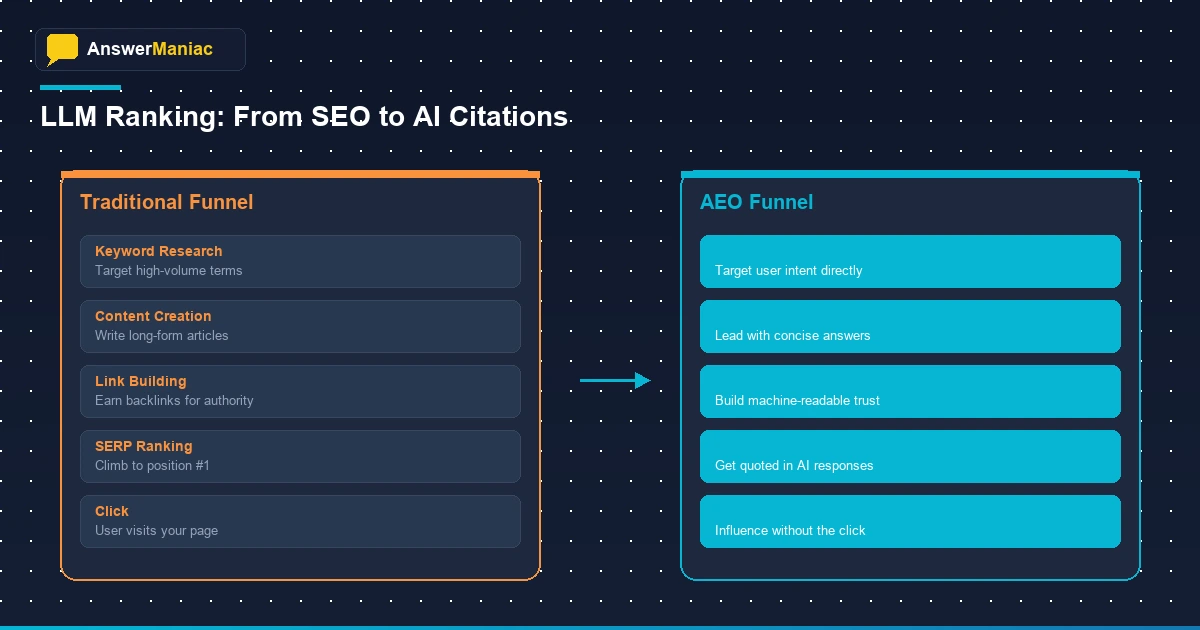
Optimizing for LLM search also means understanding where models source their confidence. Large language models rely heavily on established, authoritative ecosystems rather than isolated pages.
"The play is to co-opt the answer ecosystem. In practice, that means contributing authoritative content to the sources that the AI is inclined to trust." - Content Marketing Institute[2]
To support this, we:
- Define acronyms near their first use.
- Restate the subject instead of relying heavily on pronouns.
- Reduce references like "this" or "that" when the object is not obvious.
We also use an inverted structure on pages:
- Put the most important information at the top.
- Place definitions and core answers before deep detail.
- Use headings that echo common user questions.
The goal is clear: enable accurate quotation outside the original context, lower the chance of hallucinated or twisted meanings, and increase the likelihood that the model treats your text as a safe, direct source.
In practice, optimizing for LLM search means making meaning explicit at every step. Even when that feels slightly repetitive to a human reader. For a look at how different AI platforms handle this, see our guides on Claude AI citations, Gemini AI visibility, and Copilot citations.
Answer Engine Ranking Strategy
An answer engine ranking strategy looks at long-term presence rather than week-to-week spikes in traffic. We watch how our content appears across many question types, not just a few high-volume keywords.
We pay attention to things like:
- How often our pages get mentioned or cited in AI answers
- When our content shows up in rewritten or summarized form
- Whether that visibility helps lead to real conversions over time
We also check for content gaps by:
- Finding questions we haven't answered yet
- Creating clear pages that solve those needs
- Updating older content so it stays relevant
Patience is a core part of this. Authority builds over months. Steady updates matter more than constant new posts. Quality and consistency usually beat raw volume. Metrics should reflect influence and presence, not only clicks or sessions. For tracking citation growth over time, citation velocity is the key metric.
When treated as an ongoing system, answer engine ranking turns into a compounding asset instead of a one-time campaign.
Generative Engine SEO
Generative engine SEO blends familiar technical SEO with answer-focused writing. We still pay attention to crawlability and performance, but we accept that the first "reader" is often an AI model, not a human on the page.
Key technical habits:
- Fast-loading pages with clean, semantic markup
- Limited use of heavy scripts and complex layouts
- Clear headings, lists, and tables that break up content logically
On the content side, we align language with user intent:
- Match the question's angle and level of detail
- Avoid mixing many unrelated intents on one page
- Make the primary outcome obvious near the top
Day to day, the mindset can be summed up as: write for reuse across many tools, validate and refresh data on a regular schedule, and track what AI systems surface, not only what analytics log as clicks.
Generative engine SEO does not erase traditional SEO. It adapts it to a search world where answers, not links, are often the first and last touchpoint. For a comparison of how AI visibility and traditional SEO metrics differ, see our AI visibility vs SEO breakdown.
FAQ
What is answer engine optimization, and how does it differ from SEO?
Answer engine optimization helps AI systems use your content as direct answers. Traditional SEO focuses on clicks and rankings. AEO focuses on zero-click visibility: being cited, paraphrased, or surfaced inside AI-generated responses. It relies on answer-first content structure, question-based headings, and schema markup. The two work together, but AEO measures success through citations and on-screen presence, not just traffic.
How do AI systems decide which content appears in answers?
AI systems look for content that's well-organized, accurate, and easy to quote. They cross-reference your claims against other trusted sources. Authoritative citations, fresh data, consistent entity descriptions, and E-E-A-T signals all help confirm accuracy. Content that matches user intent and answers one question fully is easier for AI models to extract and reuse than pages covering many loosely related topics.
Why do zero-click searches matter for AI search visibility?
Zero-click searches happen when users get answers without visiting a website. As AI overviews and answer panels expand, more queries resolve on the results screen itself. That makes citation frequency and on-screen visibility more important than click-through rate alone. In this environment, being mentioned regularly inside AI answers can drive brand awareness and downstream conversions even without a direct site visit.
How does structured data support answer engine optimization?
Structured data gives AI a machine-readable map of your content. FAQ schema connects questions to answers. HowTo schema maps steps to processes. Article and Organization schema link your content to your brand entity. When schema is clean and consistent, AI crawlers can parse your page faster and with more confidence, directly improving your chances of being cited in generated answers.
How should teams measure answer engine optimization performance?
Track three things: citation frequency (how often AI mentions your brand for target queries), on-screen visibility (where and how you appear in AI-generated answers), and assisted outcomes (conversions that started with an AI-influenced discovery). Use Google Search Console to monitor high-impression, low-click queries. Manual prompt testing across ChatGPT, Perplexity, and Google AI Overviews gives you the clearest picture of real-world AEO performance.
Answer Engine Optimization in 2026
In 2026, answer engine optimization is mostly about being clear, consistent, and trustworthy. Content that answers questions quickly and stays well-structured is more likely to show up in AI search results. Teams that treat AEO as something they keep improving over time, not a one-time SEO task, usually build stronger visibility across different AI tools.
We focus on answer-led content systems and on measuring influence, not just traffic, to stay aligned with how search actually works today. To see how we apply these principles, explore The ANSWER Framework or get a free AI Visibility Audit from AnswerManiac.
References
Get AEO Insights Weekly
Join 500+ B2B marketers getting AI visibility tactics every Tuesday.
Ready to Get Your Brand Cited by AI?
See how your competitors show up in ChatGPT, Perplexity, and Gemini — and what it would take to get recommended.