How to Get Clicks from Perplexity: Step-by-Step Strategy
Step-by-step system to earn Perplexity citations and increase referral clicks.
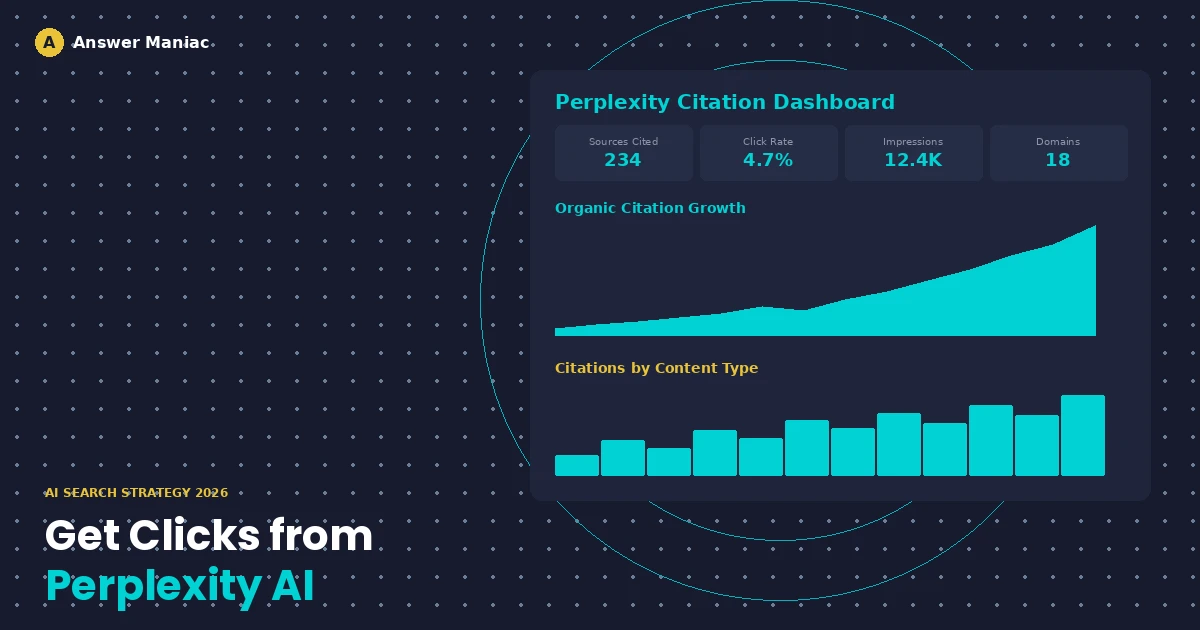
How to get clicks from Perplexity begins with one simple truth: Perplexity only drives clicks when your content earns citations inside its answers. To achieve this, you need structured, authority-driven pages that match conversational search intent.
Perplexity links to sources it trusts, and that trust depends on relevance, clear expertise signals, freshness, and proper content structure.
Research from Stanford University shows that structured, source-backed content improves retrieval accuracy, while Google Search Central confirms that helpful content with expertise signals performs better across search systems.
Perplexity Traffic Playbook: Citation Wins That Drive Clicks
- Perplexity AI traffic optimization depends on citation eligibility, not traditional blue-link rankings.
- Structured content for citations increases extraction probability and click-through rate AI signals.
- Recency bias means Perplexity favors content refreshed every 90 days with updated data and authority signals.
What Drives Clicks from Perplexity AI?
Clicks from Perplexity AI mainly come from pages cited in its answers. Citation placement depends on query alignment, content structure, authority signals, and freshness.
As highlighted by Pew Research Center: "Around six in ten respondents (58%) conducted at least one search engine query that produced an AI-generated summary of results."
Key elements to increase citation likelihood:
- Use query-aligned H2 question formatting
- Provide direct answer blocks within 40 words
- Include at least one statistic per section
- Add inline source links to authoritative domains
- Update content every 90 days for freshness
Step 1: How Do We Mine Real Conversational Queries?
Sources for query mining:
- Perplexity auto-suggestions and People Also Ask results
- Reddit threads in niche communities
- Quora SEO discussions and audience questions
- Support tickets or direct audience feedback
Each query should map to user intent. Collect 20-30 questions per topic cluster. Prioritize questions with terms like "2026," "recent update," or "step-by-step."
This approach strengthens your topic clusters and supports Perplexity click-through strategy.
Step 2: How Do We Build Authority Signals That Win Citations?
Key authority elements:
- Include 1-3 statistics per major section
- Reference current-year trends such as 2026 updates
- Cite experts, organizations, or credible institutions
- Link to authoritative external URLs for verification
- Apply schema markup for how-to steps and FAQ sections
Incorporating ChatGPT click-through optimization techniques enhances structured content placement.
Step 3: How Should We Structure Content for Maximum Citation Potential?
| Element | Why It Works | Impact on Citation |
|---|---|---|
| Question H2 formatting | Matches conversational query targeting | Higher extraction accuracy |
| 40-word direct answers | Supports direct answer blocks | Improved zero-position ranking |
| Bullet list citations | Easy synthesis by AI systems | Clear step clarity |
| Table comparison SEO | Compresses complex data | Better contextual understanding |
| Inline source linking | Strengthens authority signals | Higher trust weighting |
Insights from Google Search Central indicate: "AI Overviews help people get to the gist of a complicated topic or question more quickly, and provide a jumping off point to explore links to learn more."
Follow consistent formatting rules:
- Place definitions immediately after each H2
- Keep sentences under 20 words
- Include at least one statistic per 300 words
- Avoid filler introductions
Step 4: How Do We Monitor and Improve Perplexity Citations Over Time?
Monitoring workflow:
- Search the primary conversational query in Perplexity
- Record your citation position
- Review formatting differences versus cited pages
- Update statistics, entity mentions, and references
- Republish with the current timestamp
Teams applying how to increase ChatGPT clicks tactics ensure each update contributes to measurable AI citation growth.
What Do Real Users Reveal About Perplexity Traffic?
Watch: Perplexity Traffic Insights from Surfer Academy
Users emphasize:
- Authority signals matter more than link volume
- Automation workflows help but require careful editing
- Original data, statistics, and expert quotes improve trust
- Mobile-first formatting enhances usability
FAQ
How long does it take to get cited by Perplexity AI?
Most pages begin appearing in Perplexity citations within 2-4 weeks of publishing, assuming the content is well-structured with clear authority signals. Pages that already rank in traditional search tend to get picked up faster because Perplexity pulls from indexed sources. Refreshing content with current-year data and inline citations can accelerate this timeline.
Does Perplexity use backlinks as a ranking factor for citations?
Perplexity doesn't rely on backlink profiles the way Google does. Its citation model prioritizes content relevance, structure, and source credibility. That said, pages with strong domain authority from backlinks tend to be indexed more thoroughly, which indirectly increases citation eligibility. Focus on content quality and formatting over link building for Perplexity specifically.
What content format gets the most Perplexity citations?
Pages with question-based H2 headings, direct answer blocks under 40 words, and at least one statistic per section consistently earn more citations. Tables and bullet lists also perform well because Perplexity's retrieval system can extract structured data more efficiently than dense paragraphs. Look, I'll be honest -- we've tested long-form guides versus concise Q&A pages, and the Q&A format wins almost every time.
How often should I update content to maintain Perplexity citations?
Every 90 days is the baseline we recommend using the ANSWER Framework's Refine phase. Perplexity shows a clear recency bias, favoring content with current-year references and recently updated timestamps. Even small updates -- refreshing a stat, adding a new source link, updating a date reference -- can keep your page in rotation.
Can I track which Perplexity queries cite my content?
There's no native analytics dashboard from Perplexity yet (as of April 2026). The most reliable method is manual: search your target queries in Perplexity and record whether your page appears as a cited source. Some teams build lightweight scrapers or use referral traffic data from GA4 to identify Perplexity-sourced visits. We run this check weekly for client pages and log citation positions in a shared tracker.
How to Get Clicks from Perplexity: Turn Questions Into Citation Power
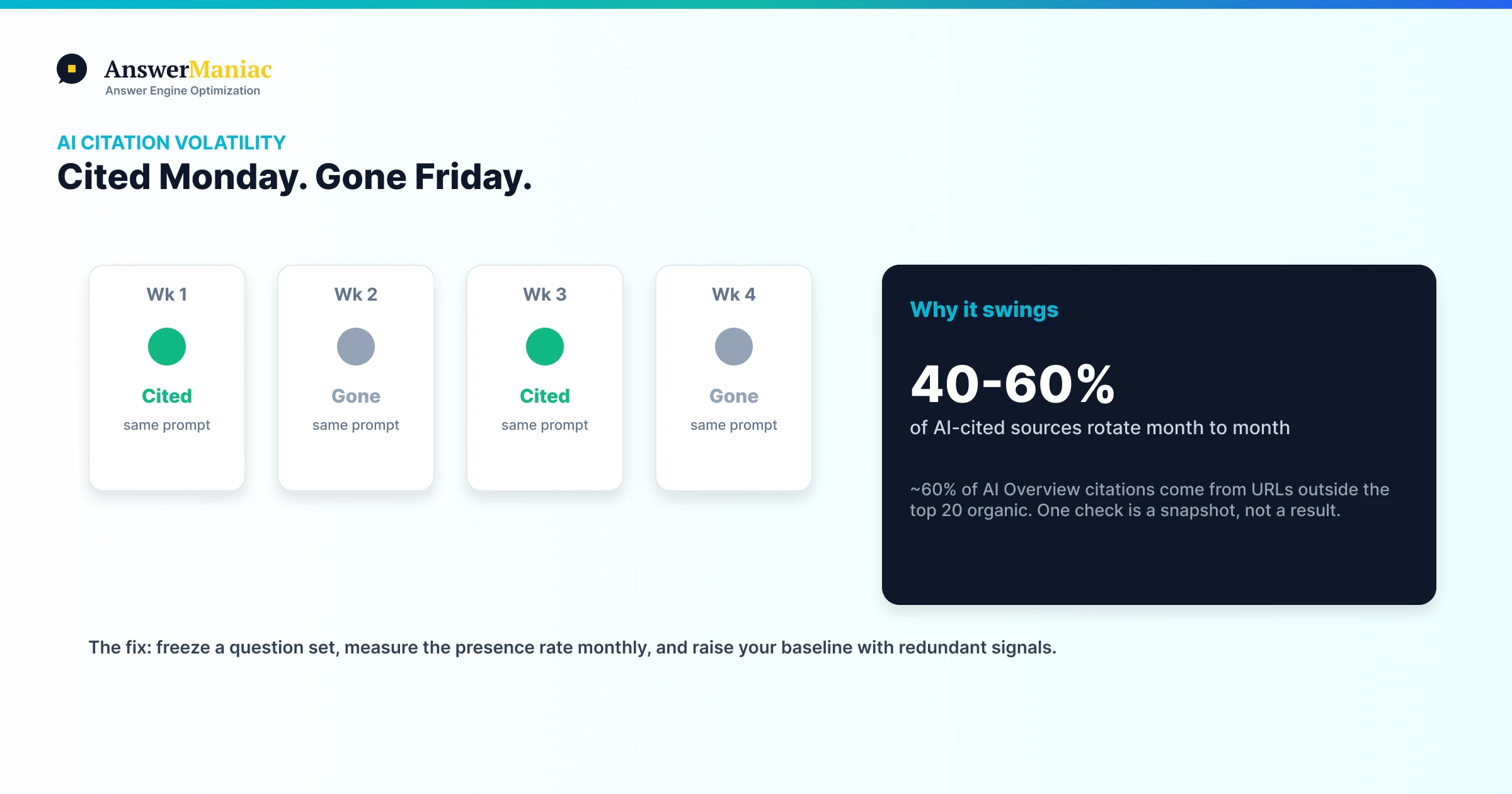
Getting clicks from Perplexity isn't about gaming an algorithm. It's about building pages that answer real questions better than anything else the model can find. Structure your content around conversational queries, back every claim with a named source, refresh every 90 days, and monitor your citation positions consistently.
That's the system. No shortcuts, no hacks -- just disciplined execution on content that AI systems want to cite.
If you want a team that does this for B2B companies every day, AnswerManiac runs the full ANSWER Framework so your pages show up when prospects ask ChatGPT, Perplexity, Gemini, Claude, and Copilot for recommendations.
References
- Pew Research Center - Google users are less likely to click on links when an AI summary appears in the results
- Google Search Central - AI Features in Search
Related Articles
Get AEO Insights Weekly
Join 500+ B2B marketers getting AI visibility tactics every Tuesday.
Ready to Get Your Brand Cited by AI?
See how your competitors show up in ChatGPT, Perplexity, and Gemini — and what it would take to get recommended.