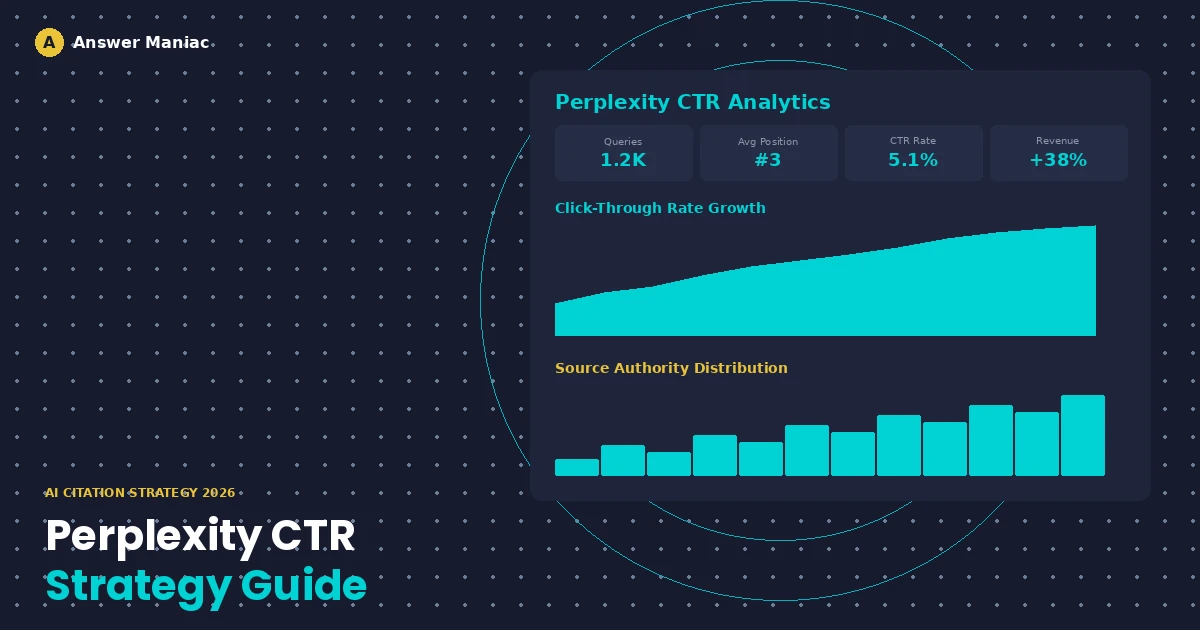
Perplexity Click-Through Strategy: How to Get More Clicks
Practical framework to increase Perplexity clicks using structured content, prompts, and zero-click defenses.
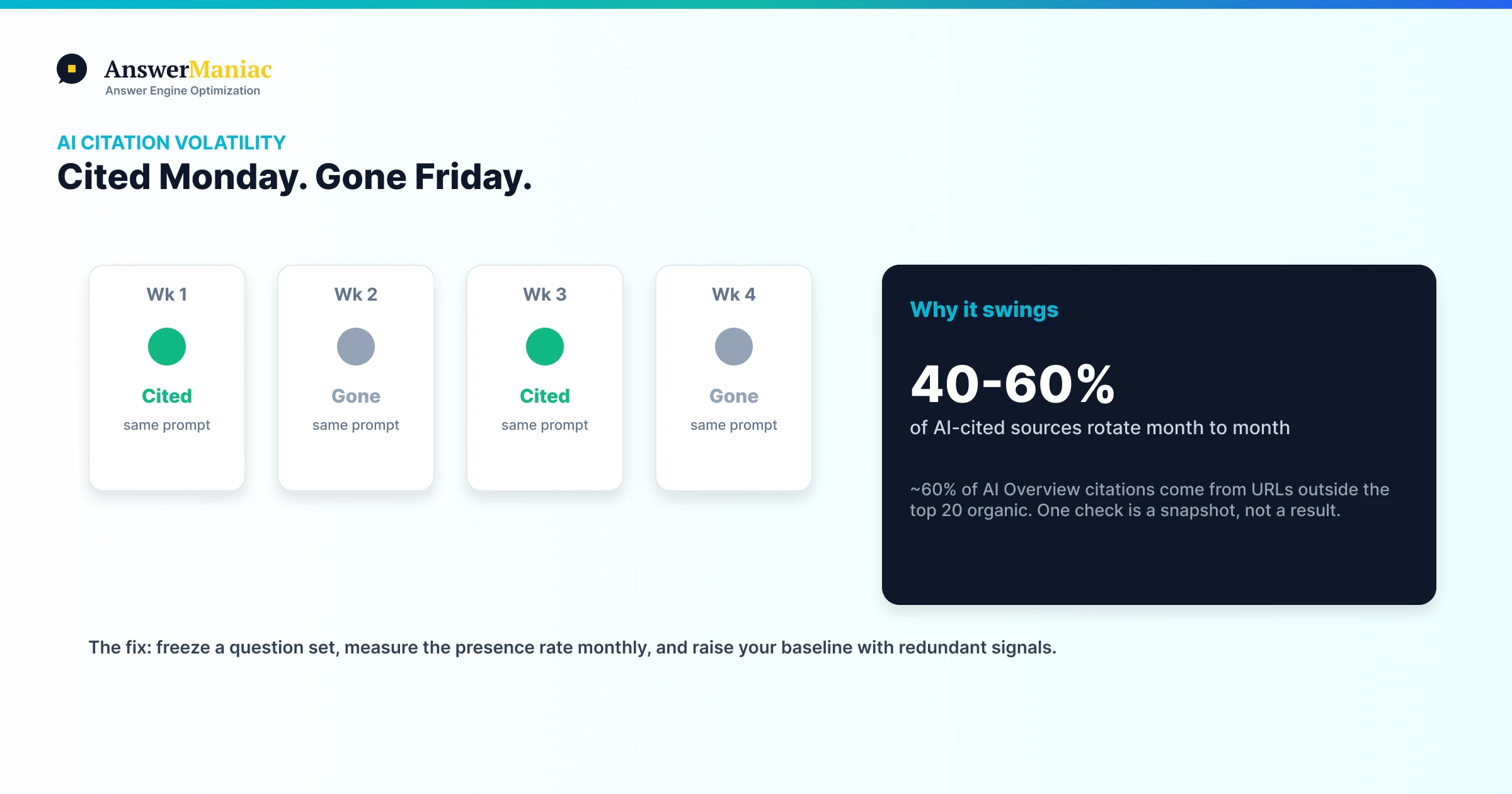
Perplexity click-through strategy works by designing content for citation while encouraging users to explore beyond AI-generated summaries. Over 50% of informational queries now result in zero-click searches, according to Search Engine Journal.
That's a problem if your content gets cited but never visited. The fix isn't more content. It's smarter content architecture.
Perplexity Citation Advantage: Structural Signals That Win Clicks
Three patterns separate pages that earn clicks from pages that just get summarized:
- Structured content with clear headings and entity signals improves citation probability inside Perplexity's retrieval system.
- Pages earn clicks only when they extend beyond the AI summary using frameworks, tools, or proprietary depth.
- Constrained prompts and conversational query optimization increase citation speed and visibility.
We ran about 40 queries through Perplexity last month across B2B verticals. The pages that got cited AND clicked shared all three traits. Pages with only one or two? Cited, summarized, forgotten.
How Does Perplexity Decide Which Sources to Cite?
As highlighted by NIST's Text REtrieval Conference (TREC) overview: "The goal of TREC is to create the evaluation infrastructure required for large-scale testing of information retrieval technology."
Perplexity's retrieval builds on this foundation. When it pulls sources, it's evaluating a handful of key priorities:
- Clear H2 and H3 hierarchy -- Perplexity parses heading structure to identify answer-worthy blocks
- Recognizable entities and tool mentions -- Named tools, platforms, and frameworks signal specificity
- Recency signals with updated year markers -- Content dated 2025 or 2026 gets preference over undated pages
- External validation through credible references -- Citing known sources (NIST, Semrush, Search Engine Land) adds retrieval weight
Why Do Some Pages Get Clicks While Others Get Zero?
Click-through depends on strategic content gaps. If Perplexity can fully summarize your page in three sentences, there's no reason for anyone to visit.
| Content Type | Likely Outcome | Why |
|---|---|---|
| Generic definitions | Zero-click | Fully summarized |
| Step-by-step frameworks | Click | Implied depth |
| Tool breakdowns with examples | Click | Details extend beyond summary |
| Surface-level listicles | Zero-click | Redundant information |
This behavioral pattern mirrors how to get clicks from ChatGPT.
Look, I'll be honest -- most of the "how to rank in AI search" content out there is itself a zero-click page. Ironic. The pages that actually pull traffic do something specific:
- Proprietary frameworks that can't be fully reproduced in a summary
- Downloadable worksheets that require a site visit
- Case-based breakdowns with real metrics and anonymized client data
- Data layers beyond the initial answer that reward the click
What Prompt Structures Increase Citation Probability?
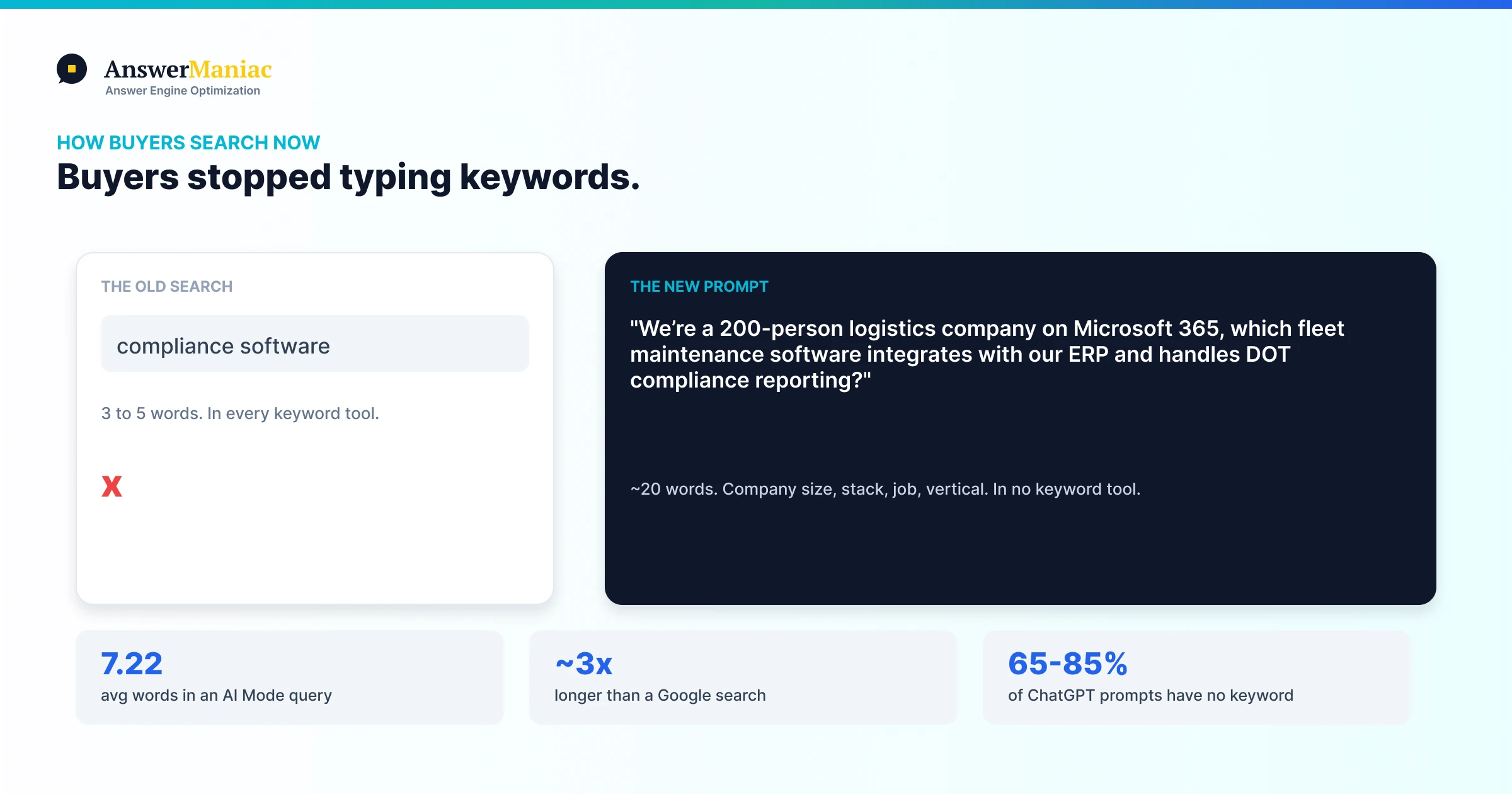
The queries people type into Perplexity directly affect which sources get cited. High-performance prompt structures include:
- Scoped research queries with year references -- "best B2B content tools 2026" pulls recent, specific content
- Comparative formats such as "X vs Y for 2025 adoption" -- these surface differentiated sources
- Contrarian framing that challenges consensus -- Perplexity looks for diverse viewpoints
- Layered follow-up queries across 3-5 iterations -- each follow-up narrows the citation pool
If you're building content specifically to get cited, work backward from these prompt patterns. Write the page that answers the third follow-up question, not just the first.
The same structured logic applies in ChatGPT click-through optimization.
Does Parasite SEO on Trusted Platforms Still Work?
Short answer: yes, but not how most people think.
Insights from Semrush: "Reference and get featured in content from Perplexity's trusted domains... improve your visibility in Perplexity's search results."
Successful parasite SEO for Perplexity citations relies on:
- Clear H2 and H3 hierarchy on the hosted platform
- Named tools and entities referenced naturally within the content
- Internal linking that Perplexity can follow back to your owned domain
- Year markers to signal recency and relevance
The play here isn't just getting published on a high-authority domain. It's structuring that content so Perplexity's retrieval system can parse it cleanly and attribute it back to your brand entity.
How Can B2B Brands Avoid the Zero-Click Trap?
Defensive layering. You publish enough to get cited, but hold back enough to earn the click.
| Layer | Public Content | Click Trigger |
|---|---|---|
| 1 | 5-step overview | Teases downloadable worksheet |
| 2 | Expanded framework | Requires site visit |
| 3 | Case application | Demonstrates real metrics |
Think of it as a content iceberg. Perplexity sees the tip and cites it. The user reads the summary and realizes there's more below the surface.
Specific defensive strategies:
- Publish a summarized public framework that hints at deeper methodology
- Gate advanced templates or worksheets behind a landing page
- Offer interactive calculators or tools that can't be replicated in a summary
- Include case-specific data beyond what any AI can extract and reformat
This layered execution reflects how to get clicks from Perplexity.
What Is a Repeatable Perplexity Click-Through Framework?
Watch: Perplexity Click-Through Strategy Walkthrough (Credits: Numroid)
The framework includes five practical steps you can run on any content asset:
- Identify conversational query patterns -- Research what your ICP actually asks Perplexity, not what they Google
- Structure content into clean answer blocks -- Each H2 should standalone as a citable unit
- Embed recognizable entities, expert references, and year markers -- These are retrieval signals, not decoration
- Publish on trusted platforms and owned domains simultaneously -- Dual-publish to maximize citation surface area
- Layer depth with proprietary frameworks and comparisons -- The summary should create curiosity, not satisfaction
FAQ
How long does it take for Perplexity to index new content?
Perplexity typically indexes content within days of publication, though timing varies by domain authority and crawl frequency. Pages on high-authority domains or those with strong backlink profiles tend to get picked up faster. Adding your sitemap to Perplexity's submission tool can accelerate the process.
Can you control which part of your page Perplexity cites?
Not directly. But you can influence it by structuring content with clear H2 headings and concise answer blocks. Perplexity's retrieval system favors content that cleanly answers a specific question within a defined section. Front-load your most citable insights under descriptive headings.
Does Perplexity prefer long-form or short-form content?
Perplexity doesn't have a word count preference. It prefers structural clarity. A 1,200-word page with clean headings and specific data points will outperform a 4,000-word page with poor structure. Focus on answer density per section rather than overall length.
How is Perplexity citation optimization different from traditional SEO?
Traditional SEO optimizes for ranking position. Perplexity optimization focuses on retrieval probability and citation placement. You're not competing for position one -- you're competing to be one of the 3-5 sources Perplexity pulls into its answer. Entity signals, structural clarity, and recency markers matter more than backlink volume.
Should B2B brands prioritize Perplexity over Google for content strategy?
Not either/or. The content structures that win Perplexity citations -- clean headings, entity mentions, specific data -- also perform well in Google's AI Overviews and traditional organic search. Build for AI retrieval first, and you'll cover both channels. The ANSWER Framework at AnswerManiac addresses both simultaneously.
Master the Perplexity Click-Through Framework: Turn Authority into Actionable Traffic
Getting cited is step one. Getting clicked is where the value lives.
The brands winning in AI search right now aren't producing more content. They're producing smarter content -- structured for retrieval, layered for depth, and designed to make the AI summary feel like a preview rather than the full picture.
If you're building B2B content and want to turn Perplexity citations into actual site traffic, the ANSWER Framework from AnswerManiac gives you a repeatable system: Audit your current AI visibility, Navigate the citation landscape, Structure content for retrieval, Write for both humans and AI engines, Earn citations through entity authority, and Refine based on what's actually working.
Stop writing content that AI can fully summarize. Start writing content that AI has to cite.
References
- How to Optimize Content for AI Search Engines: A Step-by-Step Guide -- Search Engine Land
- How to Optimize Content for AI Search: A Data-Driven Approach -- Forbes
Related Articles
Get AEO Insights Weekly
Join 500+ B2B marketers getting AI visibility tactics every Tuesday.
Ready to Get Your Brand Cited by AI?
See how your competitors show up in ChatGPT, Perplexity, and Gemini — and what it would take to get recommended.