AI Search Click Optimization: How to Get More Clicks from AI
How to optimize for AI search clicks across ChatGPT, Perplexity, and AI Overviews. Covers zero-click disruption, prompt clusters, and CTR tactics.
AI search click optimization is the practice of structuring your content, brand presence, and technical infrastructure to earn clicks from AI-generated responses. That includes ChatGPT citations, Perplexity source links, Google AI Overviews, and any other AI system that surfaces web content to users.
This isn't a rebrand of SEO. It's a new discipline. The mechanics are different, the measurement is different, and the content structures that win are different.
Here's what the data shows and what you should do about it.
Key Takeaways
- Zero-click searches are rising, but AI-referred traffic converts 4.4x better than traditional organic.
- AI Overviews and LLM citations are two distinct channels requiring different optimization approaches.
- Prompt clusters replace keyword targeting as the primary content planning unit.
- Brand mention tracking across AI platforms is the new rank tracking.
- Practical CTR tactics for AI search differ from traditional SERP optimization.
The Zero-Click Search Disruption
Zero-click searches -- where users get their answer without clicking through to any website -- aren't new. Google's featured snippets started this trend years ago. But AI search has accelerated it dramatically.
The numbers:
- Google AI Overviews now appear in approximately 30% of search results for informational queries.
- When an AI Overview appears, traditional organic CTR drops by an estimated 25-40%.
- ChatGPT and Perplexity handle millions of queries daily that never touch a traditional search engine.
What this means for your strategy:
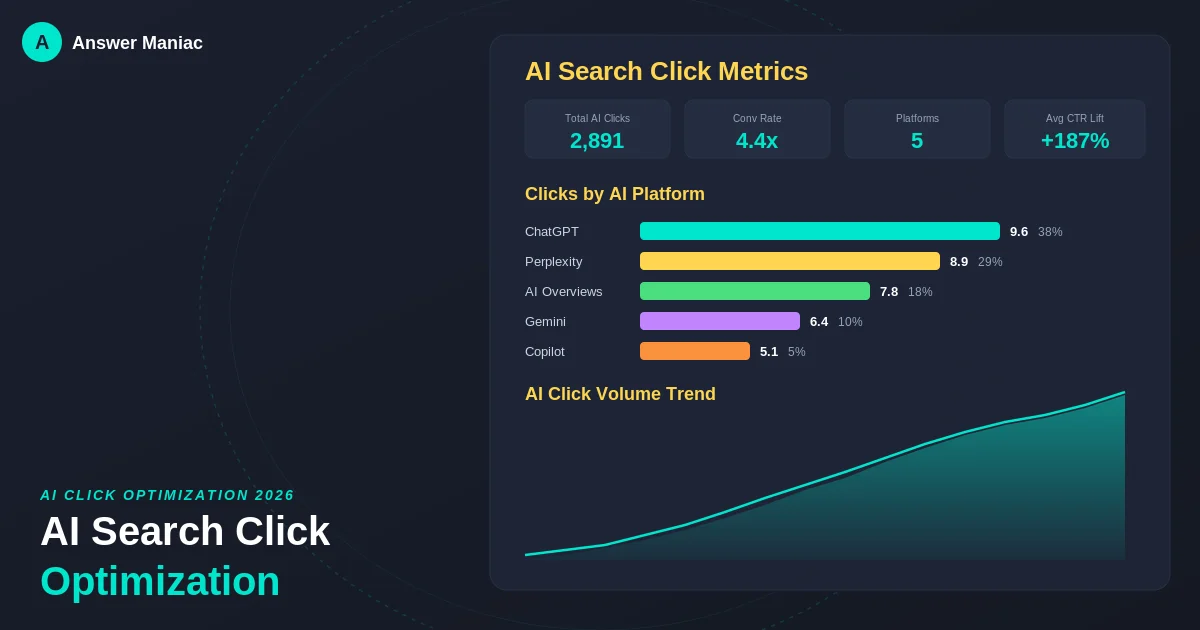
The total volume of clicks from traditional search is declining for informational queries. But a new category of clicks is emerging: AI-referred clicks. These are clicks that originate from AI citations, AI Overview source links, and LLM response attributions.
The shift isn't "zero clicks." It's "different clicks."
Why AI Traffic Converts 4.4x Better
According to Search Engine Journal, traffic referred from AI sources converts at approximately 4.4x the rate of traditional organic search traffic. This isn't random.
Why the conversion rate is higher:
- Pre-qualified intent. Users asking AI for recommendations have already passed the awareness stage. They're evaluating solutions.
- Implicit endorsement. An AI recommending your brand carries more weight than a search result listing. It's a recommendation, not just a ranking.
- Context-rich arrival. Users arrive at your page with context from the AI conversation. They know why they're clicking.
- Lower competition per impression. ChatGPT typically cites 3-5 sources per response. Google shows 10+ organic results. Fewer options means higher click probability per source.
The practical implication: Even if your total AI-referred traffic is small compared to organic, the revenue per session is significantly higher. Optimizing for AI clicks isn't just about volume -- it's about quality.
AI Overviews vs. LLM Citations: Two Different Games
Google AI Overviews and LLM citations (ChatGPT, Perplexity, Claude) look similar to users but operate on fundamentally different systems.
Google AI Overviews:
- Triggered by specific query types (primarily informational and how-to).
- Pull from pages that already rank in Google's index.
- Display source links underneath the AI-generated summary.
- Optimization is an extension of traditional SEO (schema, E-E-A-T, content quality).
LLM Citations (ChatGPT, Perplexity, etc.):
- Triggered by conversational prompts, not keyword searches.
- Pull from web crawl data, browsing results, and retrieval-augmented generation (RAG).
- Display inline citations or numbered source links.
- Optimization requires passage-level content structuring and entity authority.
Where they overlap:
| Factor | AI Overviews | LLM Citations |
|---|---|---|
| Schema markup | High impact | Moderate impact |
| Content freshness | Important | Very important |
| E-E-A-T signals | Critical | Important |
| Page authority | Important | Less important than content structure |
| Passage-level clarity | Helpful | Critical |
| FAQ schema | High impact | High impact |
Strategic recommendation: Optimize for both, but don't assume the same tactics work equally. AI Overviews reward traditional SEO strength. LLM citations reward structural clarity and entity authority.
Prompt Clusters vs. Keyword Targeting
Traditional SEO maps content to keywords. AI search optimization maps content to prompt clusters.
What's a prompt cluster?
A prompt cluster is a group of natural language queries that share the same underlying intent but are phrased differently. Unlike keywords, prompt clusters aren't limited to search box behavior. They include how people ask questions in conversational AI.
Example prompt cluster: "AI SEO tools"
- "What are the best AI SEO tools in 2026?"
- "Which tools help optimize for ChatGPT citations?"
- "AI visibility software for B2B companies"
- "Tools to track AI search rankings"
- "How do I measure my brand's AI visibility?"
- "GEO optimization platforms"
All of these prompts lead to the same type of content. But only content that addresses the full cluster -- not just one keyword -- will get cited consistently.
How to build prompt cluster content:
- Start with a seed prompt (your primary target).
- Generate 10-20 related prompts by varying phrasing, specificity, and angle.
- Structure your content so each H2 section maps to a subset of the cluster.
- Include the exact phrasing of common prompts in your headings and opening sentences.
- Test your content against the cluster by running prompts in ChatGPT and Perplexity.
Brand Mention Tracking: The New Rank Tracking
In traditional SEO, you track keyword rankings. In AI search, you track brand mentions.
Why brand mentions matter:
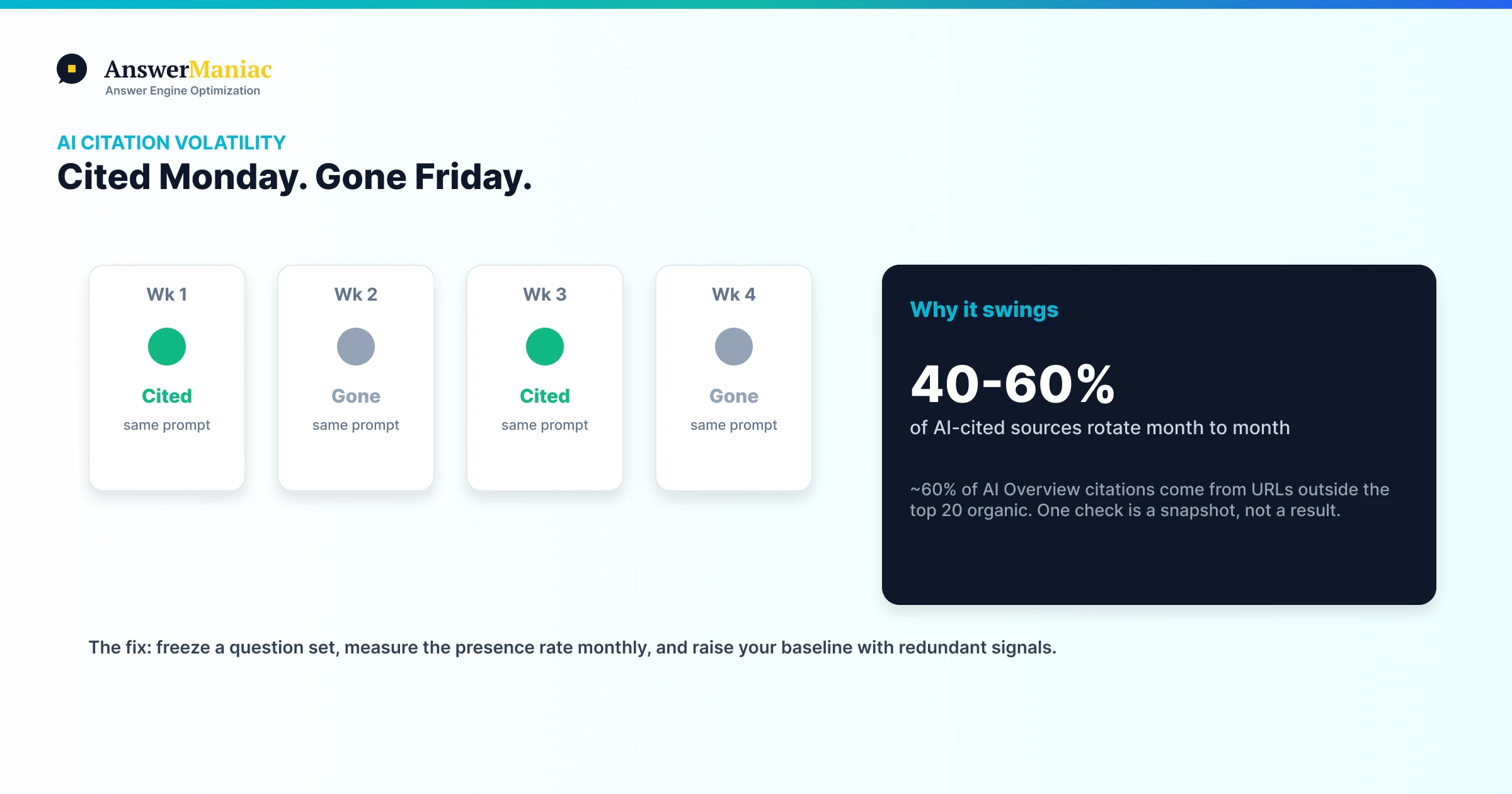
AI systems don't rank your website at position #3. They either mention your brand in a response or they don't. And unlike search rankings, AI mentions can vary dramatically based on how the prompt is phrased.
What to track:
| Metric | Description | Tool |
|---|---|---|
| Mention frequency | How often your brand appears in AI responses | AI visibility trackers, manual prompt testing |
| Citation position | Where in the response your brand appears (first, middle, last) | Manual analysis |
| Sentiment context | Whether you're mentioned positively, neutrally, or as a warning | Manual + NLP tools |
| Competitor share | How often competitors appear in the same responses | AI visibility trackers |
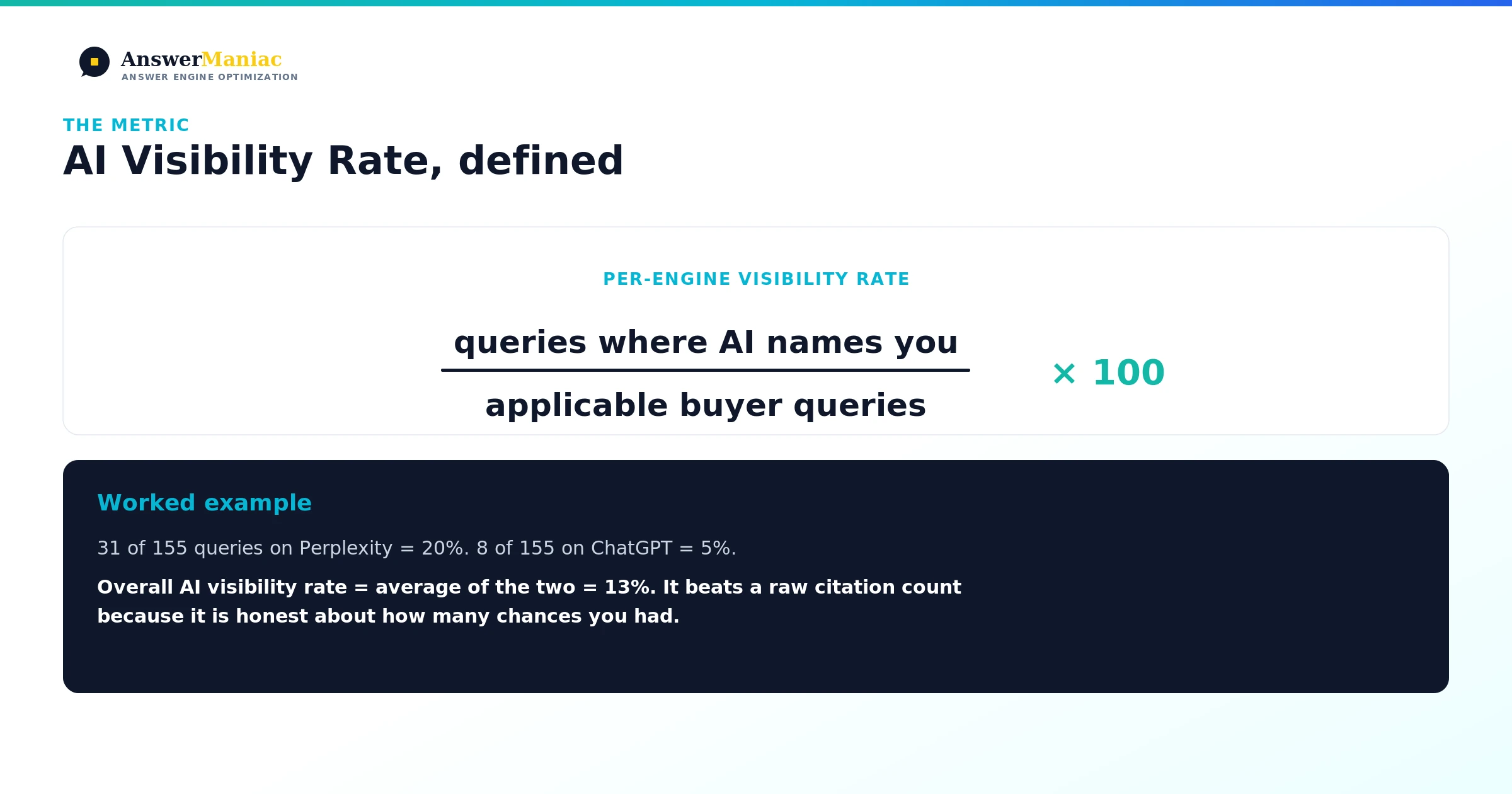
| Prompt coverage | What percentage of your target prompts cite your brand | Manual prompt testing |
Benchmarks from our client data:
- Top-performing brands appear in 30-50% of their target prompt responses.
- Average B2B brands appear in 5-15% of target prompts.
- Brands with no AI visibility strategy appear in under 3%.
The gap between optimized and unoptimized brands is massive. And it's widening.
Practical CTR Tactics for AI Search
Getting cited is step one. Getting clicked is step two. Here are the tactics that move users from "I see the citation" to "I click the link."
Tactic 1: Optimize Your Citation Snippet
When AI cites your page, it usually shows a brief description alongside the link. This snippet is your equivalent of a meta description in traditional search.
How to influence your citation snippet:
- Your meta description should be a self-contained value proposition, not keyword-stuffed.
- The first 160 characters of your page content should include your brand name and primary benefit.
- Use schema markup (Article, FAQ, HowTo) to give AI systems structured snippet candidates.
Tactic 2: Build Brand Recognition Before the Citation
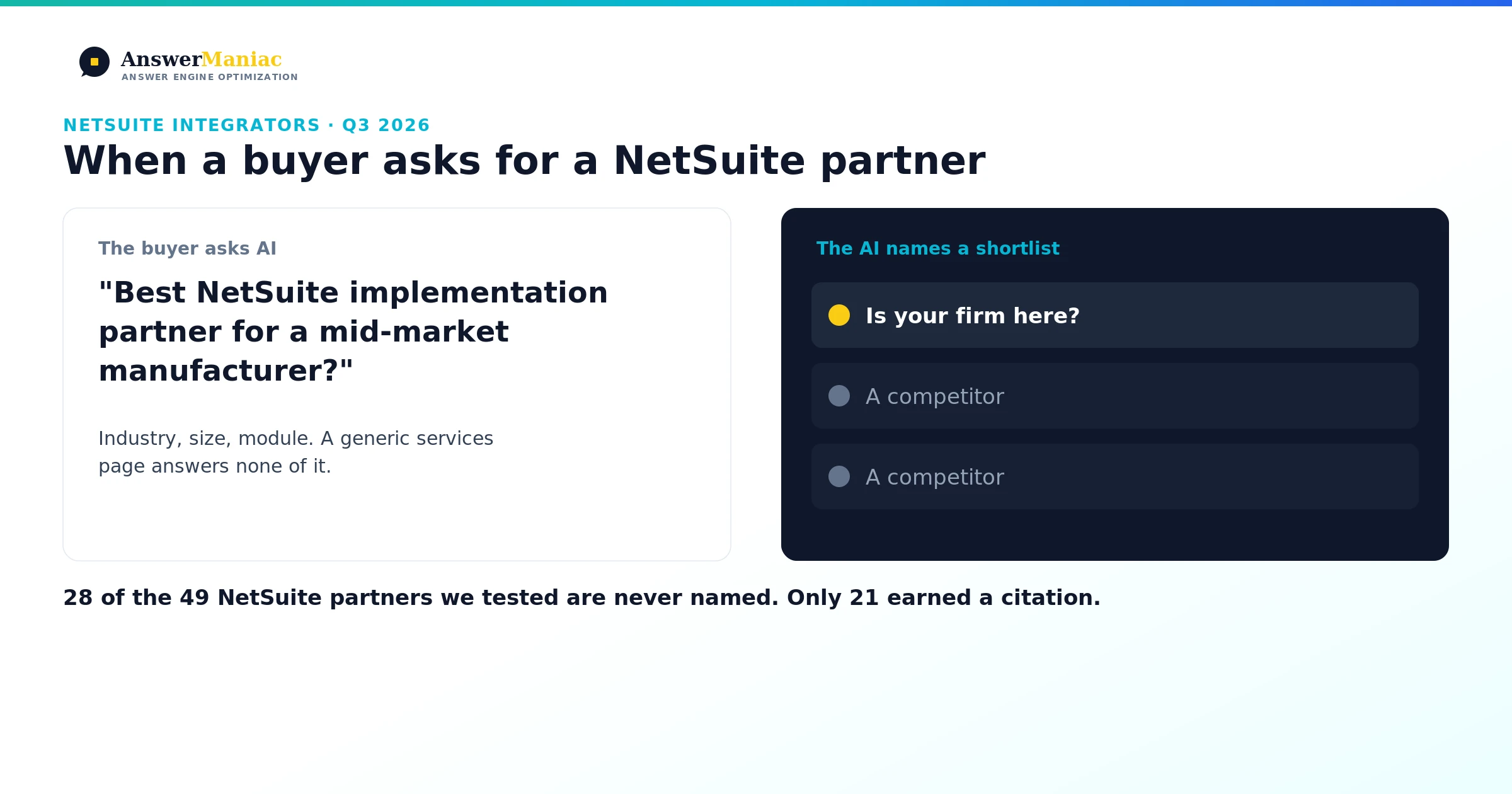
Users click AI citations from brands they recognize. If they've never heard of you, they'll skip your citation and click a known competitor.
Brand recognition strategies:
- Maintain active presence on LinkedIn, Twitter/X, and industry publications.
- Get mentioned in "best of" lists and comparison articles on third-party sites.
- Build a recognizable brand name that's easy to remember from a brief AI mention.
- Run retargeting campaigns to users who've visited AI search platforms.
Tactic 3: Create Click-Worthy Content Titles
AI systems sometimes display your page title alongside the citation link. Make it count.
Title optimization for AI citations:
- Include a specific number or data point: "10 Tactics" beats "Several Strategies."
- Use the current year: "2026 Guide" signals freshness.
- Front-load the benefit: put what the reader gets first, source second.
- Keep it under 60 characters when possible.
Tactic 4: Optimize Landing Page Experience
Clicked traffic bounces if the landing page doesn't deliver on the AI's implicit promise. When ChatGPT says "According to [your brand]..." and users click through, they expect to find exactly what was cited.
Landing page alignment checklist:
- The cited information should be visible above the fold or within the first scroll.
- Don't gate cited content behind pop-ups, email walls, or cookie consent modals that block the content.
- Load time matters more for AI traffic because users have a direct comparison (the instant AI response) fresh in mind.
- Include clear next-step CTAs for users who want to go deeper.
Tactic 5: Use UTM Parameters for AI Traffic
Standard analytics often groups AI referral traffic under "referral" or "direct." Custom UTM parameters help you track and optimize AI-specific traffic.
Recommended UTM structure:
?utm_source=chatgpt&utm_medium=ai_citation&utm_campaign=ai_visibility
?utm_source=perplexity&utm_medium=ai_citation&utm_campaign=ai_visibility
?utm_source=google_aio&utm_medium=ai_overview&utm_campaign=ai_visibility
Note: You can't add UTM parameters to how AI cites you. But you can use server logs and referrer headers to identify AI traffic sources and create custom GA4 channel definitions.
The AI Search Click Optimization Checklist
Here's a prioritized checklist for implementing AI search click optimization across your site.
P0 - Do This Week:
- Audit robots.txt for GPTBot, PerplexityBot, and anthropic-ai access.
- Add FAQ schema to your top 10 pages by traffic.
- Set up custom GA4 channels for AI referral traffic.
- Run your top 20 target prompts in ChatGPT and Perplexity. Document who gets cited.
P1 - Do This Month:
- Restructure top content into hub-and-spoke architecture.
- Rewrite introductions using answer-first formatting.
- Build prompt cluster maps for your three main topic areas.
- Launch Reddit participation in 5 target subreddits.
P2 - Do This Quarter:
- Create "Best X" comparison pages for your product category.
- Build entity presence across Knowledge Panel, Crunchbase, and Wikipedia.
- Implement IndexNow for real-time crawl notifications.
- Set up automated brand mention tracking across AI platforms.
FAQ
What is AI search click optimization?
AI search click optimization is the practice of structuring content, technical infrastructure, and brand presence to earn clicks from AI-generated responses. It covers ChatGPT citations, Perplexity source links, Google AI Overviews, and other AI systems that reference web content.
How is AI search click optimization different from SEO?
Traditional SEO optimizes for search engine rankings and SERP click-through rates. AI search click optimization focuses on getting cited in AI responses, which involves passage-level content structuring, entity authority building, and prompt cluster targeting rather than keyword-centric approaches.
Does AI search traffic actually convert?
Yes. According to Search Engine Journal, AI-referred traffic converts at approximately 4.4x the rate of traditional organic search traffic. Users arrive with higher intent and context from the AI conversation.
Can small companies compete for AI citations?
Yes. AI citations are less correlated with domain authority than Google rankings. Content quality, structural clarity, and entity signals matter more than backlink counts. Small companies with well-structured, authoritative content in niche verticals can outperform larger competitors.
How do I track AI search clicks?
Set up custom channel definitions in GA4 for referrals from chat.openai.com, perplexity.ai, and other AI platforms. Use server logs to identify AI crawler user agents. Monitor brand mention frequency using AI visibility tracking tools.
What's the difference between AI Overviews and LLM citations?
AI Overviews are Google's AI-generated summaries that appear at the top of search results. LLM citations are source links within ChatGPT, Perplexity, Claude, and other AI chatbot responses. They use different retrieval systems and require different optimization approaches.
What to Do Next
AI search click optimization isn't optional anymore. The brands that build their citation infrastructure now will compound their visibility advantage over the next 12-24 months.
If you want to see exactly where your brand stands across all AI search platforms, AnswerManiac's AI Visibility Audit gives you a complete picture. We track your citations across ChatGPT, Perplexity, Gemini, Claude, and Copilot using the ANSWER Framework, then build a strategy to close the gaps.
According to USA.gov data on federal agency digital strategy, even government organizations are now optimizing for AI-generated search experiences. If they're paying attention, you probably should be too.
References
- Search Engine Journal. "AI Referral Traffic Conversion Rates." searchenginejournal.com
- USA.gov. "Federal Digital Experience Strategy." usa.gov
Related Reading
Get AEO Insights Weekly
Join 500+ B2B marketers getting AI visibility tactics every Tuesday.
Ready to Get Your Brand Cited by AI?
See how your competitors show up in ChatGPT, Perplexity, and Gemini — and what it would take to get recommended.