Digital PR for AI Search: How Press Coverage Gets You Cited by ChatGPT and Perplexity
How Digital PR builds the authority signals ChatGPT, Perplexity, and Gemini need to cite your brand. Covers entity reinforcement, source diversity, and how news placements translate to AI recommendations.
Direct Answer: Digital PR builds the three authority signals AI platforms use to decide who to cite: domain authority (backlinks from DR 60–90 news outlets), entity reinforcement (brand + category mentioned across 500+ independent sources), and source diversity (presence on newspapers, TV stations, wire services, and industry publications). A single campaign generating 500–600+ news placements creates the kind of broad, high-authority footprint that moves AI Visibility Scores within 30–60 days.
Most of what passes for "AI SEO" right now is just regular SEO with a new label slapped on it. Optimize your schema. Write FAQ sections. Structure your content for featured snippets.
That's fine. Those things help. But they completely miss the authority question.
When ChatGPT decides who to recommend for "best fleet management software," it's not checking your FAQ schema. It's checking whether credible, independent sources mention you consistently in that context. And the fastest way to build that kind of authority footprint isn't content marketing. It's Digital PR.
How AI Models Decide Who to Cite
I'm going to simplify the mechanism because the details get technical fast, but the core logic is straightforward.
Large language models are trained on massive web crawls. Those crawls include news outlets, Wikipedia, academic papers, forums, blogs, and commercial sites. But they're not weighted equally. A mention on AP News carries more training weight than a mention on a niche blog with 200 monthly visitors.
When you ask ChatGPT "what company should I use for X," it's essentially pattern-matching across its training data and retrieval sources. The brands that appear most frequently, across the most authoritative and diverse sources, in connection with that category — those are the brands it recommends.
Three specific inputs drive citation decisions:
1. Source authority. How credible are the domains that mention your brand? A link from AP News (DR 92) signals something fundamentally different than a link from a marketing blog (DR 35). AI models have absorbed this distinction through their training data.
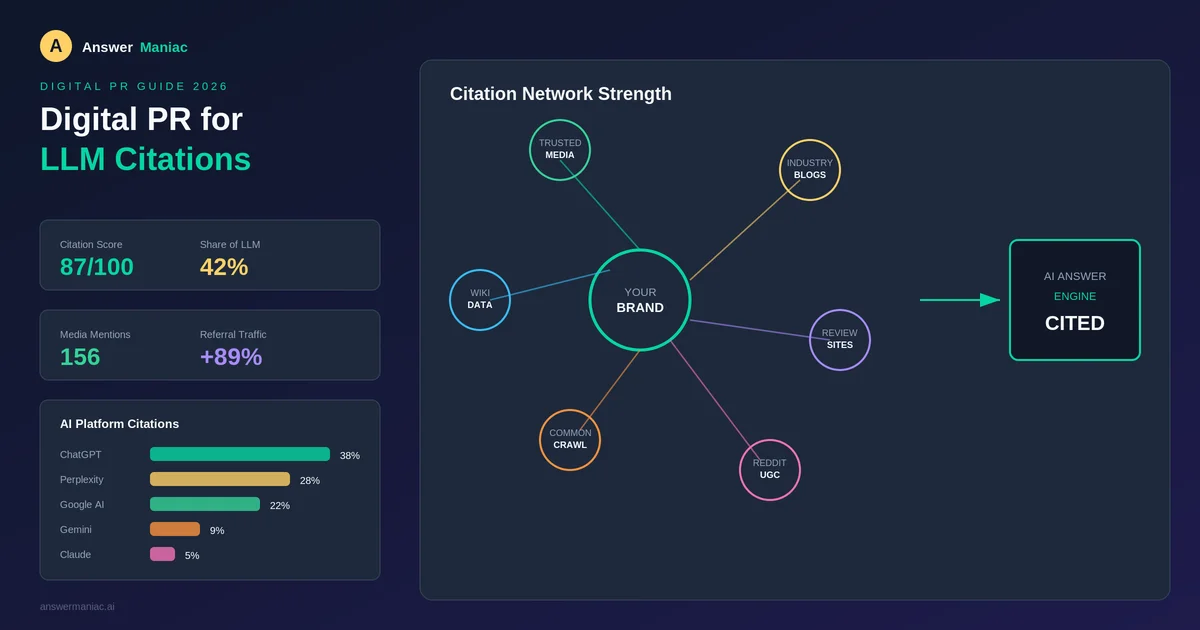
2. Entity consistency. How often does your brand name appear alongside your category across independent sources? If "Metrickal" + "back-office outsourcing" appears on 600 different domains, the model builds a strong association. If it appears on 6, the association is weak.
3. Source diversity. How many different types of sources mention you? Newspapers, TV stations, industry publications, financial outlets, regional news — each category of source adds a different dimension of credibility. Brands that only appear on their own site and a few guest posts look thin. Brands with coverage across multiple source categories look established.
Why Digital PR Hits All Three Signals
Here's where Digital PR campaigns do something that no other channel can match: they generate all three signals simultaneously, at scale, from a single distribution.
One press release distributed through premium wire services generates 500–600+ placements. Those placements span AP News (the single most-cited source by both ChatGPT and Perplexity, based on our tracking), major metro newspapers like Detroit Free Press and Austin American-Statesman, TV station affiliates carrying NBC, FOX, CBS, and ABC branding, and hundreds of regional and industry-specific outlets.
In a single campaign, you get high-DR backlinks (signal 1), your brand + category mentioned 600+ times across independent domains (signal 2), and coverage spanning newspapers, TV stations, wire services, and industry outlets (signal 3).
No amount of guest posting or directory submission replicates this. The math doesn't work — you'd need years of manual outreach to match what one wire distribution does in 48 hours.
The Category Nobody's Owning Yet
Here's something I find genuinely interesting: almost no agencies are positioning Digital PR as an AI visibility play. They're still selling it as "backlinks" or "brand awareness" or "media coverage."
That's a positioning miss. Because the B2B companies we work with don't care about "media coverage" in the abstract. They care about whether ChatGPT recommends them when a prospect asks "what's the best [their category]?"
When we frame Digital PR as "the fastest way to build the authority signals AI platforms need to cite you," the conversation changes completely. It goes from "nice to have" to "critical infrastructure for how buyers are starting to discover software."
Check any B2B software category on ChatGPT or Perplexity right now. The brands being recommended have one thing in common: broad, high-authority web presence across multiple source types. That's not a coincidence. It's the direct output of the kind of authority infrastructure Digital PR creates.
What a Campaign Actually Looks Like
I'll walk through the process because most agencies describe Digital PR in vague terms, and vagueness doesn't build confidence.
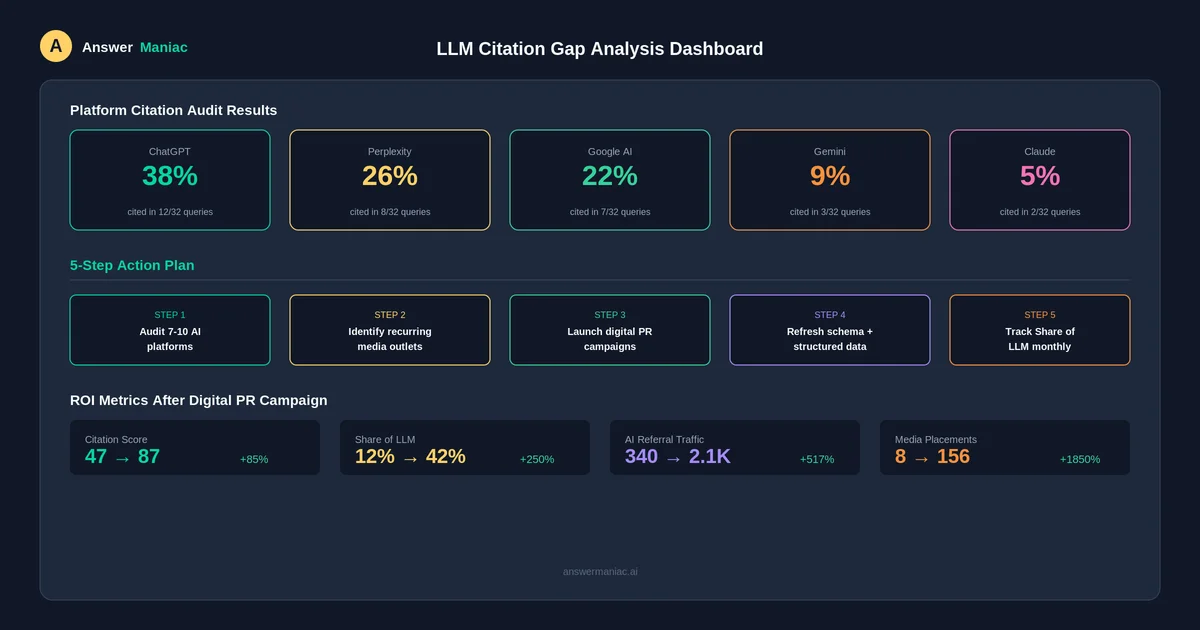
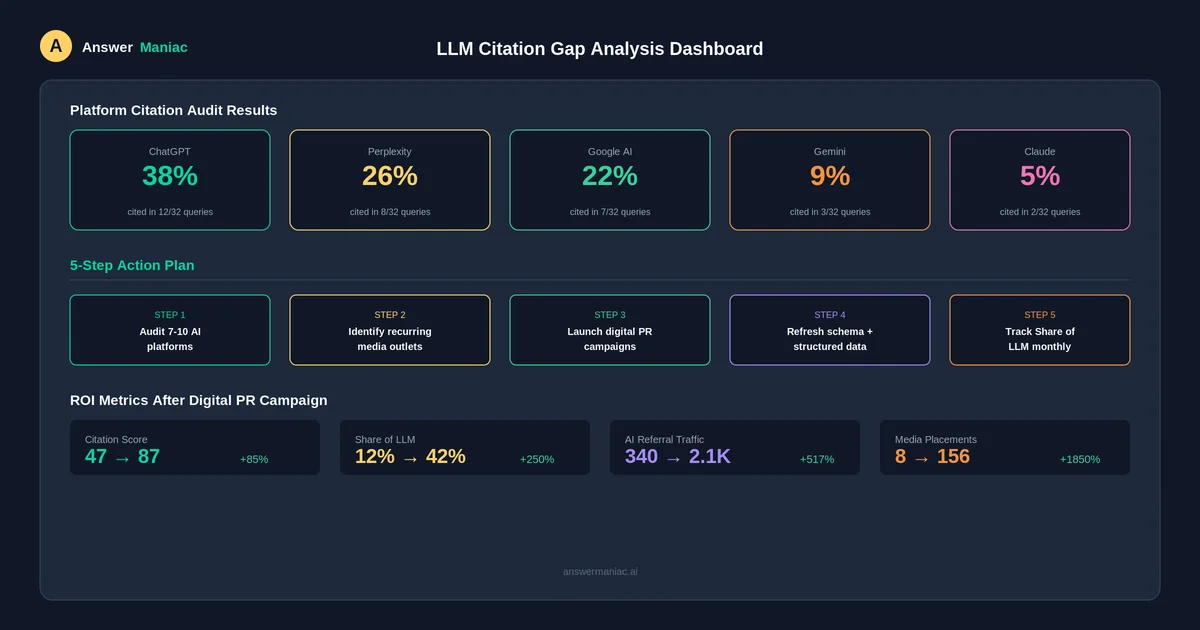
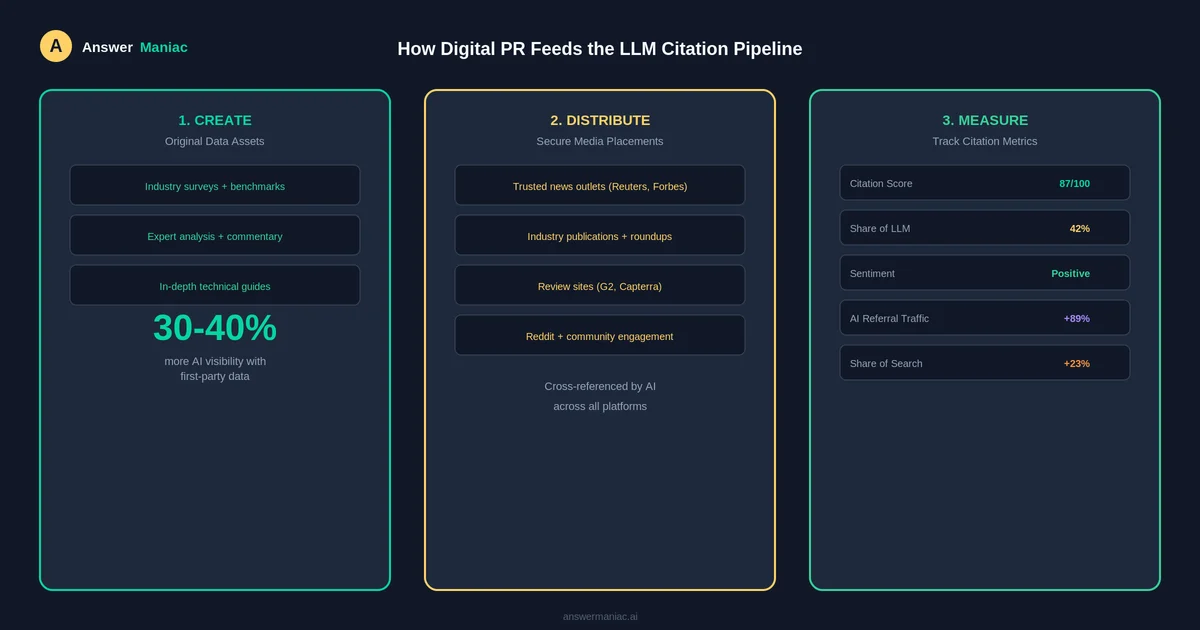
Step 1: AI visibility baseline. We query ChatGPT, Perplexity, Gemini, and Claude with the exact prompts your prospects would use. "Best [your category]," "top [your category] for [use case]," comparison queries. We document who gets cited, where you rank (if at all), and what sources the AI references.
Step 2: Angle development. We craft a newsworthy angle tied to your industry expertise. Not a company announcement — journalists don't care about your Series B or your new feature launch. We build data-driven narratives: original survey data, industry benchmarks, trend analysis. Something that positions your brand as the authority source for your category.
Step 3: Premium wire distribution. Your press release goes through wire services that feed directly into major newsrooms. Within 48–72 hours, placements start appearing on AP News, metro newspapers, TV station websites, and industry outlets.
Step 4: Verification and tracking. Every placement gets manually checked. Live link? Correct brand mention? Proper attribution? You get a full report with clickable URLs — not a spreadsheet of "potential impressions."
Step 5: AI visibility remeasurement. We re-run the same queries from Step 1 and measure what changed. Which platforms now cite you? How did your AI Visibility Score move? What's the next campaign angle?
Timing: How Fast Does AI Respond?
Placements go live within 48–72 hours of distribution. You'll have 500+ verified links within the first week. That's the easy part.
The AI citation impact depends on two variables: how quickly the platforms recrawl those sources, and how significant the authority signal is relative to your competitors.
Based on what we've tracked across campaigns, most clients see measurable movement in AI Visibility Scores within 30–60 days of the first campaign. Perplexity tends to respond fastest (it does real-time web retrieval). ChatGPT responds next (periodic training data updates plus browsing). Gemini and Claude follow on similar timelines.
The compounding effect matters here. One campaign gets you in the door. Consistent campaigns — the kind included in our Growth Engine and Category Monopoly plans — build the sustained authority presence that makes AI cite you by default rather than occasionally.
The Objection: "Isn't This Just EIN Presswire Syndication?"
I'll address this directly because it comes up. Yes, premium wire distribution uses syndication networks. That's how AP News and major newspapers receive press releases. It's been the backbone of professional PR for decades.
The question isn't whether it uses syndication — it's whether the placements are real, the links are live, and the authority signal is measurable. On all three counts, the answer is yes. We've published a full case study with 50+ clickable placement links so you can verify this yourself.
The innovation isn't in the distribution mechanism. It's in framing Digital PR as an AI visibility strategy, measuring it against AI citation outcomes, and integrating it into a broader framework designed specifically for AI search optimization.
What This Means for Your AI Visibility Strategy
If you're investing in AEO or GEO and not including Digital PR in your authority-building phase, you're leaving the highest-leverage tactic on the table.
Content optimization, schema markup, and entity structuring are necessary — they're the foundation. But without the broad, high-authority signals that Digital PR provides, your foundation doesn't have enough weight behind it for AI to treat you as citation-worthy.
Think of it this way: content tells AI what you do. Digital PR tells AI that credible, independent sources agree.
Key Takeaways
- AI platforms cite brands based on three signals: source authority (DR), entity consistency (brand + category across independent domains), and source diversity (coverage across multiple source categories).
- A single Digital PR campaign generates 500–600+ placements across AP News, newspapers, TV stations, and industry outlets — hitting all three signals simultaneously.
- Most AI visibility improvements show within 30–60 days of campaign distribution. Perplexity responds fastest due to real-time retrieval.
- Digital PR for AI search is a category nobody's owning yet. Most agencies still position PR as "backlinks" or "brand awareness."
- The strongest results come from combining Digital PR with structured content and entity optimization — the approach we call the ANSWER Framework.
Get AEO Insights Weekly
Join 500+ B2B marketers getting AI visibility tactics every Tuesday.
Ready to Get Your Brand Cited by AI?
See how your competitors show up in ChatGPT, Perplexity, and Gemini — and what it would take to get recommended.