Digital PR vs Link Building: Which One Actually Gets You Cited by AI?
Digital PR vs link building for AI visibility — comparing cost per link, domain authority impact, entity reinforcement, and which approach ChatGPT and Perplexity actually trust. Data from 600+ placements.
Direct Answer: Digital PR earns 500–600+ backlinks per campaign from DR 60–90 news outlets at $3–8 per link. Traditional link building earns 5–15 links per month from DR 30–60 sites at $100–500 per link. For AI visibility specifically, Digital PR wins because it targets the news outlets AI platforms actually train on, builds entity reinforcement across hundreds of independent sources, and is measurably tied to AI citation improvements. Link building is still valuable for targeted, niche-relevant authority — but it doesn't move AI visibility scores on its own.
There's a question I hear from almost every B2B company we talk to: "Should we invest in link building or Digital PR?"
The honest answer is that they solve different problems. But if your goal is getting recommended by ChatGPT, Perplexity, and Gemini — not just ranking on page one of Google — the data overwhelmingly favors one approach.
Let me walk through what we've seen across actual campaigns.
The Numbers: Cost, Scale, and Authority
Here's a straight comparison based on real campaign data — not projections or industry averages.
| Metric | Digital PR | Link Building |
|---|---|---|
| Links per campaign/month | 500–600+ | 5–15 |
| Average DR of sources | 60–90 | 30–60 |
| Cost per quality link | $3–8 | $100–500 |
| Time to first links | 48–72 hours | 2–6 weeks |
| AI training data coverage | High | Low |
| Entity reinforcement | 500+ sources | Isolated |
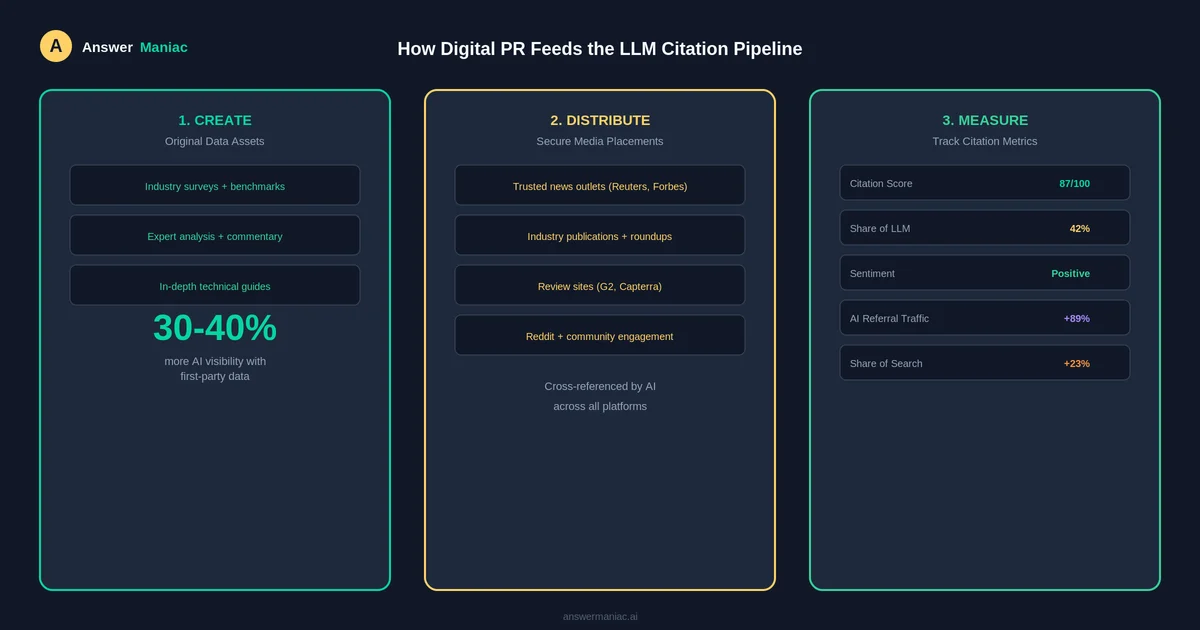
We ran a single Digital PR campaign for a B2B client that generated 600+ verified placements across AP News, 20+ major metro newspapers, and 25+ TV station affiliates. Total cost per link worked out to around $5.
Compare that to a typical link building engagement where you're paying $200–400 per guest post placement on a DR 40 blog. At 10 links per month, you're spending $2,000–4,000 for links that don't touch the sources AI platforms train on.
Why AI Cares About Source Type
This is the part most agencies miss. AI models like ChatGPT and Perplexity don't treat all backlinks equally. They're trained on large-scale web crawls that heavily weight authoritative news sources.
When Perplexity answers "what's the best back-office outsourcing platform," it's pulling from sources it considers authoritative. AP News ranks higher in that hierarchy than a guest post on a marketing blog with 500 monthly visitors.
Three specific signals matter for AI citation:
Domain authority of the source. DR 60–90 outlets carry exponentially more weight than DR 30 blogs. A link from AP News signals "this brand is credible enough for the Associated Press to mention." A link from a guest post signals "this brand paid for a placement."
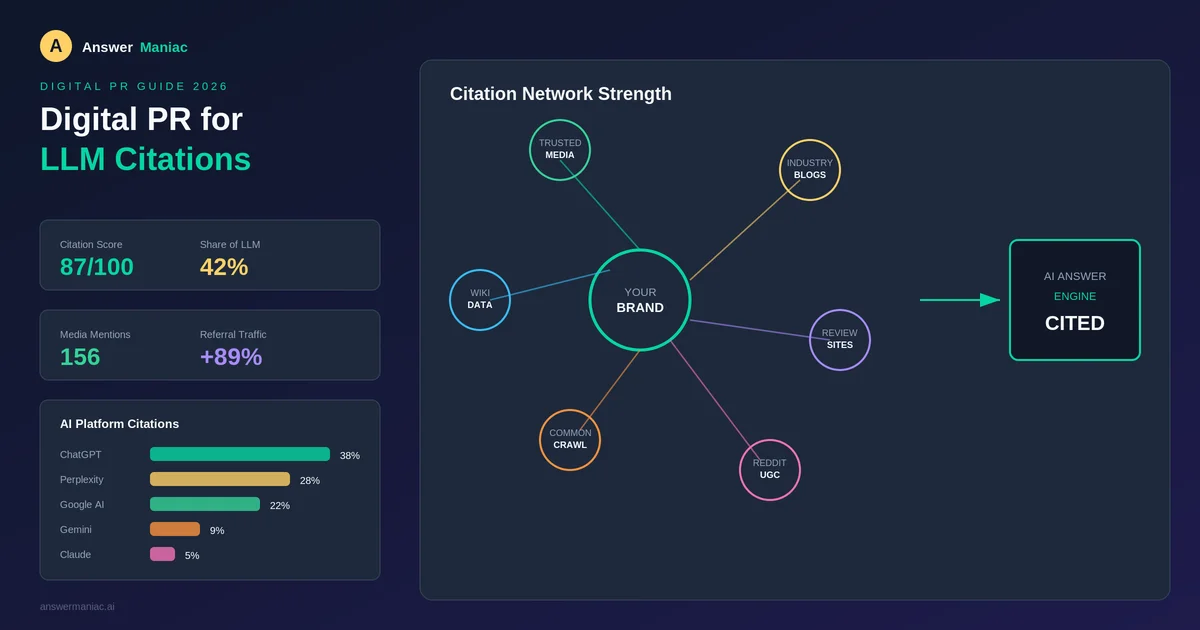
Entity consistency. When your brand name, URL, and category appear together across 500+ independent domains, AI models build a strong entity profile. That's what makes them confident enough to recommend you. Isolated links from unrelated blogs don't create this pattern.
Source diversity. AI doesn't trust brands that only appear on their own properties or a handful of niche blogs. It trusts brands mentioned across newspapers, TV stations, industry publications, and financial outlets. Digital PR campaigns hit all these categories in a single distribution.
When Link Building Still Wins
I'm not going to pretend Digital PR replaces link building entirely. There are scenarios where traditional outreach is the better investment:
Niche relevance. If you sell compliance software for healthcare, a link from a healthcare regulatory blog with 2,000 highly-targeted readers might convert better than a placement on a local NBC affiliate. Link building lets you target specific publications in your vertical.
Anchor text control. With link building, you can negotiate exact or partial-match anchor text. Digital PR placements use natural brand mentions — you don't get to specify "best compliance software for healthcare" as anchor text in an AP News article.
Ongoing content partnerships. Some link building relationships evolve into recurring guest column spots, podcast appearances, and co-marketing. Digital PR is more transactional — one campaign, hundreds of placements, done.
Early-stage topical authority. If you're a brand-new company with no existing content, building out topical authority through guest posts and contributed articles can establish your knowledge base before you amplify with PR.
The Compounding Effect: Why Most Companies Need Both
Here's what we actually recommend to clients at AnswerManiac: use Digital PR for the volume authority signals that move AI visibility scores, and use targeted link building for niche-relevant placements that drive direct referral traffic.
The ANSWER Framework positions Digital PR as the "Earn" phase — it's where you build the authority infrastructure that AI platforms need to cite you. But it works best when combined with structured content (the "Write" phase) and entity optimization (the "Structure" phase).
One without the other leaves gaps. Digital PR without optimized citation-ready content means AI sees your brand on AP News but can't find a clear, structured answer to surface. Link building without PR means your domain has niche backlinks but lacks the broad authority signals AI trusts.
What the Data Actually Shows
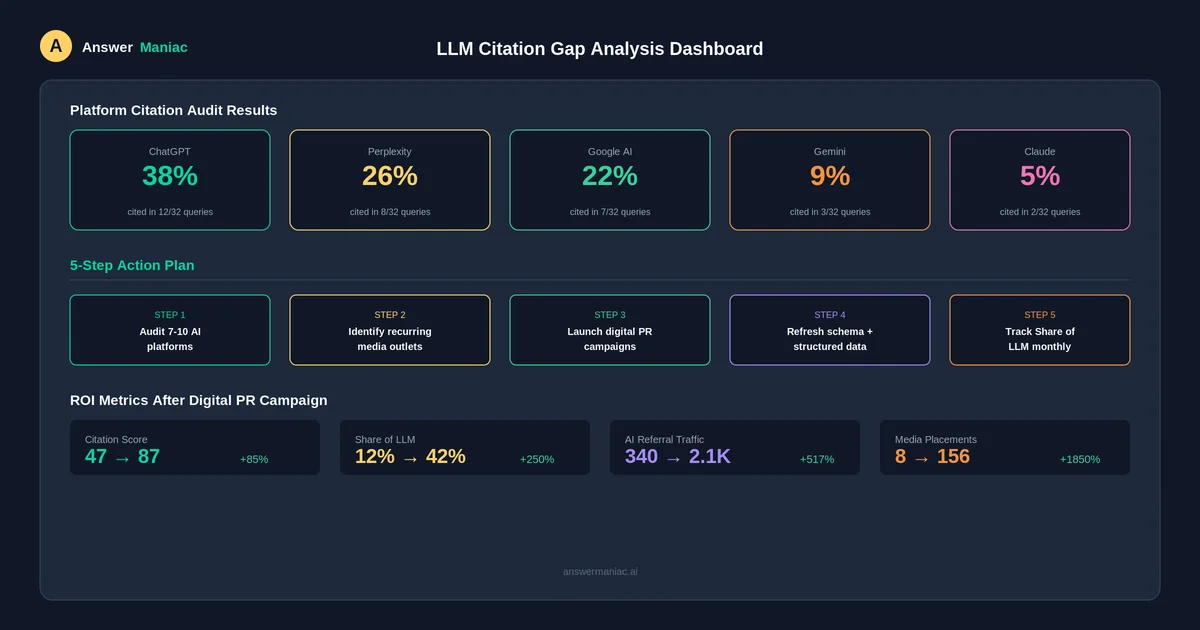
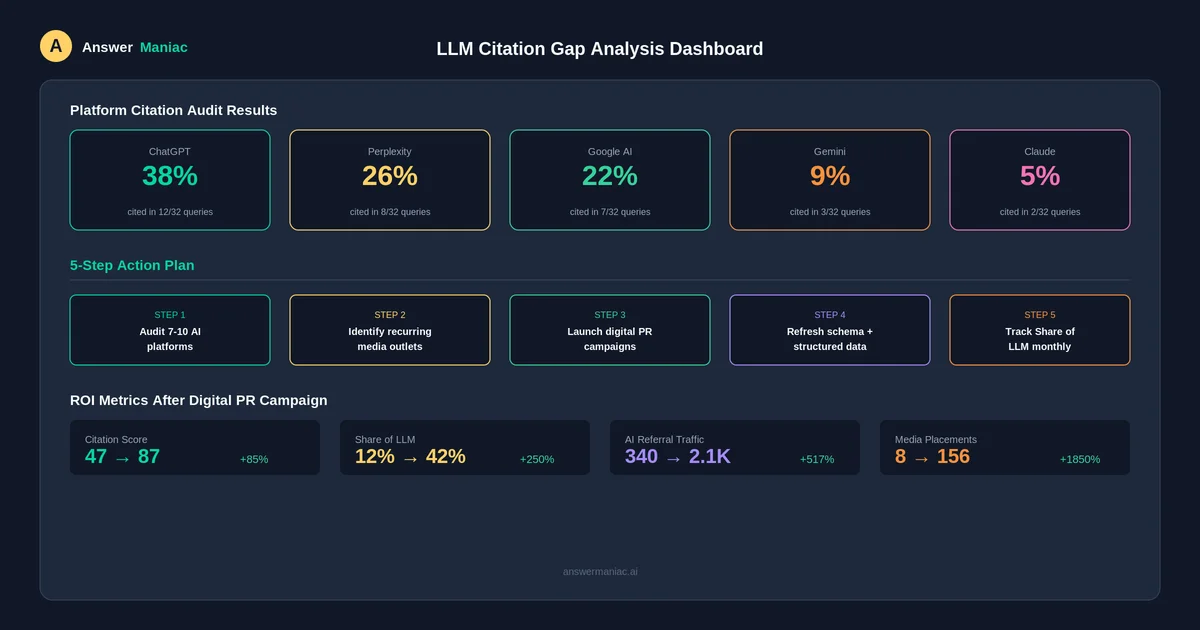
We track AI Visibility Scores before and after every campaign. Here's the pattern we've seen consistently:
After a Digital PR campaign, clients see AI Visibility Score improvements within 30–60 days. The improvement correlates most strongly with source diversity — the sheer number of independent domains mentioning the brand — followed by the DR of those sources.
After link building alone, AI Visibility Scores rarely move unless the links come from sources that are already in AI training data. A DR 45 marketing blog usually isn't.
This doesn't mean link building is worthless. It means the ROI calculation is different depending on whether your primary goal is Google rankings or AI citations.
Making the Decision
If you're trying to decide between the two, ask yourself one question: are my competitors already showing up in AI recommendations?
If yes, you need the kind of authority signals that move AI models — and that means Digital PR at scale. You can add targeted link building on top of it.
If no, you might have time to build more slowly with link building while the category is still uncontested. But don't wait too long — once a competitor locks in AI citations, displacing them gets significantly harder.
Either way, the days of treating all backlinks as equal are over. AI platforms have their own hierarchy of trust, and it favors the sources Digital PR targets.
Key Takeaways
- Digital PR generates 500–600+ links per campaign at $3–8 each from DR 60–90 outlets. Link building generates 5–15 per month at $100–500 each from DR 30–60 sites.
- AI platforms weight news outlets (AP News, major newspapers, TV stations) far more heavily than blog guest posts for citation decisions.
- Digital PR builds entity reinforcement across 500+ sources. Link building creates isolated authority signals.
- Link building still wins for niche relevance, anchor text control, and ongoing content partnerships.
- The strongest approach combines Digital PR for AI visibility with targeted link building for niche authority.
For a full breakdown of how Digital PR pricing works and what's included in each plan, check our pricing page.
Get AEO Insights Weekly
Join 500+ B2B marketers getting AI visibility tactics every Tuesday.
Ready to Get Your Brand Cited by AI?
See how your competitors show up in ChatGPT, Perplexity, and Gemini — and what it would take to get recommended.