ChatGPT vs Gemini vs Perplexity: Which AI Engine Actually Sends B2B Buyers in 2026
ChatGPT leads B2B research at 76% usage, Gemini follows at 62%, and Perplexity punches above its size on citations. Here's which AI engine matters for your B2B pipeline in 2026.
Quick Answer
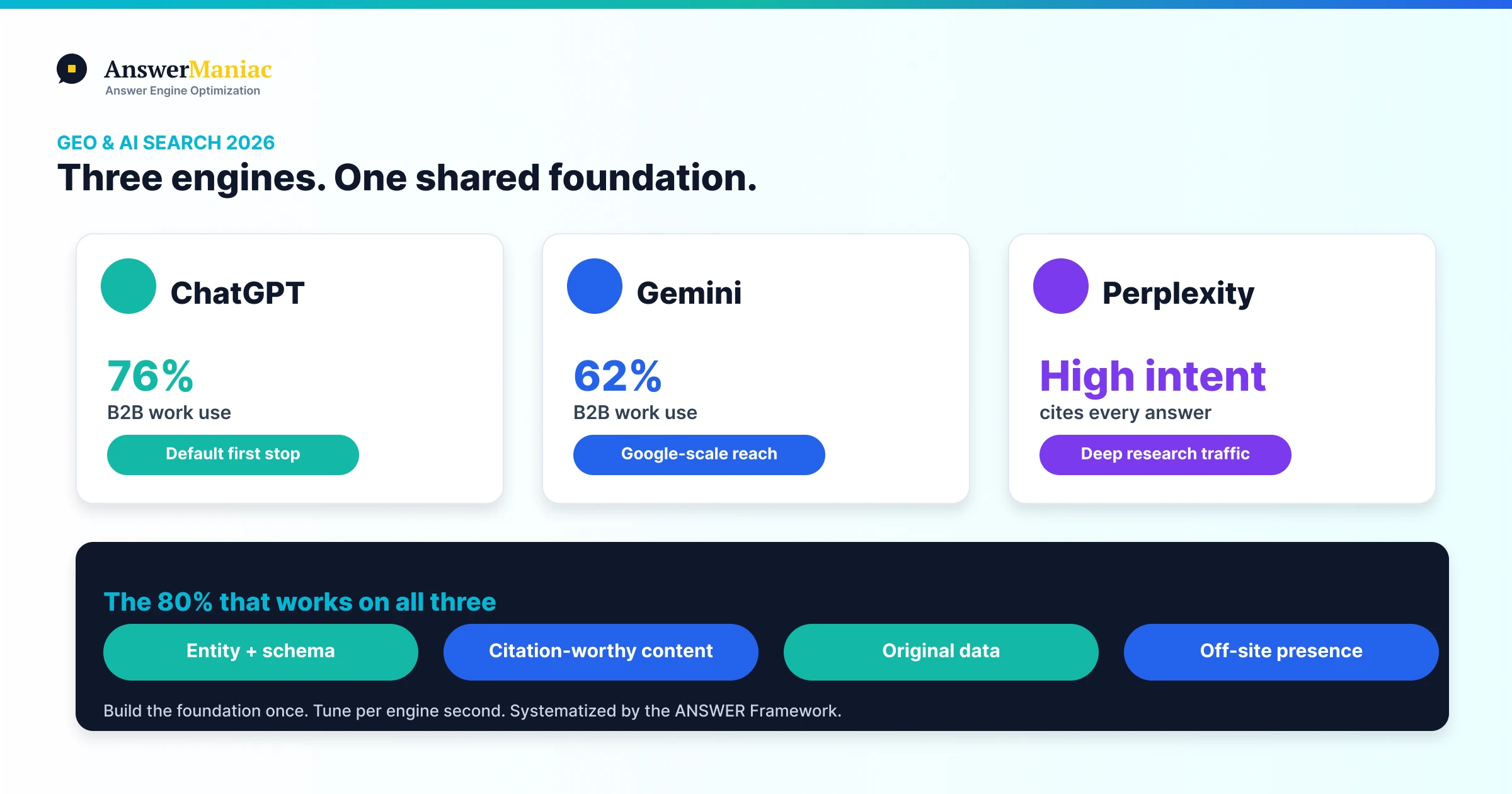
Which AI engine matters most for B2B in 2026? ChatGPT leads, used by 76% of B2B buyers for work and 71% for product research (G2 2026). Google Gemini is a close and fast-growing second at 62% for work, backed by 900M-plus monthly app users and the 2B-plus users of Google AI Overviews. Perplexity is smaller in raw reach but over-indexes on citations because it links sources on nearly every answer, making it the highest-intent traffic driver. For most B2B companies, optimize for ChatGPT first, Gemini and AI Overviews second, and Perplexity for buyers deep in research.
You cannot chase every AI engine at once, and you should not try. The engines differ in who uses them, how they pick sources, and what kind of buyer they send. Spread yourself evenly and you underperform on all three. Sequence them right and you compound.
I get asked "which one should we focus on?" almost every week. The honest answer starts with the usage data, not with whichever engine is trending on LinkedIn that week. So let me walk through what the 2026 numbers actually say, then give you the sequencing I use with clients.
One quick caveat before the data: platform stats in this space come largely from vendor announcements and third-party aggregators, and they move fast. I have cited the most credible sources I could find and flagged where a number is a company disclosure versus an estimate. Treat the ranges as directional, not gospel.
The Usage Data: Who B2B Buyers Actually Use
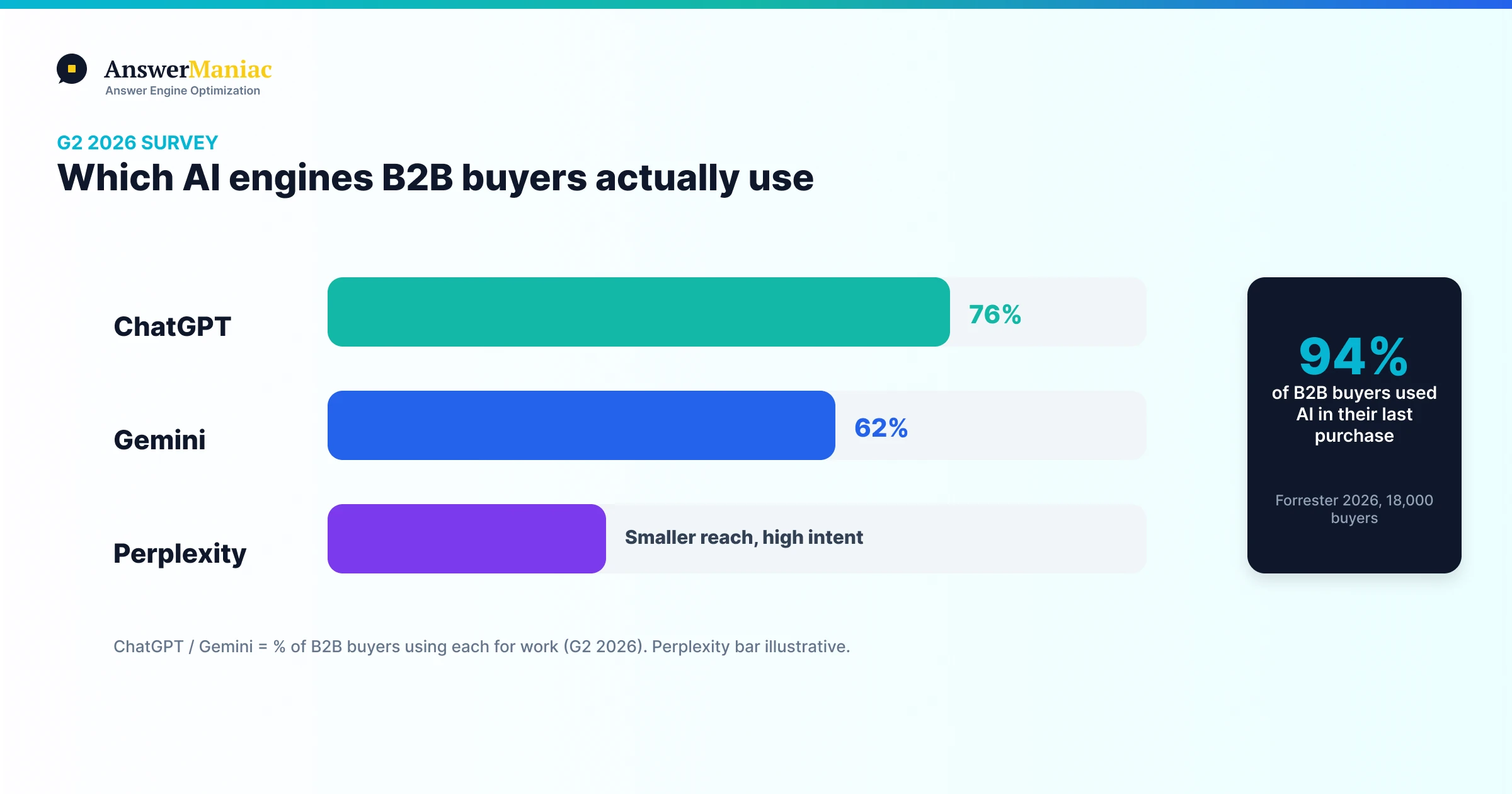
G2's 2026 survey of B2B decision-makers gives the clearest read on work usage:
| Engine | B2B work use | Product research use | Source |
|---|---|---|---|
| ChatGPT | 76% | 71% | G2 2026 survey |
| Google Gemini | 62% | 61% | G2 2026 survey |
| Perplexity | Lower reach, high intent | Strong on cited research | G2 2026 / reporting |
Set that against the macro numbers. Forrester's 2026 Buyers' Journey Survey of 18,000 buyers found 94% used AI during their most recent purchase. So the question is not whether your buyers use AI, it is which engine catches them at which moment.
Now the reach behind each engine.
ChatGPT: The Default First Stop
ChatGPT is where most B2B research begins. At 76% work usage, it is the closest thing to a default. Its answers name vendors conversationally, and once it "knows" a company it tends to surface that company repeatedly, which we saw directly in our own research where ChatGPT concentrated citations on fewer companies but mentioned them more than once.
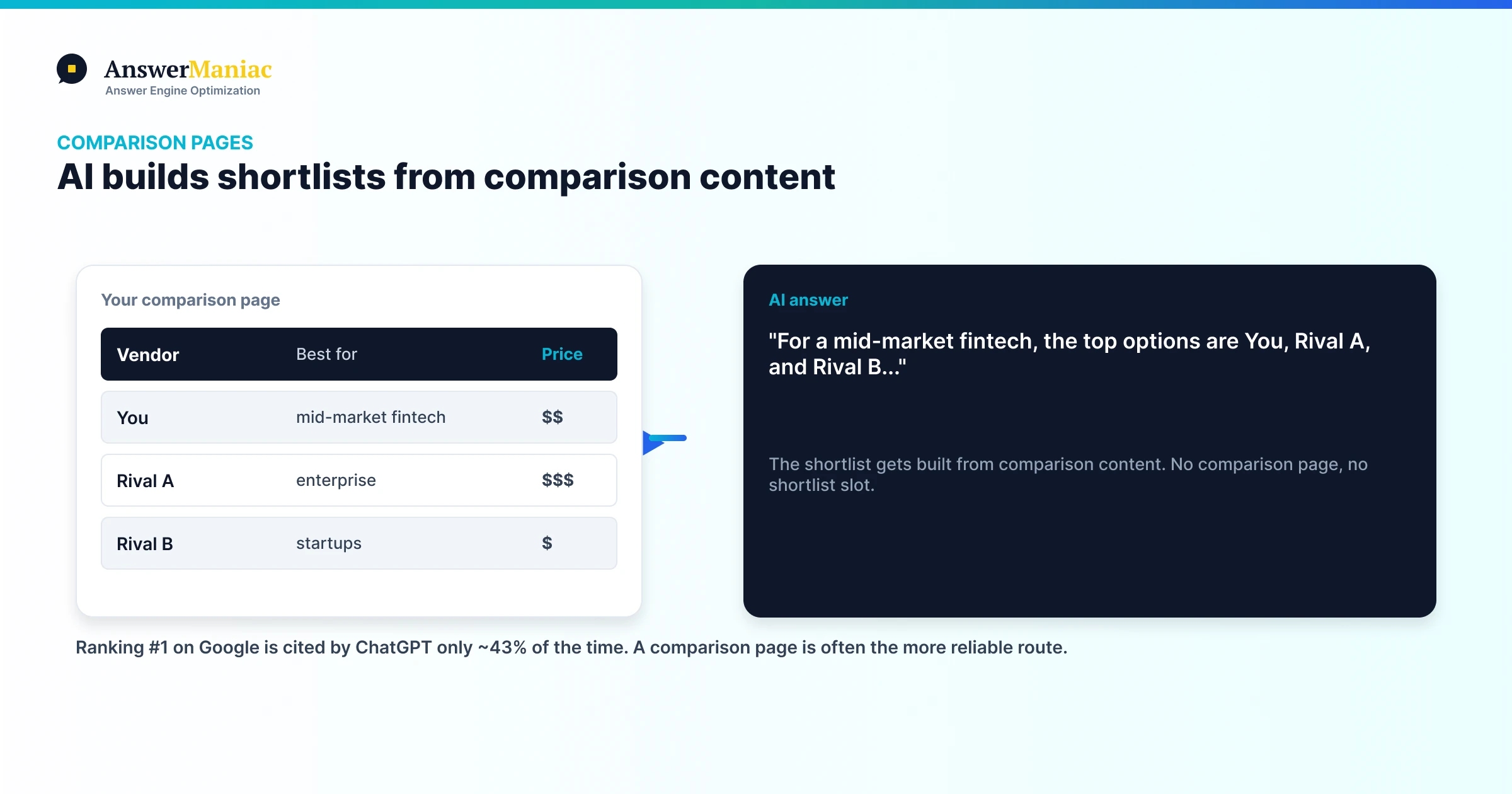
How it picks sources: ChatGPT's search pulls in real time and favors authoritative, well-structured content, and notably it does not just parrot the Google top ten. Independent analysis found pages ranking number one on Google were cited by ChatGPT only about 43% of the time, which means classic rank does not guarantee an AI mention. You earn the mention through entity authority and extractable content, not rank alone.
Priority for B2B: first. If you optimize for one engine, this is it.
Gemini: The Google-Scale Second Front
Gemini is the one teams underrate, usually because they think of it as just the chatbot. The reach is much larger than the app alone.
The Gemini app reached more than 900 million monthly active users at Google I/O in May 2026 and passed 950 million by its Q2 2026 earnings, with daily actives tripling year over year (Google disclosures). More important for B2B, Gemini is woven through Google's surface area: AI Overviews now serve more than 2 billion monthly users, one of the largest AI distribution layers anywhere.
How it picks sources: Gemini grounds many answers in Google Search, so your standard Google visibility, structured data, and entity signals carry over. This is the engine where good technical SEO and AI Overviews optimization do double duty. If you are already strong in Google Search, you have a head start in Gemini.
Priority for B2B: second, and rising. The overlap with your existing Google work makes it efficient to pursue.
Perplexity: Smaller Reach, Higher Intent
Perplexity has less raw reach than ChatGPT or Gemini, but it behaves differently in a way that matters for B2B. It cites sources on nearly every answer, and its users skew toward people doing serious research. That combination makes it a high-intent traffic driver relative to its size.
How it picks sources: Perplexity retrieves in real time and leans hard on cited, recent, well-structured content. It is often the fastest engine to reward a genuinely useful, data-rich page with a citation, which is why it shows up early when you publish original research.
Priority for B2B: third overall, but first if your buyers are analysts, technical evaluators, or anyone deep in a comparison. The traffic it sends is small in volume and strong in intent.
The Good News: The Work Overlaps
Here is the part that should lower your stress. You are not building three separate programs. The foundational work that earns you a mention in one engine earns it in the others, because they all reward the same underlying signals:
- Consistent entity information and structured data.
- Clear, extractable answers in formats engines pull from, like comparison tables and direct-answer blocks.
- Original data and genuinely new information, not restated common knowledge.
- Off-site presence: reviews, earned media, and real community discussion.
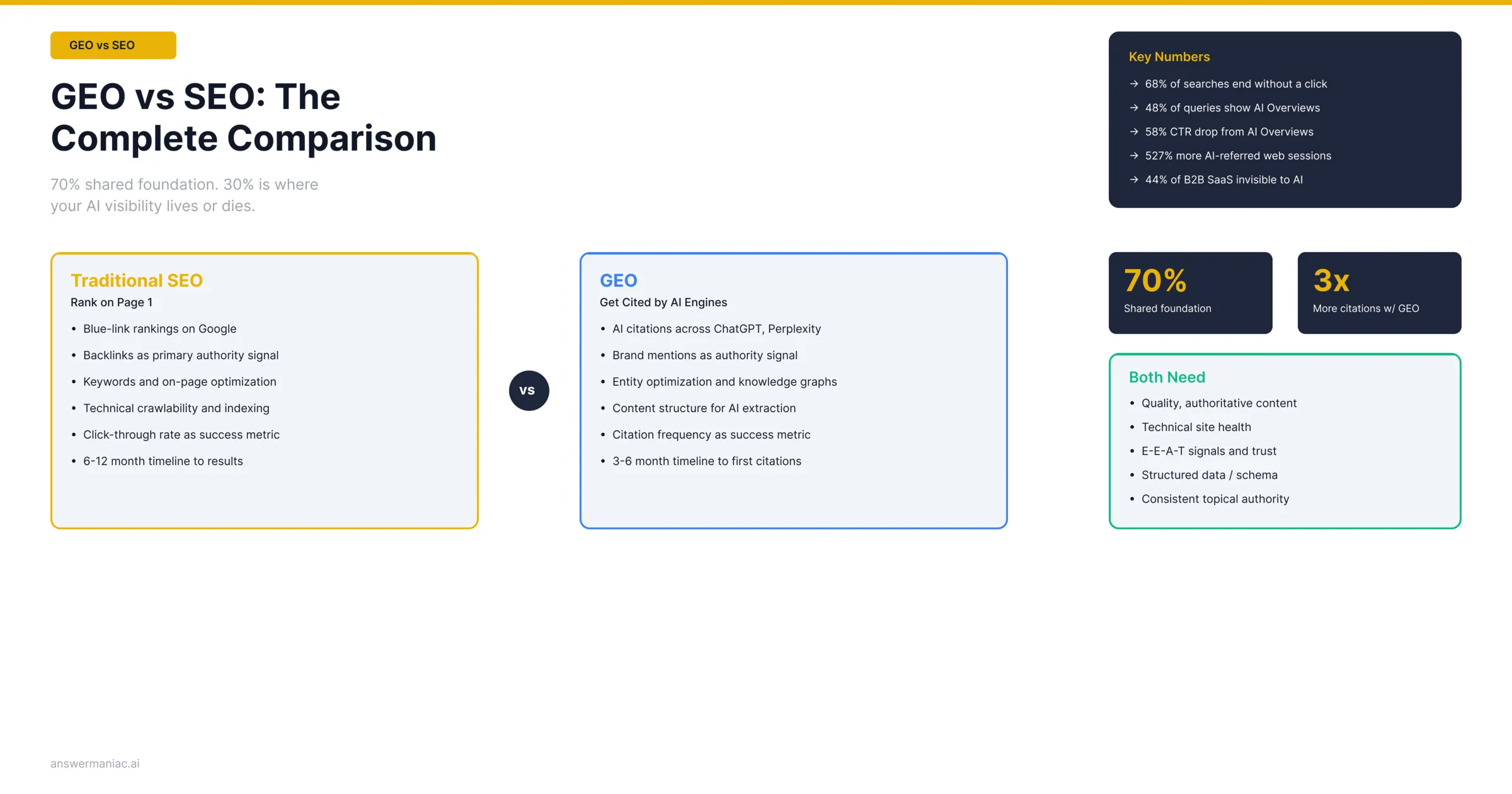
Do that work once and it compounds across ChatGPT, Gemini, Perplexity, and AI Overviews. The per-engine tuning is the last 20%. The shared foundation is the first 80%, and it is the same 80% every time. That shared foundation is exactly what the ANSWER Framework systematizes.
How to Sequence Your Effort
For a typical B2B company, here is the order I recommend:
- Build the shared foundation. Entity authority, schema, citation-worthy content. This is engine-agnostic and non-negotiable.
- Optimize for ChatGPT. Highest usage, default first stop, so the fastest path to being in the consideration set.
- Extend to Gemini and AI Overviews. Build on your Google Search strength; the overlap makes this efficient.
- Tune for Perplexity. Especially if your buyers are researchers or technical evaluators. Original data pays off here fast.
- Measure share of voice across all four. Track where you win and lose using AI share of voice, then reallocate.
Notice what is not on the list: picking one engine and ignoring the rest. The data does not support a single-engine strategy, because your buyers use several. It supports a shared foundation with sequenced tuning.
Frequently Asked Questions
Which AI engine do B2B buyers use most? ChatGPT, used by 76% of B2B buyers for work and 71% for product research in G2's 2026 survey. Gemini follows at 62% for work, and Perplexity has smaller reach but high research intent.
Is Gemini worth optimizing for? Yes. The Gemini app passed 900 million monthly users in 2026, and Gemini grounds many answers in Google Search, so your existing Google visibility and structured data carry over. It is one of the most efficient engines to pursue.
Does Perplexity send meaningful B2B traffic? Relative to its size, yes. Perplexity cites sources on nearly every answer and its users tend to be deep in research, so the traffic is lower in volume but higher in intent, which suits B2B.
Do I have to optimize each engine separately? No. Roughly 80% of the work is shared: entity authority, structured data, citation-worthy content, and off-site presence. Per-engine tuning is the final layer, not a separate program.
Does ranking number one on Google get me cited by ChatGPT? Not reliably. Analysis found number-one Google results were cited by ChatGPT only about 43% of the time. AI citation depends on entity authority and extractable content, not rank alone.
The Takeaway
Do not pick a favorite engine. Pick a sequence. ChatGPT is where most B2B research starts, Gemini rides Google's enormous surface area, and Perplexity punches above its weight on high-intent research traffic. The foundation that earns you a place in all three is the same, so build that first and tune per engine second. When 94% of your buyers research with AI, the goal is simple: be the vendor the answer names, on every engine they use.
Want to see which engines currently mention you and which name your competitors instead? Run a free AI visibility audit for your baseline across ChatGPT, Gemini, and Perplexity.
Sources
- G2 2026 global survey of B2B decision-makers (ChatGPT 76% work / 71% research; Gemini 62% / 61%)
- Forrester 2026 Buyers' Journey Survey (18,000 buyers; 94% used AI during most recent purchase)
- Google disclosures, Google I/O May 2026 and Q2 2026 earnings (Gemini app 900M-plus, then 950M-plus MAU; AI Overviews 2B-plus monthly users)
- Independent AI citation analysis (number-one Google results cited by ChatGPT ~43% of the time)
- AnswerManiac benchmark research: 376 B2B companies across five verticals
Related Reading
Get AEO Insights Weekly
Join 500+ B2B marketers getting AI visibility tactics every Tuesday.
Ready to Get Your Brand Cited by AI?
See how your competitors show up in ChatGPT, Perplexity, and Gemini — and what it would take to get recommended.