What Is an AI SEO Agency? How to Choose the Right One in 2026 | AnswerManiac
An AI SEO agency optimizes your brand for AI-generated answers across ChatGPT, Google AI Overviews, Gemini & Perplexity. Learn what to look for, how GEO works, and why traditional SEO alone isn't enough. Free visibility audit inside.
Direct Answer: An AI SEO agency is a specialized marketing firm that optimizes your brand's visibility across AI-powered search experiences -- including Google AI Overviews, ChatGPT, Gemini, Perplexity, and Copilot. Unlike traditional SEO agencies that focus exclusively on ranking in organic listings, an AEO agency (also called a GEO agency or LLM SEO agency) ensures your content is structured, cited, and surfaced in AI-generated answers where most modern search journeys now begin. The best AI SEO agencies combine traditional SEO foundations with generative engine optimization (GEO) to position your brand as a trusted, referenced source -- not just a ranked page.
Table of Contents
- Why Traditional SEO Alone Is No Longer Enough
- What Does an AI SEO Agency Actually Do?
- AI SEO vs. Traditional SEO: What's the Difference?
- How Does Generative Engine Optimization (GEO) Work?
- What Services Should an AI SEO Agency Offer?
- How to Evaluate and Choose the Right AI SEO Agency
- What Results Should You Expect from AI SEO Services?
- How AnswerManiac Approaches AI Search Optimization
- FAQs About AI SEO Agencies
Why Is Traditional SEO Alone No Longer Enough?
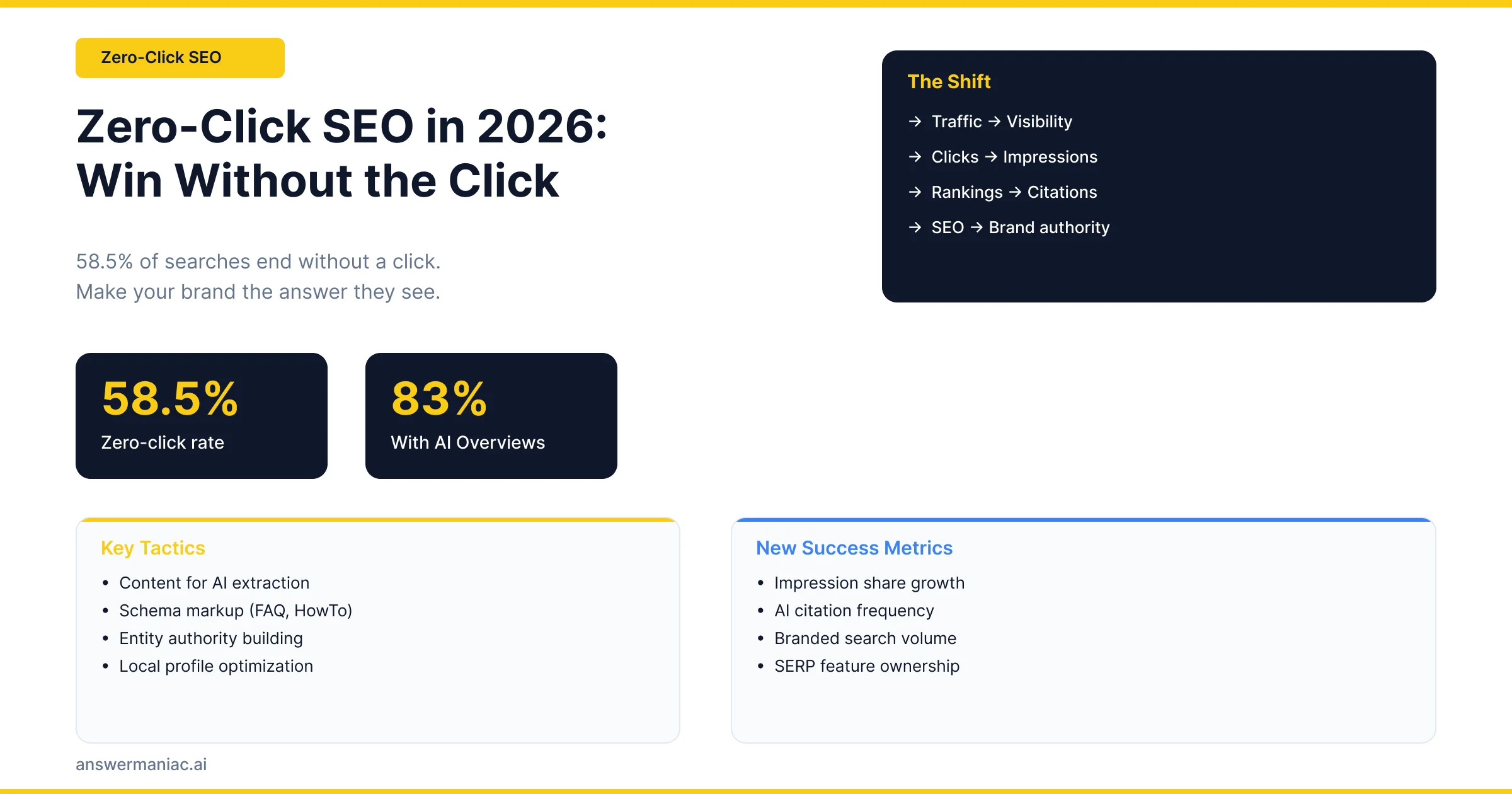
Search behavior has fundamentally changed. According to data from SparkToro and Datos, over 65% of Google searches now end without a single click. Google's AI Overviews serve more than 1 billion users worldwide, and queries with 8+ words have increased by 700%. People aren't just typing short keywords anymore -- they're asking full questions and expecting complete, conversational answers.
This shift means that ranking on page one of traditional search results is no longer the whole game. Your brand can hold a #1 organic position and still be invisible if the AI-generated answer above it cites your competitor instead.
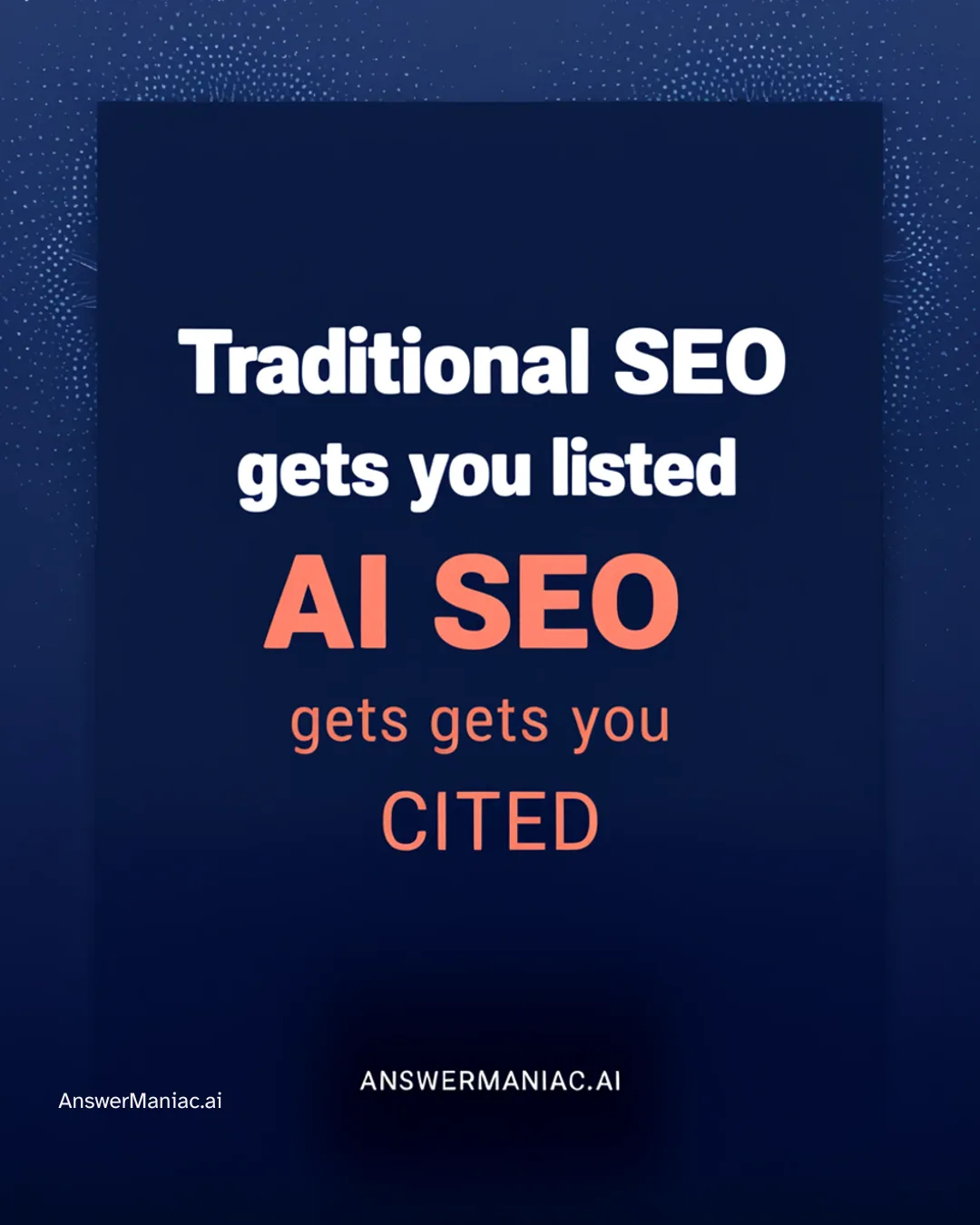
That's the fundamental problem an AI SEO agency solves. Traditional SEO gets you listed. AI SEO gets you cited. And in an era where AI summaries are the first thing users read, being cited is what builds trust, drives brand recognition, and ultimately captures the click.
| Metric | Value |
|---|---|
| Increase in 8+ word queries | 700% |
| Google AI Overviews users | 1B+ |
| Searches ending without a click | 65%+ |
| Increase in search impressions | ~50% |
| Drop in clicks from AI answers | -30% |
What Does an AI SEO Agency Actually Do?
An AI SEO agency goes beyond keyword rankings to optimize how language models understand, evaluate, and reference your brand. The core focus is making your content the answer -- not just a result.
Here's what that involves in practice:
AI Visibility Auditing
The agency benchmarks where your brand currently appears (and where it doesn't) across AI platforms. This includes testing real prompts on ChatGPT, Gemini, Perplexity, Copilot, and Google AI Overviews to identify citation gaps, missed topics, and how machines currently interpret your authority.
Content Structuring for LLM Retrieval
This isn't about keyword stuffing. It's about reworking your existing content to improve clarity, semantic hierarchy, and factual density so that AI systems can parse, trust, and cite your pages. The goal is to earn LLM citations by providing direct answer boxes, question-based headings, clear entity definitions, and structured data markup that makes your expertise machine-readable.
Generative Engine Optimization (GEO)
GEO is the strategic layer that positions your content to appear in AI-generated summaries and conversational search results. This involves entity optimization, topical authority building through content clusters, NLP readability improvements, and schema implementation that helps machines understand context.
Strategic Content Creation
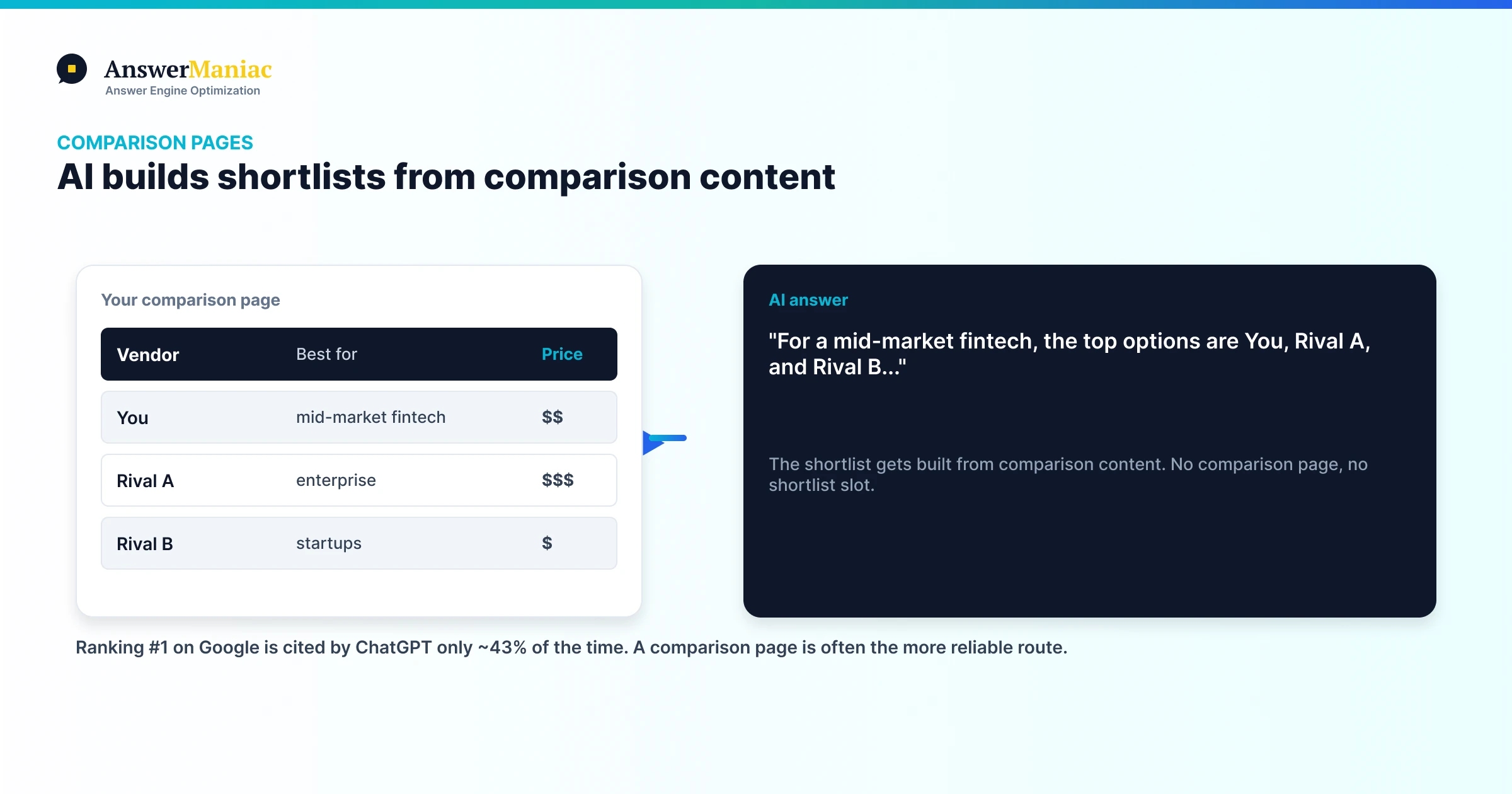
An AI SEO agency creates new content specifically designed to be surfaced in generative answers. This means explainer articles, comparison pages, FAQ hubs, and topic clusters that reinforce your brand as a citable, authoritative source across every platform.
Performance Measurement & Reporting
Traditional metrics like rankings and clicks still matter, but an AI SEO agency also tracks AI citation presence, share of voice in generative results, brand mention frequency across LLMs, and visibility trends over time. Understanding your LLM citations footprint is essential for proving ROI in AI search.
How Does AI SEO Compare to Traditional SEO?
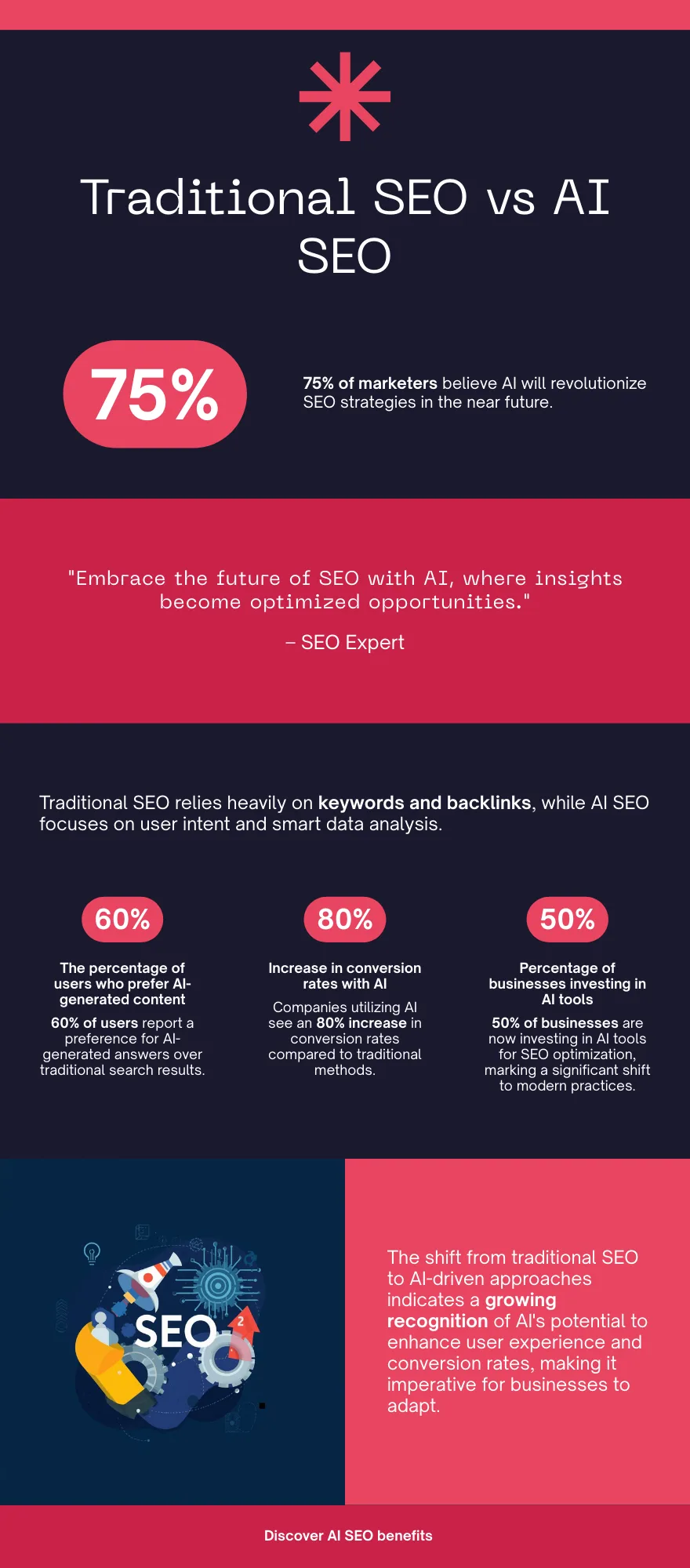
Traditional SEO and AI SEO aren't competing strategies -- they're complementary layers. Here's a side-by-side breakdown to clarify where each approach delivers value:
| Category | Traditional SEO | AI SEO (GEO / AEO) |
|---|---|---|
| Search Experience | 10 blue links on Google SERPs | AI-generated answers in Google AI Overviews, ChatGPT, Gemini, Perplexity, Copilot |
| Primary Goal | Rank higher in organic listings | Be cited or featured in AI-generated responses |
| Audience Behavior | Users scan SERPs and click through | Users get direct answers, often without clicking |
| Optimization Focus | Keywords, backlinks, metadata, page structure | Clarity, semantic structure, trust signals, entity optimization |
| Content Style | Keyword-rich, skimmable | Structured, factual, source-friendly (FAQs, How-Tos, explainers) |
| Technical Elements | Meta tags, sitemaps, mobile optimization | Schema markup, entity recognition, NLP readability, alt text |
| Performance Metrics | Rankings, clicks, organic sessions | AI citation presence, share of voice, visibility across AI outputs |
| Authority Signals | Domain authority, backlinks, topical depth | Cited sources, brand mentions, trustworthiness across LLMs |
| Content Strategy | Optimize individual pages for queries | Develop entity-based topic clusters AI can synthesize |
| Example Win | Ranking #1 for "best project management tool" | Being the cited source when someone asks ChatGPT: "What's the best tool for managing remote teams?" |
Key takeaway: Traditional SEO earns organic visibility. AI SEO earns citations in the answers people actually read. Working with a LLM citations agency helps you measure and grow that citation presence. The strongest strategies combine both traditional and AI SEO, creating a unified visibility presence from top-of-funnel AI answers through to bottom-of-funnel landing pages.
How Does Generative Engine Optimization (GEO) Work?
Generative Engine Optimization is the practice of structuring and positioning content so it's retrieved, understood, and cited by large language models. While the term is newer, the discipline draws from established SEO principles and extends them into how AI systems evaluate sources.
Here's how GEO differs from traditional optimization in practice:
Entity-First Content Architecture
Instead of targeting isolated keywords, GEO builds content around entities -- people, companies, products, concepts -- and maps the relationships between them. Language models don't think in keywords. They think in entities and context. Your content needs to match that.
Structured Answers Over Keyword Density
GEO-optimized content provides clear, direct answers to specific questions using structured formats: definition boxes, comparison tables, step-by-step processes, and FAQ sections. These formats make it easy for LLMs to extract and cite your content in their responses.
Trust and Authority Signaling
LLMs weigh trust signals differently than Google's traditional ranking algorithm. Author credentials, cited statistics, outbound links to authoritative sources, and consistent brand mentions across the web all influence whether an AI system treats your content as citable. Building a strong LLM citations profile is one of the most measurable ways to track whether your authority signals are working.
Multi-Platform Visibility
GEO doesn't optimize for a single search engine. A comprehensive approach ensures your brand is referenced across Google AI Overviews, ChatGPT, Gemini, Perplexity, Copilot, and emerging AI assistants. Each platform retrieves information slightly differently, so the strategy needs to account for those nuances.
What Services Should a Credible AI SEO Agency Offer?
Not every agency calling itself an "AI SEO agency" actually delivers AI-specific optimization. Many are traditional SEO firms that have rebranded without meaningfully changing their approach. Here's the service checklist that separates genuine AI SEO agencies from the rebrand:
| Service | What It Means | Why It Matters |
|---|---|---|
| AI Visibility & Entity Audit | Benchmark your brand's presence across AI platforms using real prompts | Reveals where you're invisible and where competitors are being cited |
| Content Structuring & Optimization | Rework existing content for semantic clarity, entity mapping, and LLM readability | Makes your content machine-readable and citable |
| GEO Strategy & Implementation | Build entity-based topic clusters with schema, structured answers, and trust signals | Positions your brand for AI-generated answers |
| Strategic Content Creation | Create new AEO-optimized pages, explainers, FAQs, and comparison content | Fills topical gaps and reinforces brand authority |
| CRO for AI-Referred Traffic | Optimize landing pages for users who arrive from AI answers (mid-funnel, answer-seeking) | Converts AI-driven visitors who behave differently than SERP clickers |
| AI Citation Tracking & Reporting | Monitor brand mentions, citation frequency, and share of voice across AI platforms | Proves ROI and identifies emerging opportunities |
| Traditional SEO Foundation | Technical SEO, on-page optimization, backlink strategy, and site architecture | Provides the ranking base that AI systems rely on for source selection |
How Do You Evaluate and Choose the Right AI SEO Agency?
The AI SEO space is growing fast, and so is the number of agencies claiming expertise they don't have. Here's a practical framework for evaluating whether an AI SEO company can actually deliver results:
1. Ask for AI-Specific Case Studies
Traditional SEO case studies showing ranking improvements don't prove AI search expertise. Ask for evidence of increased AI citations, brand presence in ChatGPT or Gemini responses, or documented improvements in Google AI Overview visibility. If they can't show you this, they're running a traditional playbook with a new label.
2. Verify Their Measurement Framework
A legitimate AI SEO agency should be able to explain exactly how they measure success beyond rankings and traffic. Look for tools and processes that track citation frequency, brand mention sentiment, share of voice in AI answers, and prompt-level visibility across multiple platforms.
3. Check for a Unified Strategy
The best agencies don't treat traditional SEO and AI SEO as separate workstreams. They build unified strategies where technical SEO, content optimization, and GEO reinforce each other. If an agency can only do one or the other, your visibility will have gaps.
4. Understand Their Content Approach
Ask how they structure content differently for AI retrieval versus traditional rankings. If the answer is just "we use AI to write content faster," that's not AI SEO -- that's content automation. Genuine AI SEO involves restructuring content architecture, implementing entity-based strategies, and building pages that AI systems want to cite.
5. Look for Platform-Specific Expertise
Each AI platform retrieves and cites content differently. Google AI Overviews, ChatGPT, Gemini, Perplexity, and Copilot all have distinct behaviors. A strong AI SEO agency understands these differences and optimizes for visibility across all of them, not just Google.
What Results Should You Expect from AI SEO Services?
Setting realistic expectations is critical. AI SEO is a long-term strategy, not a quick fix. Here's a general timeline based on industry benchmarks and agency performance data:
| Timeframe | What Typically Happens |
|---|---|
| Month 1-2 | Audit and benchmarking. Your current AI visibility is mapped across platforms. Strategy development, content gap analysis, and technical foundations are established. |
| Month 2-4 | Content restructuring and optimization. Existing pages are reworked for LLM readability. New GEO-optimized content starts being published. Schema and entity mapping are implemented. |
| Month 4-6 | Early citations begin appearing. Your brand starts showing up in AI-generated answers for targeted topics. Traditional rankings improve as the technical foundation strengthens. |
| Month 6-12 | Compounding visibility. AI citation frequency increases. Share of voice in generative results grows. Traditional SEO and AI SEO compound together, driving both traffic and trust. |
| Ongoing | Continuous monitoring, prompt-level testing, and strategy refinement. The AI search landscape evolves constantly, and your strategy needs to evolve with it. |
Important: Beware any agency that promises immediate AI citations or guaranteed placements in ChatGPT responses. AI search results are dynamic and non-deterministic -- no agency can control them the way you might bid on an ad placement. What a good agency can do is systematically increase your probability of being cited by building the right content, structure, and authority signals.
How Does AnswerManiac Approach AI Search Optimization?
AnswerManiac is an AI SEO agency built from the ground up around the principles of generative engine optimization. We don't bolt AI SEO onto a traditional playbook -- it's the foundation of everything we do.
Here's what makes our approach different:
Full-Spectrum AI Visibility Tracking
We monitor your brand's presence across Google AI Overviews, ChatGPT, Gemini, Perplexity, Copilot, and traditional search results through a unified dashboard. You see exactly where you're being cited, where competitors are winning, and where the biggest opportunities exist.
AEO-First Content Architecture
Every page we create or optimize follows a proven AEO framework: question-based H1s, direct answer boxes, structured follow-up sections, clear entity definitions, and schema markup that gives AI systems exactly what they need to cite your content. This isn't theory -- it's the framework we use across every client engagement.
Traditional SEO + AI SEO, Unified
We don't treat these as separate services. Our strategy ensures your technical SEO foundation supports AI visibility, your content architecture serves both ranking and citation goals, and your authority signals compound across traditional and AI search. The result is complete visibility -- from the AI answer at the top of the funnel to the landing page that converts at the bottom.
Transparent, Citation-Focused Reporting
Our reporting goes beyond traffic and rankings. You'll see AI citation frequency, share of voice in generative answers, brand mention tracking, prompt-level visibility data, and competitive benchmarking -- all in a single view that shows you what your customers actually see when they search.
Want to see where your brand stands in AI search?
We'll audit your current AI visibility across Google AI Overviews, ChatGPT, Gemini, and Perplexity -- and show you exactly where your competitors are being cited instead.
GET YOUR FREE AI VISIBILITY AUDIT
FAQ
What is an AI SEO agency?
An AI SEO agency optimizes your brand's visibility in AI-powered search results -- including Google AI Overviews, ChatGPT, Gemini, Perplexity, and Copilot. It combines traditional SEO with generative engine optimization (GEO) to ensure your content is cited, not just ranked. An AEO agency like AnswerManiac focuses specifically on making your brand the answer across every AI search platform.
Is AI SEO replacing traditional SEO?
No. AI SEO and traditional SEO are complementary strategies. Traditional SEO ensures your site is crawlable, indexed, and ranked. AI SEO ensures your content is structured and authoritative enough to be cited in AI-generated answers. The most effective strategy combines both.
What is the difference between GEO, AEO, AIO, and LLMO?
These terms all describe variations of the same discipline: optimizing content for AI-generated search results. GEO (Generative Engine Optimization), AEO (Answer Engine Optimization), AIO (AI Optimization), and LLMO (Large Language Model Optimization) emphasize slightly different aspects, but the core goal is the same -- getting your brand cited in AI answers.
How do you measure success in AI SEO?
Key metrics include AI citation presence (how often your brand is referenced in AI answers), share of voice in generative results, brand mention frequency across LLM platforms, traditional rankings, organic traffic, and conversion rates from AI-referred visitors.
Do keywords still matter in AI SEO?
Keywords still matter for traditional SEO, but AI SEO places greater emphasis on entities, topics, and context. LLMs don't match keywords to queries the way traditional search engines do -- they understand meaning and relationships. Your content strategy should reflect that shift.
What kind of content performs best in AI-generated answers?
Content that provides clear, structured, factual answers to specific questions performs best. This includes pages with direct answer boxes, well-organized H2/H3 headings, comparison tables, step-by-step guides, FAQ sections, and authoritative sourcing. The more machine-readable and trustworthy your content is, the more likely it is to be cited.
How much do AI SEO services cost?
AI SEO agency pricing varies widely, typically ranging from $2,500 to $10,000+ per month depending on scope, competition, and the breadth of platforms being targeted. Agencies with proven AI-specific track records tend to command higher rates, but the ROI comes from capturing visibility in a channel your competitors likely aren't optimizing for yet.
Can AI SEO help with branded search?
Yes. AI SEO is especially powerful for branded queries because LLMs often surface brand information in response to questions about products, services, and comparisons. Ensuring that AI systems have accurate, positive, and comprehensive information about your brand directly influences how you're represented in AI answers.
How long does it take to see results from AI SEO?
Initial improvements in AI visibility typically appear within 2-4 months, with significant citation growth occurring around the 4-6 month mark. Like traditional SEO, AI SEO is a compounding strategy -- the longer you invest, the stronger your visibility becomes across both traditional and AI search.
TL;DR: Why Your Brand Needs an AI SEO Agency in 2026
AI-powered search isn't coming -- it's here. Over 1 billion people use Google AI Overviews, and platforms like ChatGPT and Gemini are becoming primary discovery channels for products and services.
An AI SEO agency ensures your brand is visible, cited, and trusted across every platform where your customers are searching. Traditional SEO builds the foundation. AI SEO (GEO) extends your reach into the answers people actually read.
The brands that invest now will own the conversation. The brands that wait will spend the next two years trying to catch up.
Don't let your brand turn invisible. Get your free AI visibility audit from AnswerManiac and see exactly where you stand -- and where you can go next.
Related Articles
Get AEO Insights Weekly
Join 500+ B2B marketers getting AI visibility tactics every Tuesday.
Ready to Get Your Brand Cited by AI?
See how your competitors show up in ChatGPT, Perplexity, and Gemini — and what it would take to get recommended.