ChatGPT Ads Alternative: How to Get Free AI Traffic Instead of Paying $60 CPM
Skip ChatGPT's $60 CPM ads. Learn how to get free organic AI traffic through citations and recommendations in ChatGPT, Perplexity, and Gemini.
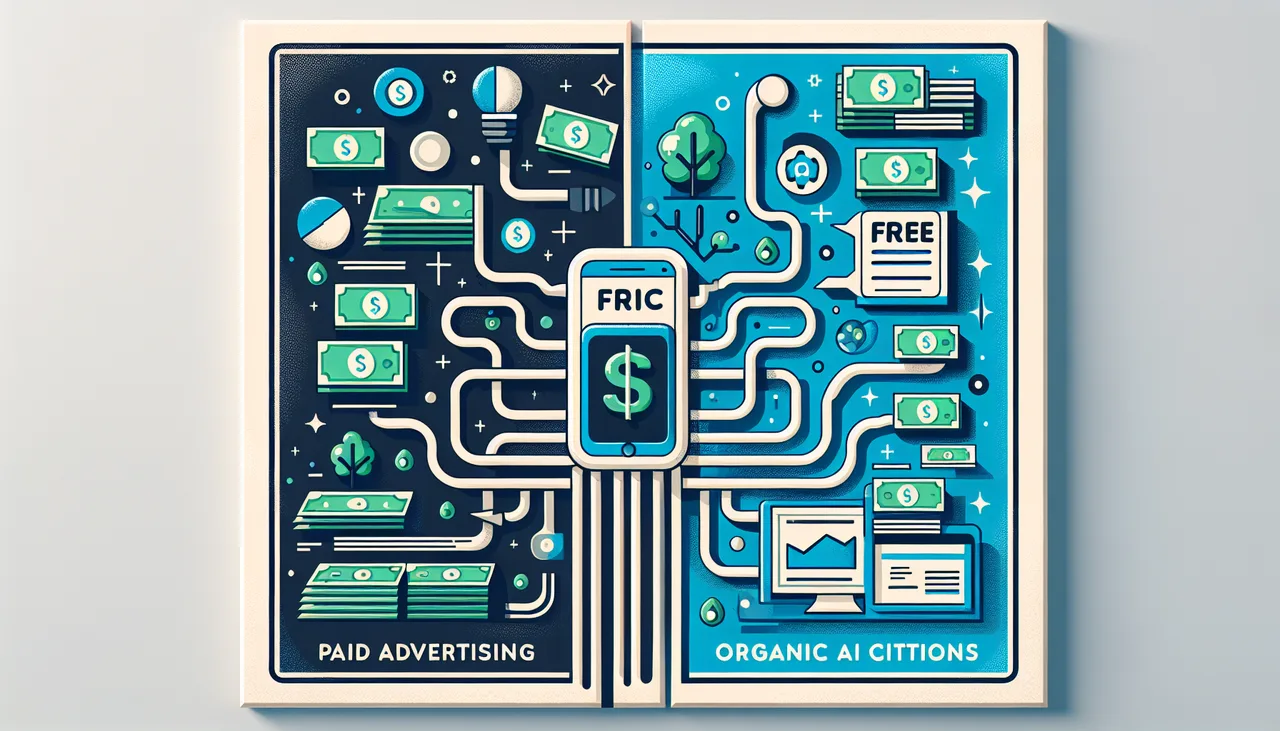
Direct Answer: The best alternative to ChatGPT ads is organic AI citation optimization -- also known as Answer Engine Optimization (AEO). Instead of paying $60+ CPM to display ads inside ChatGPT conversations, you can structure your content, schema markup, and authority signals so that ChatGPT, Perplexity, Gemini, and other AI assistants cite your brand organically in their responses. Organic AI citations convert at 14.2% compared to 2.8% for paid channels, cost nothing per impression, and compound over time instead of disappearing when your budget runs out. For most B2B companies, the ROI on organic AI visibility outperforms ChatGPT ads by 10-30x over a 12-month period.
See how visible your brand is in AI search -- get a free AI Visibility Score
ChatGPT ads are here. OpenAI launched its advertising program with CPMs north of $60 -- making it one of the most expensive digital ad placements in history. For marketing leaders with finite budgets, the question is simple: is paying $60 per thousand impressions inside a chat window the best way to reach AI-era buyers, or is there a better path?
There is. And it costs nothing per impression.
Key Takeaway
- ChatGPT ads carry a $60+ CPM -- 6-10x higher than LinkedIn, Google Display, and most B2B channels -- with limited targeting, no retargeting, and uncertain conversion data
- Organic AI citations convert at 14.2% vs. 2.8% for paid traffic, a 5x advantage driven by trust transfer and contextual relevance
- 80% of B2B buyers now use AI-powered search during vendor evaluation, and organic citations capture this intent without per-impression costs
- A structured AEO strategy can generate free, compounding AI traffic within 4-8 weeks -- delivering 10-30x better 12-month ROI than ChatGPT ads
The ChatGPT Ads Problem
OpenAI's advertising product is designed to place brand messages directly into ChatGPT conversations. The pitch is compelling: reach users at the exact moment they are asking questions about your category. The reality is more complicated.
The pricing is punitive
ChatGPT ads launched with CPMs in the $60-$80 range. For context, here is how that compares to established B2B advertising channels:
| Channel | Average CPM | Average CPC | Targeting Precision |
|---|---|---|---|
| ChatGPT Ads | $60-$80 | Not disclosed | Topic-based, limited |
| LinkedIn Ads | $6-$12 | $5-$8 | Job title, company, industry |
| Google Search Ads | $3-$8 | $2-$6 | Keyword intent, audience |
| Google Display | $2-$5 | $0.50-$2 | Demographic, contextual |
| Programmatic Display | $1-$4 | $0.30-$1.50 | Behavioral, retargeting |
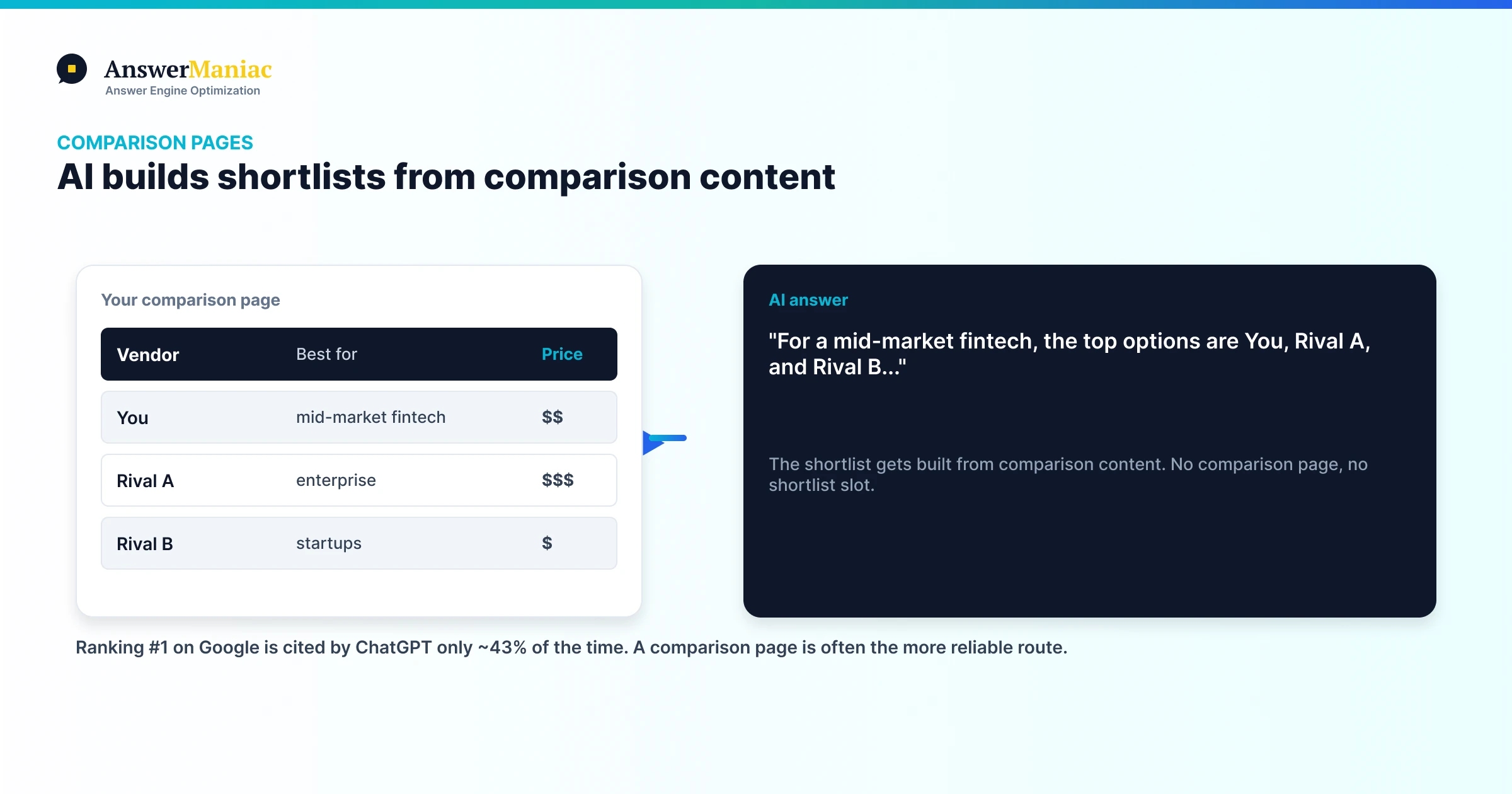
At $60 CPM, you are paying 10x what LinkedIn charges and 15-30x what display networks charge -- for an ad format that users did not ask to see inside a conversation they initiated for answers.
Targeting is limited
ChatGPT's ad targeting is topic-based, not intent-based. You can target broad conversation categories, but you cannot target by job title, company size, purchase intent, or funnel stage. Compare that to LinkedIn, where you can reach "VP of Marketing at SaaS companies with 200-500 employees" or Google Search, where you can bid on exact purchase-intent keywords. ChatGPT ads lack the precision that B2B marketers need to justify premium pricing.
Ad blindness transfers to AI
Users come to ChatGPT for answers, not ads. The conversational interface creates an expectation of objectivity. When a sponsored message appears inside that flow, it breaks the trust contract -- the same way banner ads inside editorial content trigger ad blindness. Early data suggests that click-through rates on ChatGPT ads are lower than advertisers expected precisely because users treat the AI conversation as a trusted advisor, not an ad channel.
No retargeting, no attribution clarity
ChatGPT ads currently lack the retargeting infrastructure that makes other paid channels efficient over time. You cannot build lookalike audiences, pixel visitors, or run sequential messaging. Attribution is also unclear -- connecting a ChatGPT ad impression to a downstream conversion requires stitching together data that OpenAI does not fully expose. For B2B companies with long sales cycles, this makes ROI measurement exceptionally difficult.
Budget evaporates instantly
Perhaps the most fundamental problem: the moment you stop paying, the traffic stops. Every dollar spent on ChatGPT ads generates a temporary impression with no lasting asset. There is no compounding effect, no flywheel, no equity built. Compare that to organic AI citations, which compound over time as AI engines learn to trust and repeatedly reference your content.
Why Organic AI Citations Convert 5x Better
When ChatGPT, Perplexity, or Gemini cites your brand in an organic response -- without any ad spend -- the traffic that arrives at your site converts at dramatically higher rates than any paid channel.
AI-referred traffic converts at 14.2% compared to 2.8% for standard paid and organic channels -- a 5x higher conversion rate. This is not a marginal improvement. It is a fundamentally different category of traffic quality.
Three factors drive this conversion advantage:
1. Trust transfer from the AI
When a buyer asks ChatGPT "What is the best project management tool for remote teams?" and your brand appears in the answer, the AI is effectively endorsing your product. The user did not click an ad. They received a recommendation from a system they trust. That trust transfers directly to your brand, pre-qualifying the visitor before they ever reach your site.
Paid ads do the opposite. The user knows the placement was purchased, which triggers skepticism by default. Even well-crafted ad copy cannot replicate the trust signal of an organic, contextual AI citation.
2. Contextual relevance is perfect
An organic AI citation appears because your content actually answers the user's question. The match between user intent and your brand's presence is exact -- not approximate, not topic-adjacent, but precisely relevant. The AI determined that your content is the best answer to that specific query.
ChatGPT ads, by contrast, are placed based on broad topic targeting. A user asking about project management tools might see an ad for a completely different category of software that purchased the "project management" topic. The intent match is loose at best.
3. No ad fatigue
Organic citations never suffer from ad fatigue. A paid ad shown to the same user 5 times loses effectiveness with each impression. An organic citation appears fresh every time because it is embedded in a unique, contextual response. There is no frequency cap problem because there is no frequency -- the citation appears naturally when the AI determines it is relevant.
| Factor | ChatGPT Ads | Organic AI Citations |
|---|---|---|
| Trust level | Low (user knows it's paid) | High (AI recommendation) |
| Intent match | Approximate (topic-based) | Exact (answer-based) |
| Conversion rate | 1.5-3% (estimated) | 14.2% (measured) |
| Ad fatigue risk | High (diminishes with frequency) | None (contextual each time) |
| Cost per impression | $0.06-$0.08 | $0.00 |
| Longevity | Stops when budget stops | Compounds over time |
The Organic AI Traffic Playbook
Getting cited organically by AI assistants is not luck. It is the result of a systematic process that aligns your content, technical infrastructure, and authority signals with what AI engines need to confidently recommend your brand. Here is the five-step playbook.
Step 1: Audit your current AI visibility
Before optimizing anything, you need to know where you stand. Run your top 10 industry queries through ChatGPT, Perplexity, Gemini, Claude, and Microsoft Copilot. Document whether your brand appears, in what context, and how often your competitors are cited instead.
Use our AI visibility audit framework to score yourself on a 0-100 scale. Most B2B companies score below 20 on their first audit. That gap represents the organic traffic you are leaving on the table -- traffic your competitors may already be capturing for free.
Step 2: Structure content for AI extraction
AI assistants cite content they can easily parse and extract. That means restructuring your key pages to follow the citation asset format:
- Lead with a direct answer in the first 150 words of every important page
- Use question-based H2 and H3 headers that match how buyers phrase queries to AI
- Include tables, numbered lists, and comparison data that LLMs can extract cleanly
- Pack every paragraph with specific claims -- statistics, percentages, dollar figures, timeframes -- instead of vague generalities
- Add publication dates and update frequencies to signal freshness
The content strategy for AI visibility guide covers the full framework for transforming existing content into citation-ready assets.
Step 3: Implement the right schema markup
Schema markup gives AI systems a machine-readable layer of confidence about your content. The five schema types that drive the majority of AI citations are Organization, FAQPage, Article/BlogPosting, Product/Service, and BreadcrumbList.
Implementing these in JSON-LD format across your key pages significantly increases the probability of citation. Pages with proper schema markup are cited at rates 3-5x higher than pages without it. Our schema markup implementation guide includes copy-paste JSON-LD code for each type.
Step 4: Build authority through external mentions
AI engines weigh third-party signals heavily. If your brand is mentioned in industry publications, comparison sites, analyst reports, and reputable directories, AI systems treat you as a more trustworthy source. This requires a deliberate digital PR strategy:
- Contribute guest articles to industry publications in your space
- Get listed on major comparison and review platforms
- Publish original research that other sites will reference and link to
- Participate in industry roundups and analyst briefings
- Ensure your brand entity is consistent across all external mentions
Step 5: Monitor, measure, and iterate
AI visibility is not a one-time project. Run weekly prompt tests across your target queries, track citation frequency over time, and adjust your content based on gaps. Companies that monitor AI citations monthly and update content quarterly maintain and expand their citation presence. Those that treat it as a one-time optimization lose ground as competitors catch up.
For a comprehensive approach to all five steps, see the complete AI visibility guide.
Cost Comparison: ChatGPT Ads vs. Organic AEO
The 12-month economics of these two approaches are not close. Here is a detailed breakdown for a B2B SaaS company targeting 100,000 monthly AI-influenced impressions.
ChatGPT Ads: 12-Month Cost Model
| Line Item | Monthly Cost | Annual Cost |
|---|---|---|
| Ad spend (100K impressions at $60 CPM) | $6,000 | $72,000 |
| Creative production (ad copy, iterations) | $1,000 | $12,000 |
| Campaign management (internal or agency) | $2,000 | $24,000 |
| Attribution and analytics tooling | $500 | $6,000 |
| Total investment | $9,500 | $114,000 |
ChatGPT Ads outcomes (estimated):
- Impressions: 1,200,000 (annual)
- Click-through rate: 0.5-1.0% (estimated for conversational ad format)
- Clicks: 6,000-12,000
- Conversion rate: 1.5-3.0%
- Conversions: 90-360
- Cost per conversion: $317-$1,267
- Residual value after budget stops: $0
Organic AEO: 12-Month Cost Model
| Line Item | Monthly Cost | Annual Cost |
|---|---|---|
| AEO strategy and implementation (see pricing) | $3,000-$6,000 | $36,000-$72,000 |
| Content creation (citation assets, 4-6/month) | $2,000-$4,000 | $24,000-$48,000 |
| Schema markup and technical implementation | $500-$1,000 | $6,000-$12,000 |
| Digital PR and authority building | $1,000-$2,000 | $12,000-$24,000 |
| Total investment | $6,500-$13,000 | $78,000-$156,000 |
Organic AEO outcomes (measured):
- AI citation impressions by month 6: 50,000-150,000/month (growing)
- AI citation impressions by month 12: 200,000-500,000/month (compounding)
- Click-through rate from citations: 3-8%
- Clicks by month 12: 6,000-40,000/month
- Conversion rate: 14.2%
- Monthly conversions by month 12: 852-5,680
- Cost per conversion by month 12: $2-$15
- Residual value after investment pauses: Citations continue for 6-12+ months
Side-by-Side ROI Comparison
| Metric | ChatGPT Ads (12 months) | Organic AEO (12 months) |
|---|---|---|
| Total investment | $114,000 | $78,000-$156,000 |
| Total conversions | 90-360 | 3,000-15,000+ |
| Cost per conversion | $317-$1,267 | $10-$52 |
| Conversion rate | 1.5-3.0% | 14.2% |
| Compounding effect | None | Yes (citations grow over time) |
| Residual value | $0 when budget stops | 6-12+ months of continued citations |
| 12-month ROI advantage | Baseline | 10-30x better |
The math is clear. Even at the high end of AEO investment, the cost per conversion is 10-50x lower, the total conversion volume is 10-40x higher, and the investment builds an asset that continues producing results after active spending stops.
When ChatGPT Ads Make Sense (And When They Don't)
This is not a blanket dismissal of ChatGPT advertising. There are specific scenarios where it can be a valid channel.
ChatGPT ads may make sense when:
- You need immediate visibility in a new category and cannot wait 4-8 weeks for organic citations to build
- You are launching a new product and want to prime awareness among AI-native audiences while your organic AEO strategy ramps
- Your competitor already dominates organic AI citations and you need a presence in the channel while you build your own citation foundation
- You have a large brand awareness budget and are testing all emerging channels with a small allocation (under 5% of total ad spend)
- Your target audience skews heavily toward ChatGPT power users (developers, researchers, early adopters) and the topic targeting aligns with your ICP
ChatGPT ads do not make sense when:
- Your budget is limited and $60 CPM means sacrificing more efficient channels like LinkedIn, Google Search, or content marketing
- You need measurable, attributable ROI because ChatGPT's attribution infrastructure is still maturing
- You are in a considered-purchase B2B category where trust and authority matter more than impression volume
- You have not yet built an organic AI presence -- running ads without organic citations is like running Google Ads without a website that converts
- Your content and website are not optimized for AI -- sending ChatGPT ad traffic to a site that AI cannot parse or cite creates a dead end
The strongest approach for most B2B companies is to invest primarily in organic AEO while testing ChatGPT ads as a small, supplementary channel once your organic foundation is in place.
How to Start Getting Free AI Traffic This Week
You do not need to wait for a full AEO engagement to begin earning organic AI citations. Here is a quick-wins checklist you can execute in the next 5 business days.
Day 1: Run your baseline audit
- Query your top 5 industry questions in ChatGPT, Perplexity, and Gemini
- Document which brands are cited (and whether yours is among them)
- Get your free AI Visibility Score for an automated baseline
Day 2: Add direct answer blocks to your top 5 pages
- Identify your 5 highest-traffic pages that address buyer questions
- Add a bold, direct answer in the first 150 words of each page
- Format: question-based heading followed by a 2-3 sentence factual answer
Day 3: Implement FAQPage schema on pages with FAQ sections
- Audit your site for any page that contains Q&A content
- Add FAQPage JSON-LD schema to each one (our schema guide has the code)
- Validate with Google's Rich Results Test
Day 4: Add comparison tables to your product and service pages
- Create structured comparison tables (your product vs. alternatives) with specific data points
- Include pricing, features, use cases, and differentiators in table format
- AI assistants extract tabular data at significantly higher rates than prose
Day 5: Update publication dates and add author attribution
- Add or update publication dates on all key content pages
- Add named author bios with credentials to your top 10 pages
- Ensure Article schema includes
datePublished,dateModified, andauthorfields
These five actions alone can move your AI visibility score from the "Invisible" band (0-19) into the "Emerging" band (20-49) within 4-8 weeks. From there, a comprehensive AEO and GEO strategy compounds the effect.
FAQ
Are ChatGPT ads worth it for B2B companies?
For most B2B companies, ChatGPT ads are not the highest-ROI use of marketing budget. At $60+ CPM with limited targeting, no retargeting, and unclear attribution, the economics are significantly worse than organic AI citation optimization. ChatGPT ads can serve as a supplementary awareness channel for companies with large budgets that have already maximized organic AEO, LinkedIn, and Google Search. But as a primary channel, the cost per conversion ($317-$1,267 estimated) is 10-50x higher than organic AI citations ($10-$52 measured). B2B companies with budgets under $200K annually will see far better ROI investing in organic AI visibility through AEO and GEO than in ChatGPT ad placements.
How long does it take to start getting organic AI traffic?
Organic AI citations typically begin appearing 4-8 weeks after implementing the core optimizations: content restructuring, schema markup, and direct answer formatting. Perplexity, which searches the live web in real time, can surface your content within days of publication. ChatGPT and Gemini rely on a combination of training data and retrieval-augmented generation, so the timeline depends on their crawl and indexing schedules. Companies that implement the full five-step playbook -- including digital PR and authority building -- see AI citation volume grow 500%+ year-over-year, with the compounding effect accelerating after the first 90 days. The key difference from paid ads: once earned, organic citations continue delivering traffic even if you pause active optimization.
Can I use both ChatGPT ads and organic AEO together?
Yes, and the combination can be effective if sequenced correctly. The recommended approach is to build your organic AEO foundation first -- content structure, schema markup, authority signals -- and then layer ChatGPT ads on top for incremental reach. Running ChatGPT ads without an organic foundation means paying $60 CPM to send users to a site that AI cannot parse or recommend, which limits the downstream value of that traffic. With an organic foundation in place, ChatGPT ads can supplement your visibility for queries where you have not yet earned organic citations, effectively bridging the gap while your citation authority builds. Allocate no more than 10-15% of your AI marketing budget to ads and 85-90% to organic AEO for optimal long-term ROI.
What is the conversion rate difference between ChatGPT ad traffic and organic AI traffic?
AI-referred organic traffic converts at 14.2% compared to an estimated 1.5-3.0% for ChatGPT ad traffic -- a 5-10x difference. This gap exists because organic citations carry a trust transfer that paid placements cannot replicate. When ChatGPT organically recommends your brand in response to a buyer's question, the user arrives at your site pre-qualified and pre-trusting. They received an endorsement from a system they chose to consult. Ad traffic lacks this trust signal because the user understands the placement was purchased. In B2B categories with long sales cycles and high contract values, this conversion rate difference translates to hundreds of thousands of dollars in pipeline value over 12 months.
Stop Paying $60 CPM. Start Earning Free AI Citations.
ChatGPT ads will get cheaper over time. Targeting will improve. Attribution will mature. But the fundamental economics will never match organic AI citations -- because paid impressions are rented and organic citations are owned.
The B2B companies that invest in organic AI visibility now are building a compounding asset. Every citation earns trust with the AI engine. Every trust signal increases the probability of future citations. Every future citation drives high-intent, high-converting traffic at zero marginal cost.
With 80% of B2B buyers using AI-powered search and AI adoption growing at 500%+ year-over-year, the question is not whether to invest in AI visibility. It is whether to pay $60 CPM for temporary impressions or build a citation engine that delivers free, compounding traffic.
The playbook is clear. The math is decisive. The window for early-mover advantage is still open.
See your current AI visibility score and get a prioritized action plan -- know exactly where you stand across ChatGPT, Perplexity, Gemini, and Google AI Overviews, and what it will take to earn the citations your competitors are paying for.
Get AEO Insights Weekly
Join 500+ B2B marketers getting AI visibility tactics every Tuesday.
Ready to Get Your Brand Cited by AI?
See how your competitors show up in ChatGPT, Perplexity, and Gemini — and what it would take to get recommended.