AI Brand Reputation: How to Control What LLMs Say About Your Company
AI brand reputation management helps you track, analyze, and influence how AI tools describe your company online.
Quick Answer
AI brand reputation management is about controlling the information that large language models use to generate summaries about your company. Unlike traditional reputation management focused on search rankings and review responses, AI reputation management targets the data sources that feed AI systems like ChatGPT, Gemini, and Perplexity. The core work involves auditing what AI says about your brand, building structured content (FAQ pages, schema markup, detailed product descriptions) that AI can easily read, managing reviews strategically across platforms, and using monitoring tools to track your brand's presence in AI-generated answers. Companies that invest in knowledge graph optimization and build consistent positive signals across trusted third-party sources gain a measurable advantage in how AI represents them.
AI brand reputation management uses artificial intelligence to watch and influence how AI tools talk about your company.
It focuses on the information that feeds large language models to make sure they tell accurate, positive stories. Without this control, AI can turn old criticisms into major problems, hurting trust and sales.
This article explains how AI reputation works and the practical steps you can take. Keep reading to learn how to create clear, trustworthy information that AI systems will use.
AI Reputation Control: What Shapes Your Brand in AI Search
These key points highlight how brands can influence what AI systems summarize and say about them online.
- AI reputation management means keeping track of the specific websites, reviews, and forums that large language models use to write summaries about your brand.
- You must actively build positive signals to shape what AI says. This includes creating helpful FAQ pages and getting good mentions from trusted third-party sites.
- Your strategy needs constant adjustment. Monitor results and test your approach to keep up as AI search behaviors and models change.
Defining AI Brand Reputation Management
AI brand reputation management is a fundamental shift. Traditional methods focus on search engine results and reviews (SERPs). The new approach manages how generative AI systems create summaries about your brand.
Tools like ChatGPT or Google Gemini don't just list links. They read huge amounts of data from across the web, reviews, news, forums, and website content, and then generate a concise answer about your company. Your goal is to control the information that goes into that summary.
"The rise of generative AI has introduced a new layer of reputation risk: the 'algorithmic hall of mirrors.' Unlike traditional search engines that index content, LLMs synthesize it, meaning a brand's reputation is now determined by the probability of its association with positive or negative sentiment within a model's training data." - MIT Sloan School of Management
This process uses AI tools for monitoring and analysis. It tracks brand mentions within AI answer engines themselves.
The core objective is to ensure these systems have access to clean, accurate, and positive information.
This way, when someone asks an AI about your brand, the response aligns with your identity. Without this control, AI may use outdated complaints or competitor content, creating a narrative that's hard to fix.
The AI Transformation of Reputation Management
The change is structural, not small. Traditional reputation management was often reactive and manual. A team might check review sites daily and respond by hand. SEO work aimed to push good content higher in Google's traditional search results. This worked on a human scale.
"As consumers increasingly turn to AI assistants for product discovery, the traditional 'link-based' reputation model is being replaced by a 'citation-based' model. For brands, this means that visibility is no longer about occupying the top spot on a results page, but about becoming a persistent, verified entity within the AI's internal knowledge graph." - Wharton School of the University of Pennsylvania
AI reputation management works on a machine scale. AI systems can scan billions of data points monthly, forming opinions in seconds. This means threats to your reputation are faster and more numerous. But the tools to handle them are also stronger.
The key difference is what you optimize for. Old SEO aimed for clicks and high rankings. AI reputation management, sometimes called GEO, aims for citations and accurate summaries.
Your goal shifts from "ranking first for a keyword" to "being cited correctly and positively when an AI answers a question."
This requires understanding what signals AI values. AI looks for factual data from trusted sources, consistent positive sentiment in reviews, and clear, organized information on your own website that it can easily read and trust.
| Aspect | Traditional Reputation Management | AI Reputation Management |
|---|---|---|
| Primary Focus | Search engine rankings & review responses | AI-generated summaries & citations |
| Data Sources | Reviews, news, direct feedback | Reviews, forums, structured data, AI outputs |
| Response Speed | Manual, often daily | Real-time AI monitoring & alerts |
| Optimization Target | Links & keyword placement | Semantic accuracy & authoritative signals |
| Key Metric | SERP position & review score | AI citation frequency & sentiment in summaries |
The Critical Role of AI Monitoring Tools
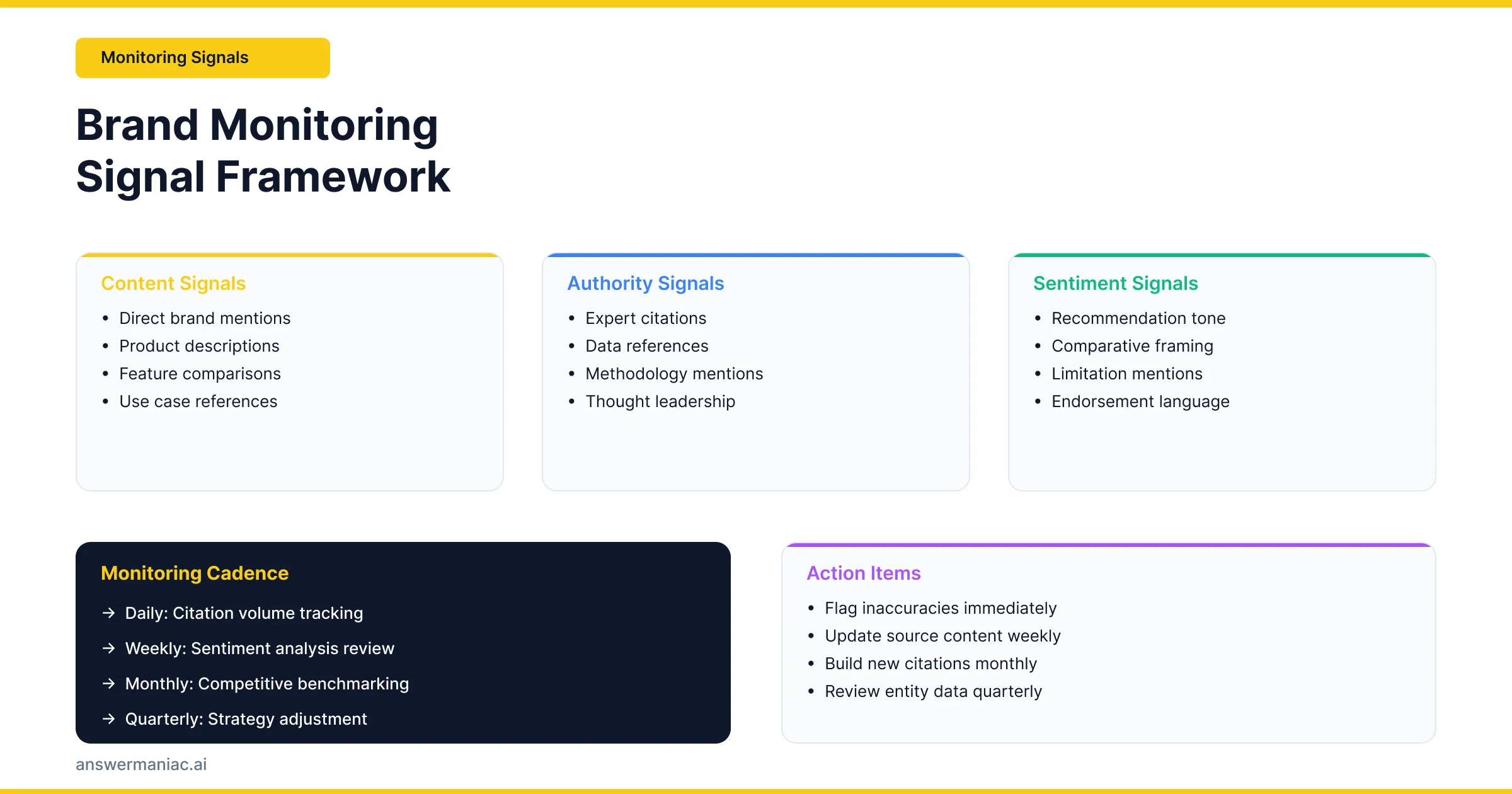
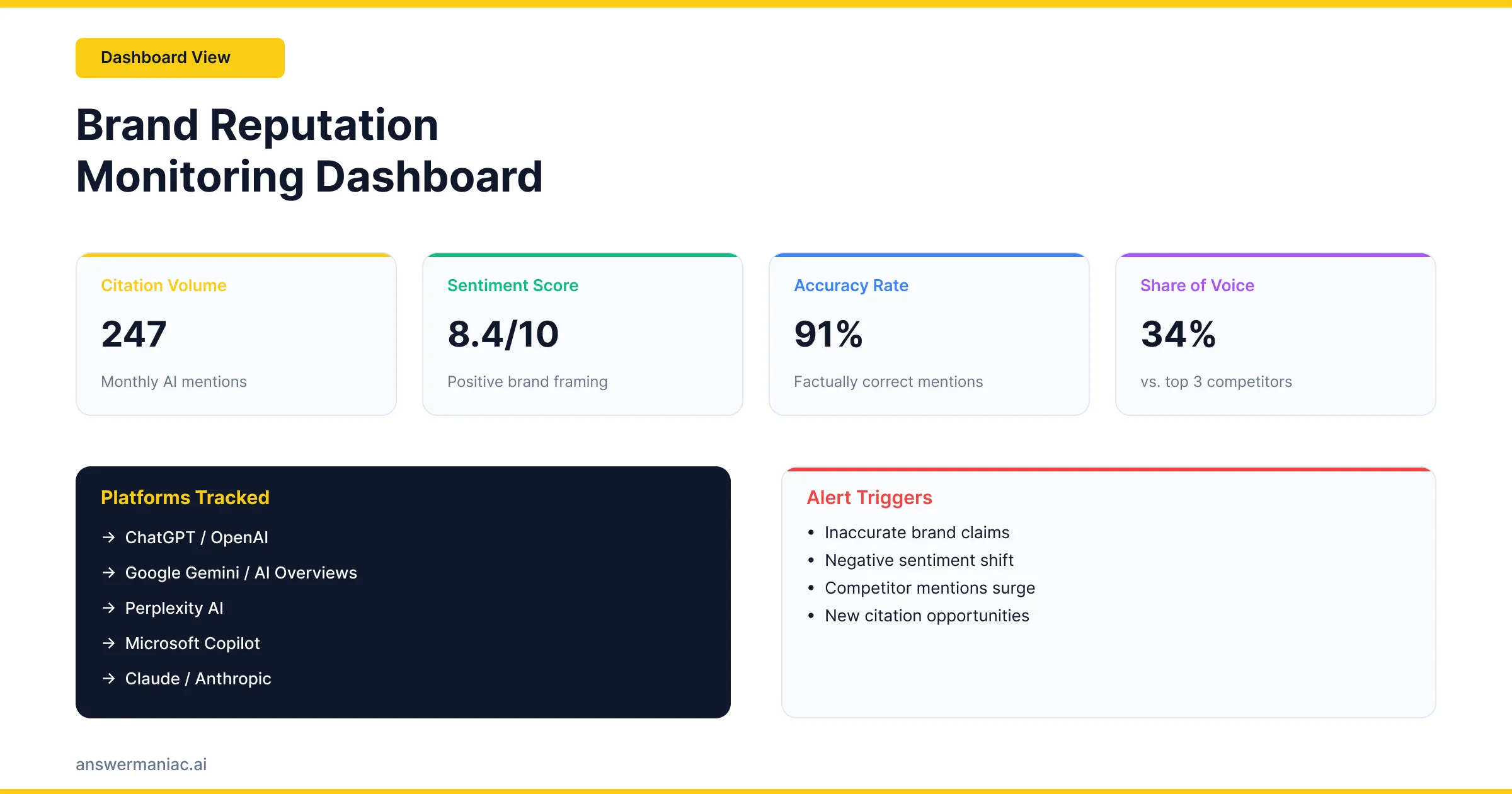
To manage your reputation in AI systems, you first need to see what they see and say. This requires AI monitoring tools.
These tools track and analyze how your brand is discussed and how AI summarizes that information, which has become essential as companies adopt broader search everywhere optimization strategy approaches to manage visibility across search engines, social platforms, and AI systems.
They scan social media, review sites, forums, and the outputs of major AI chatbots.
These tools provide essential capabilities:
- Comprehensive scanning: They monitor a wide range of sources, including AI search results, to show you exactly what chatbots like ChatGPT say about your company.
- Real-time sentiment analysis: They classify mentions as positive, neutral, or negative as they happen.
- Early issue detection: They can spot sudden spikes in negative coverage or new complaint patterns on forums before they become bigger problems.
- Actionable intelligence: They alert your team to issues quickly, track your standing against competitors in AI conversations, and measure review trends to guide your response strategy.
This visibility is the foundation of a proactive strategy. Without it, you won't know the narrative being built about you in important new channels.
These tools can look at millions of mentions, which is too much for people to do, and show you the biggest risks and best chances to improve.
Enhancing Strategy with AI Sentiment Analysis
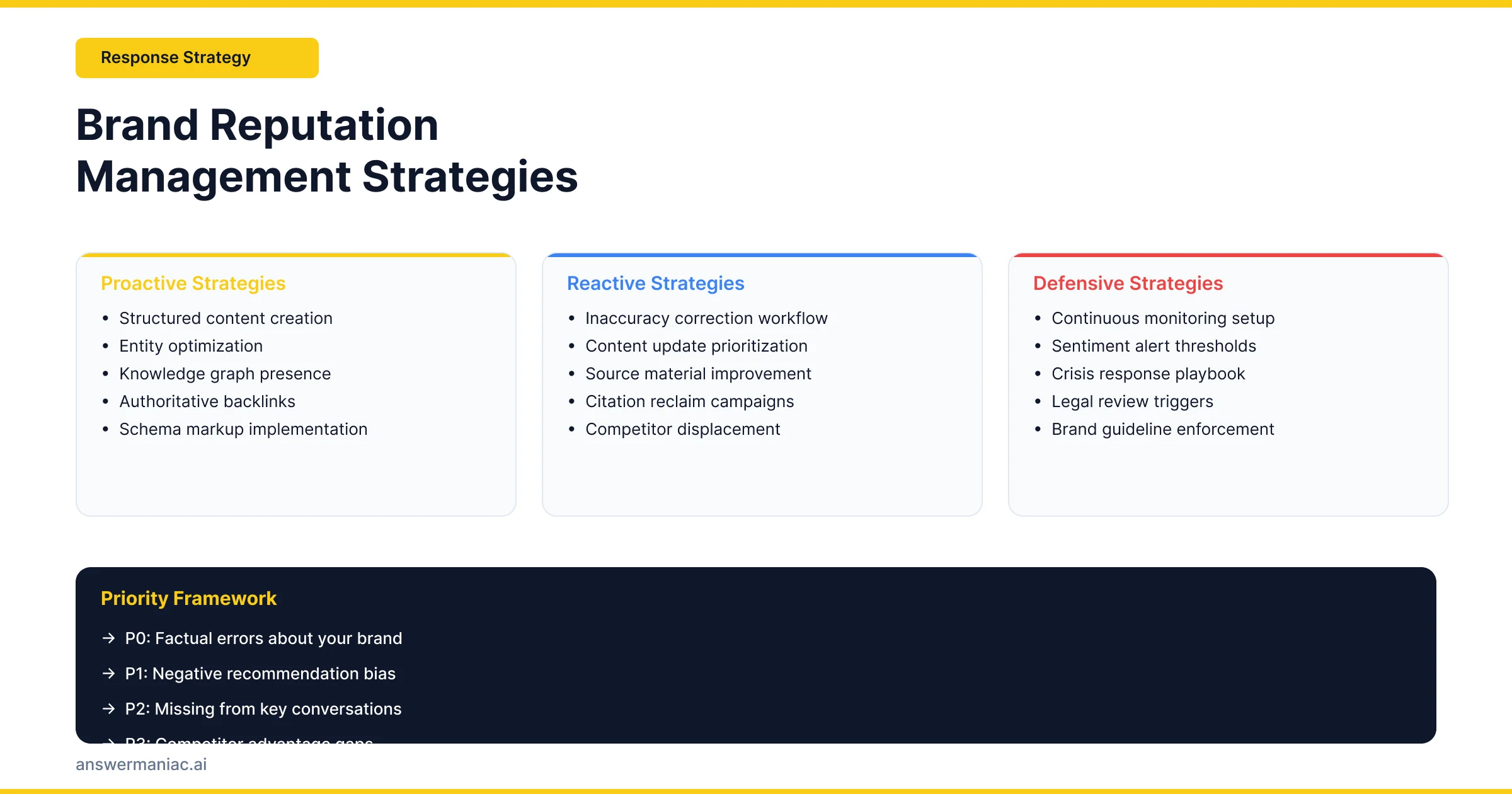
Understanding the tone of online conversation is crucial. AI-driven sentiment analysis provides this on a large scale.
Using machine learning, these systems evaluate the emotional tone behind customer feedback, posts, and comments. They identify nuanced feelings like frustration or satisfaction, which older systems often missed.
This deep analysis improves your strategy in key ways:
- Understands true customer perception: It shows not just if people are talking about you, but how they feel. You can see if reviews praise your service but criticize product quality, allowing you to fix specific issues.
- Identifies sentiment patterns: It can reveal if negative sentiment spikes when a certain product feature is discussed, or if positive feelings link to specific types of media coverage.
- Provides predictive capability: By tracking sentiment trends, AI tools can forecast potential reputation problems. A slow rise in negative discussion on a forum can be flagged as a growing risk, letting you intervene early with communication or content.
This shift from reacting to predicting is a major advantage of using AI in your reputation work.
AI Systems and Their Influence on Brand Perception
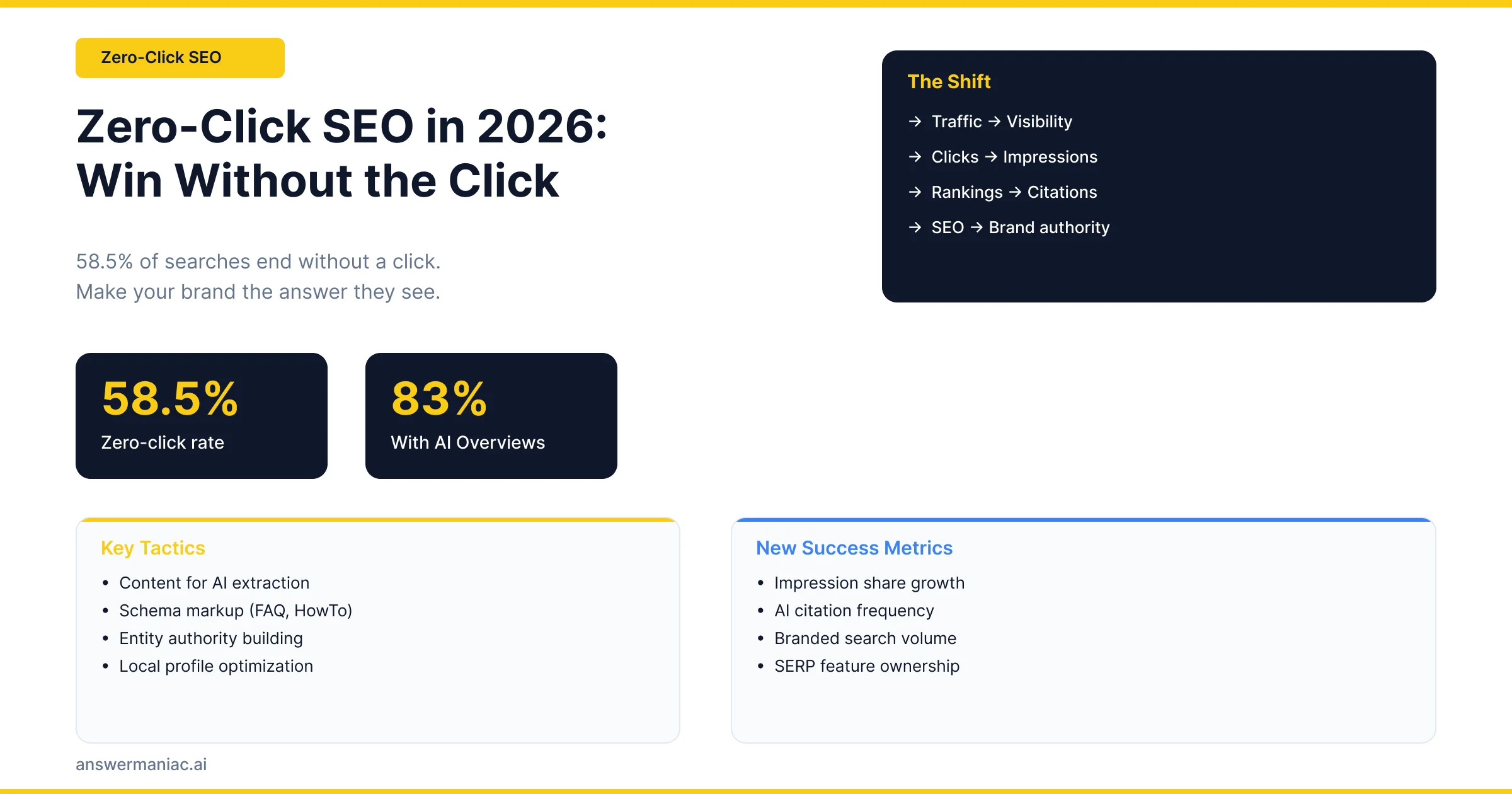
When someone asks a chatbot "What is [Your Brand] known for?", the AI doesn't do a live search, reflecting the growing impact of zero-click SEO strategy in 2026, where answers are delivered directly in AI-generated summaries instead of traditional website visits.
It creates an answer based on its training and the information it can access. This answer is often the user's first impression, and they may never visit your website. The sources the AI uses are critical.
AI gathers brand information from specific signals. These include:
- Structured website data: Clear FAQ pages, detailed product descriptions, and well-organized policy hubs on your own site.
- Authoritative third-party citations: Information from trusted databases, Wikipedia, and industry directories.
- Customer review sentiment: Reviews from Google Maps, Yelp, and other platforms shape the overall tone.
- Social community discussions: Posts and debates on forums or social media also feed the AI's understanding.
This means your reputation isn't just about your website or official reviews. A discussion about your pricing on a Reddit thread could become a point in an AI summary. Managing these signals requires a full view of your digital presence.
You need to ensure accurate, positive information exists not only on your own sites but also across the third-party places that AI engines trust.
Core Strategies for AI Era Reputation Improvement
Building a reputation that AI systems will reflect requires a structured, proactive plan.
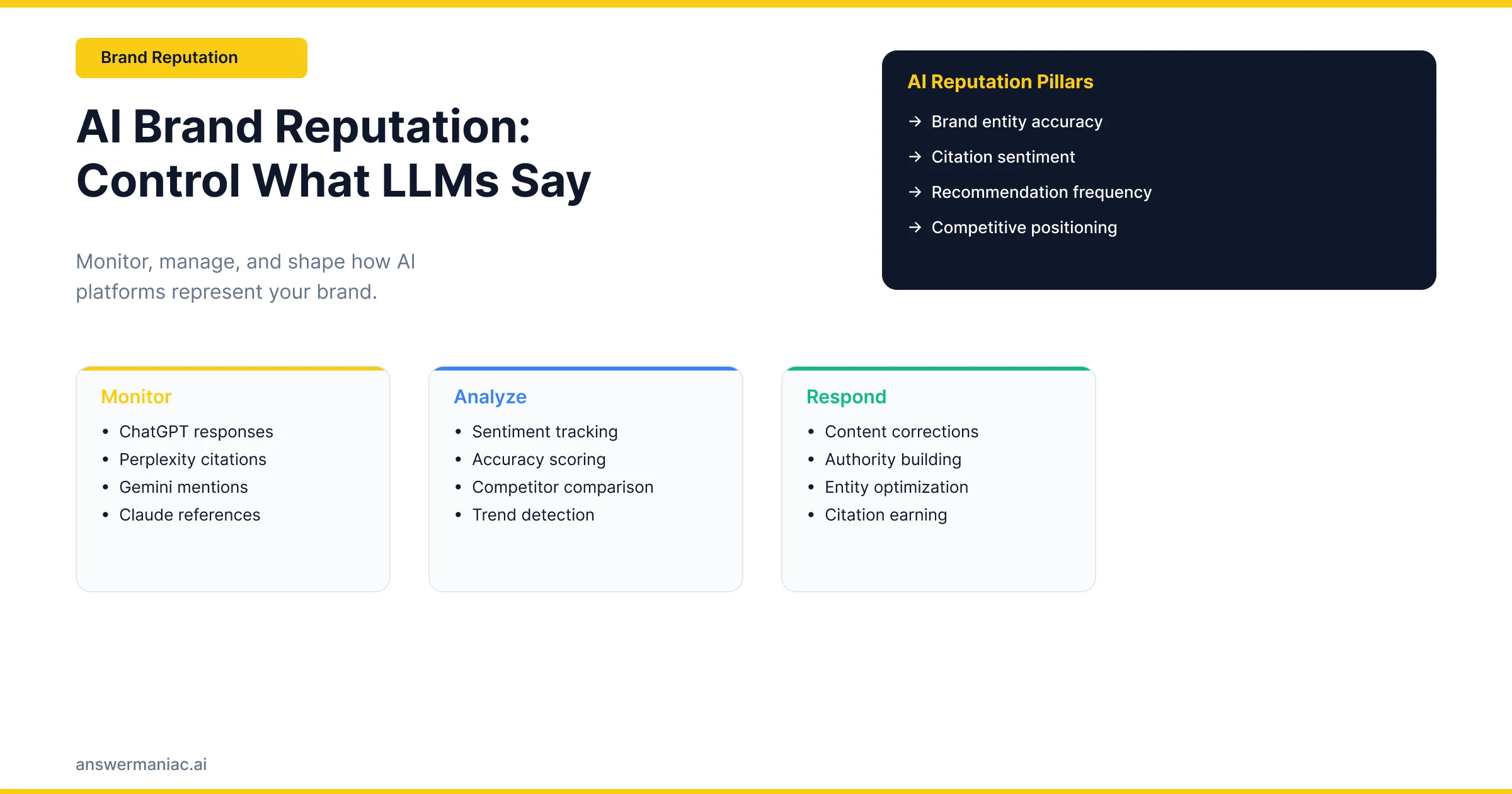
Start with an audit. Use AI tools to ask chatbots questions about your brand. Analyze the summaries they create. Find any gaps, mistakes, or negative points. This gives you a baseline to know what needs fixing.
Next, build the right signals, especially for industries where AI visibility for cybersecurity companies and other technical sectors depends heavily on authoritative mentions, structured data, and consistent third-party citations.
This is the core of the work. Create and optimize content that AI values. On your website, make detailed FAQ pages, clear policy hubs, and thorough product descriptions that answer common questions.
Use structured data (schema markup) so AI can read the information easily. At the same time, work to get positive mentions from trusted third parties, like media coverage or industry reports.
Manage reviews strategically. Getting and responding to customer reviews is about more than a star rating. It feeds a steady stream of sentiment into the data AI uses.
Respond to reviews quickly and professionally. Encourage happy customers to share their experiences on major platforms. AI looks at the volume and tone of these reviews as a key reputation sign.
Finally, monitor, test, and refine. This is not a one-time task. AI changes over time. Use monitoring tools to track your brand's performance across AI platforms.
Test new content and strategies to see if they improve how AI talks about you. This ongoing process keeps your reputation management working effectively.
Navigating Challenges in AI Reputation Management
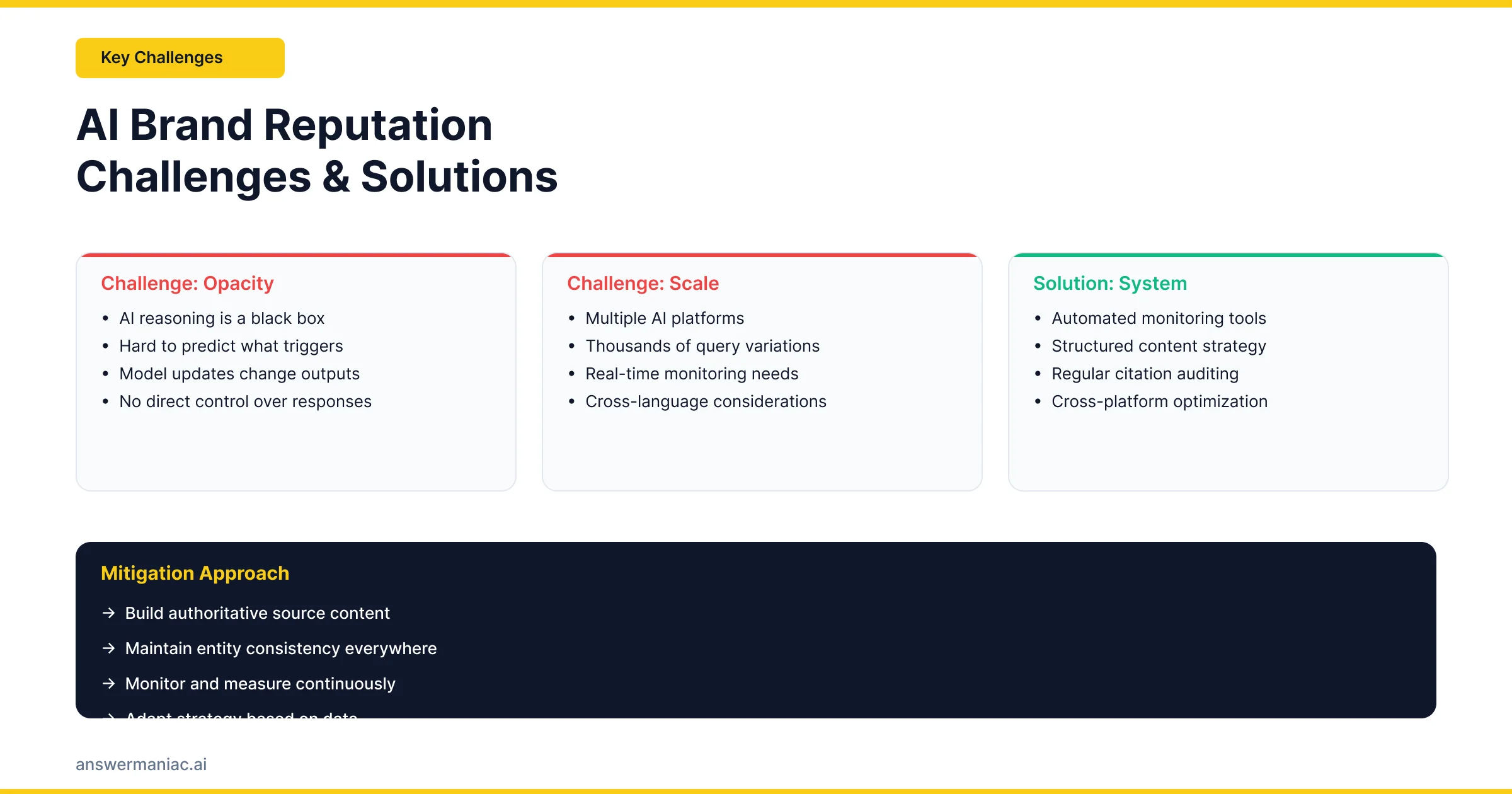
AI offers powerful tools but also brings new challenges.
Key challenges include:
- AI misinformation or "hallucinations": An AI might mix old, fixed complaints with new info or invent negative points. Fixing this is difficult because the false story isn't on a website, it's created by the AI. The fix is to keep giving the AI correct information until it learns, which takes time.
- Fake reviews and coordinated attacks: Bad actors can use bots to create fake negative reviews or malicious forum posts. AI tools can help spot these patterns, but removing them often needs manual reporting with each platform. These attacks can be overwhelming without AI help to filter them.
- Managing signals across many platforms: You must maintain a consistent, positive story across social media, review sites, forums, news, and AI engines. This requires integrated tools and clear processes to handle all channels at once.
- Balancing automation with authenticity: Relying too much on AI to write responses or content can lead to robotic, impersonal communication that hurts trust. Human oversight is essential to keep your brand's genuine voice.
FAQ
How does artificial intelligence change brand reputation management today?
Artificial intelligence changes how companies manage brand reputation by analyzing large amounts of online data. AI systems review customer reviews, social media posts, online forums, and media coverage to understand public sentiment. Large language models also generate AI summaries in search engines. This process helps businesses track brand perception, detect reputation issues early, and improve overall online reputation.
How can businesses monitor their online reputation using AI tools?
Businesses use reputation management tools powered by artificial intelligence and Natural Language Processing to monitor online reputation. These monitoring tools collect data from review sites, social platforms, and social communities. AI-Driven Sentiment Analysis evaluates Sentiment Trends, review volume, and customer feedback. The results provide actionable intelligence that helps teams respond quickly to reputation issues and changing consumer sentiment.
Why do customer reviews strongly influence AI reputation systems?
Customer reviews influence AI reputation management because artificial intelligence systems analyze review volume, star ratings, and user reviews to understand brand reputation. AI-powered search tools often summarize online reviews when presenting information to users. Negative feedback, fake reviews, or poor review responses can affect customer perception and brand identity across search results and social feeds.
How do search engines shape brand reputation in the AI era?
Search engines now use artificial intelligence, generative AI, and AI-powered search systems to summarize information about businesses. These systems gather brand data from structured data, FAQ pages, product descriptions, and online reviews. Content aggregators and recommendation systems also influence search results. Accurate information and strong content optimization help maintain a positive brand reputation.
What practical steps help protect a company's online reputation?
Companies can protect brand reputation by combining Social Listening, Media Monitoring, and consistent review responses. Monitoring social media posts, online forums, and customer support interactions helps detect reputation signals early. Businesses should also analyze Mention Counts, review-monitoring model data, and Share of Voice metrics. Clear brand response cycles and strong customer experience improve long-term reputation management.
Shape Your Brand Story in the Age of AI
AI now influences how people first discover and judge brands. If your information is outdated or incomplete, AI may shape a narrative that does not reflect your real value. Managing your AI brand presence means ensuring the systems people trust are learning from accurate, current, and positive signals.
The brands that lead do not react, they guide the story. Through audits, stronger data signals, and continuous refinement, you can influence how AI represents your company.
Start with a free AI brand audit from AnswerManiac and see how your brand appears across the AI ecosystem.
References:
- MIT Sloan School of Management - How to Navigate the Age of Agentic AI
- Wharton School - How Should Brands Use AI
Related Articles:
Get AEO Insights Weekly
Join 500+ B2B marketers getting AI visibility tactics every Tuesday.
Ready to Get Your Brand Cited by AI?
See how your competitors show up in ChatGPT, Perplexity, and Gemini — and what it would take to get recommended.