Search Everywhere Optimization: Why Google Alone Isn't Enough in 2026
Learn the search everywhere optimization strategy that helps your brand stay visible on TikTok, Amazon, AI chatbots, and other discovery platforms.
Quick Answer
Search Everywhere Optimization is the strategy of building brand visibility across every platform where your audience searches, not just Google. This includes AI chatbots (ChatGPT, Gemini, Perplexity), social media (TikTok, LinkedIn, Reddit), video platforms (YouTube), local search (Google Maps, Apple Maps), and marketplaces (Amazon). The approach requires a unified technical foundation with structured data, consistent brand information across all profiles, and a content cascade that adapts your core message to each platform's format. Companies that adopt this multi-platform strategy build more resilient traffic sources and stronger brand authority. The shift from traditional SEO to search everywhere connects directly to broader trends in AI brand reputation management and AI-first content strategy.
Search Everywhere Optimization (SEO) is a strategy to make your brand visible beyond just Google. It covers AI chatbots, social media, video platforms, and marketplaces.
People now start searches on TikTok, ask ChatGPT for advice, and shop directly on Amazon. Relying only on Google means missing many modern discovery channels.
This article explains the parts of this strategy, the key platforms, and how to put it into practice. Keep reading to learn how to build a presence that reaches your audience wherever they look.
Search Everywhere Strategy: The New Visibility Rules
These points capture why modern SEO must extend beyond Google and how a unified approach strengthens brand visibility across platforms.
- Modern discovery happens across many platforms, making a Google-only strategy insufficient for full visibility.
- Search Everywhere Optimization needs a unified approach with consistent brand data, platform-specific content, and technical signals like schema markup.
- The main benefit is more diverse and resilient traffic, but the challenge is managing many platforms and changing rules.
Defining Search Everywhere Optimization
Search Everywhere Optimization is the next step after traditional SEO and closely connects with modern AI brand reputation management practices that focus on shaping how brands appear across AI-generated answers, social platforms, and search engines.
It's a strategy to make your brand visible and trusted on every platform where people look for information.
This includes not just Google, but also AI chatbots, social media, video sites, local maps, and online stores. The goal is to appear when users search across different platforms.
This strategy is important because how people search has changed. Many users, especially younger ones, now start their searches on social media or video platforms. AI tools are also handling more questions.
If your brand isn't set up for these places, a large part of your audience won't find you. Each platform works like its own search engine with different ranking rules.
The Limits of a Traditional SEO Focus
Traditional SEO is still important. It focuses on ranking well in Google's search results by optimizing keywords, improving website health, and building authority with links.
This approach is centered on your website. But it works on the idea that Google is the main, or only, place people find things. That assumption is no longer reliable.
"The fundamental difference between SEO and GEO lies in the end goal. SEO optimizes for clicks from search engine results pages. GEO optimizes for citations within AI-generated responses. A page can rank #1 in Google but never get cited by ChatGPT if it lacks the structural elements AI engines prioritize." - Frase.io
The digital world is now more varied. People have many starting points. They might look for a product idea on TikTok, ask an AI assistant for a software suggestion, or search for a local service directly in Apple Maps.
Each of these platforms has its own search function and its own rules for deciding what is relevant or trustworthy. A strategy that only works on Google misses these other places.
Your website could be #1 on Google, but if a customer asks ChatGPT and your brand isn't mentioned in the answer, you've lost that chance. This shift requires visibility across multiple platforms.
| Focus Area | Traditional SEO | Search Everywhere Optimization |
|---|---|---|
| Primary Platform | Google Search | All discovery platforms |
| Core Metric | Organic traffic & SERP rank | Multi-platform visibility & citation rate |
| Content Approach | Website-centric, long-form | Platform-specific, repurposed across channels |
| Technical Foundation | On-site SEO, backlinks | Unified structured data, brand signal consistency |
The Key Platforms in a Search Everywhere Strategy
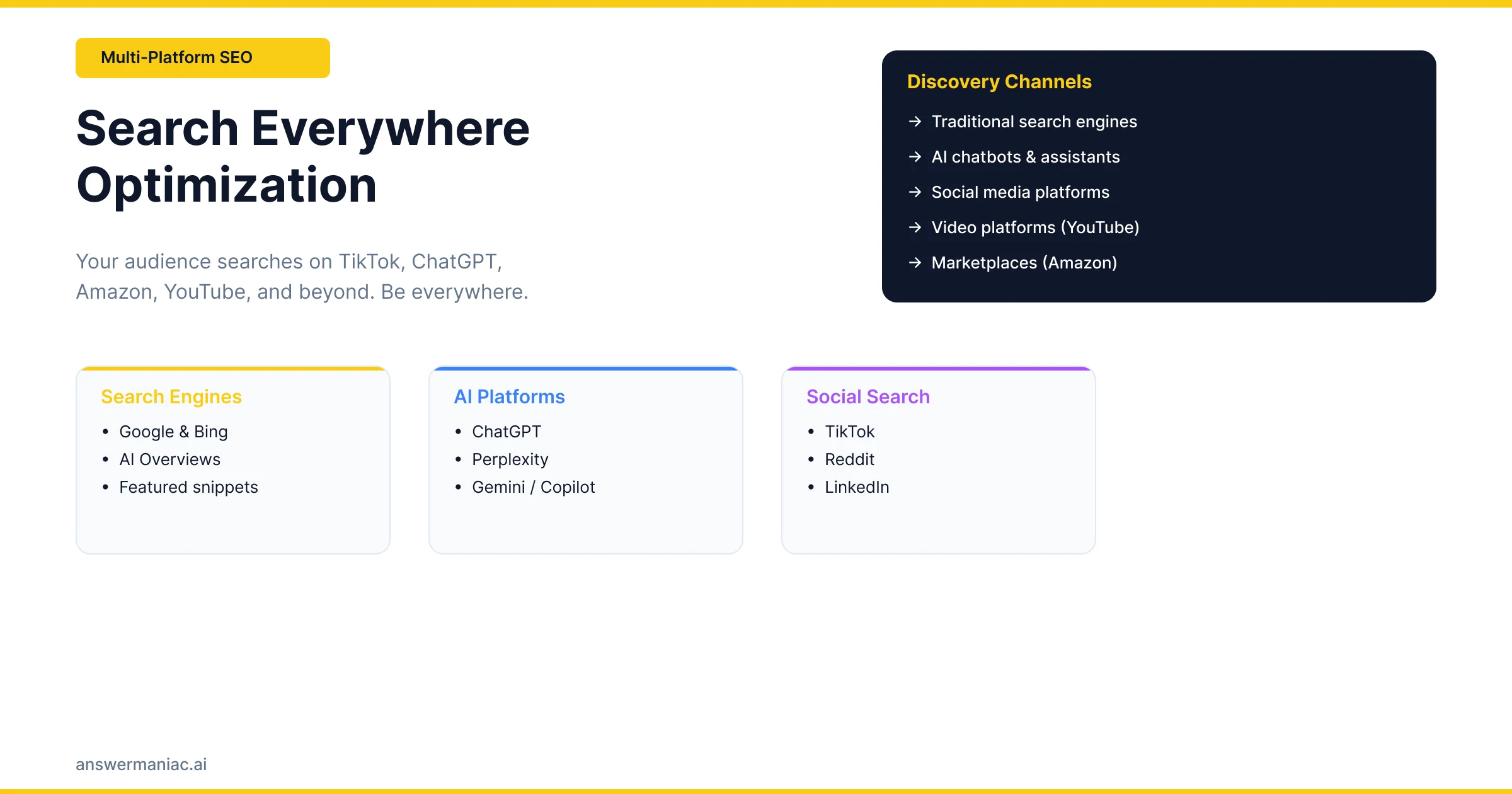
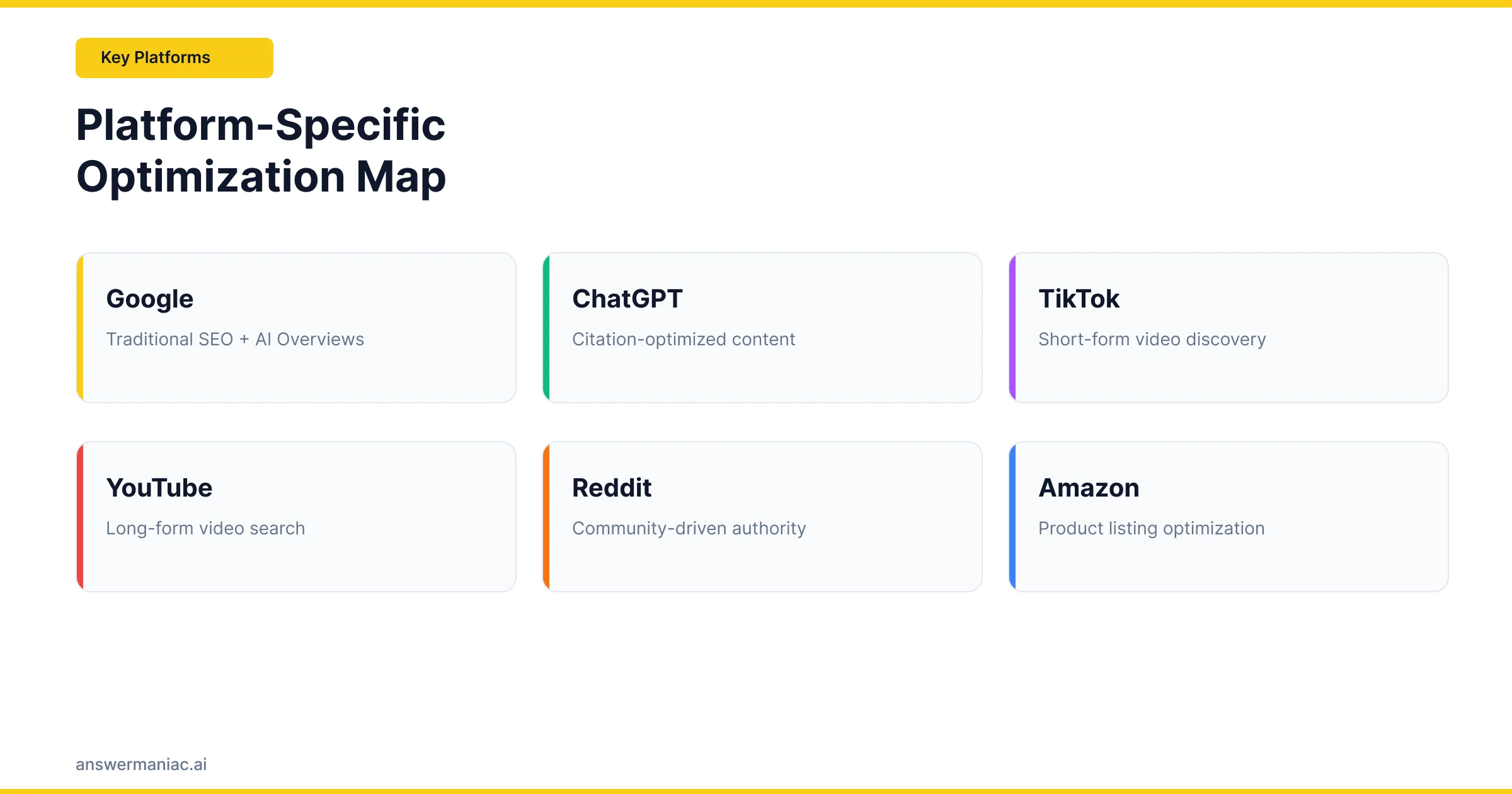
A practical Search Everywhere strategy maps and targets the specific platforms where your audience looks for information. The main categories to focus on include:
- Search Engines: Like Google and Bing. This uses traditional SEO tactics, with a stronger focus on structured data to help AI summaries.
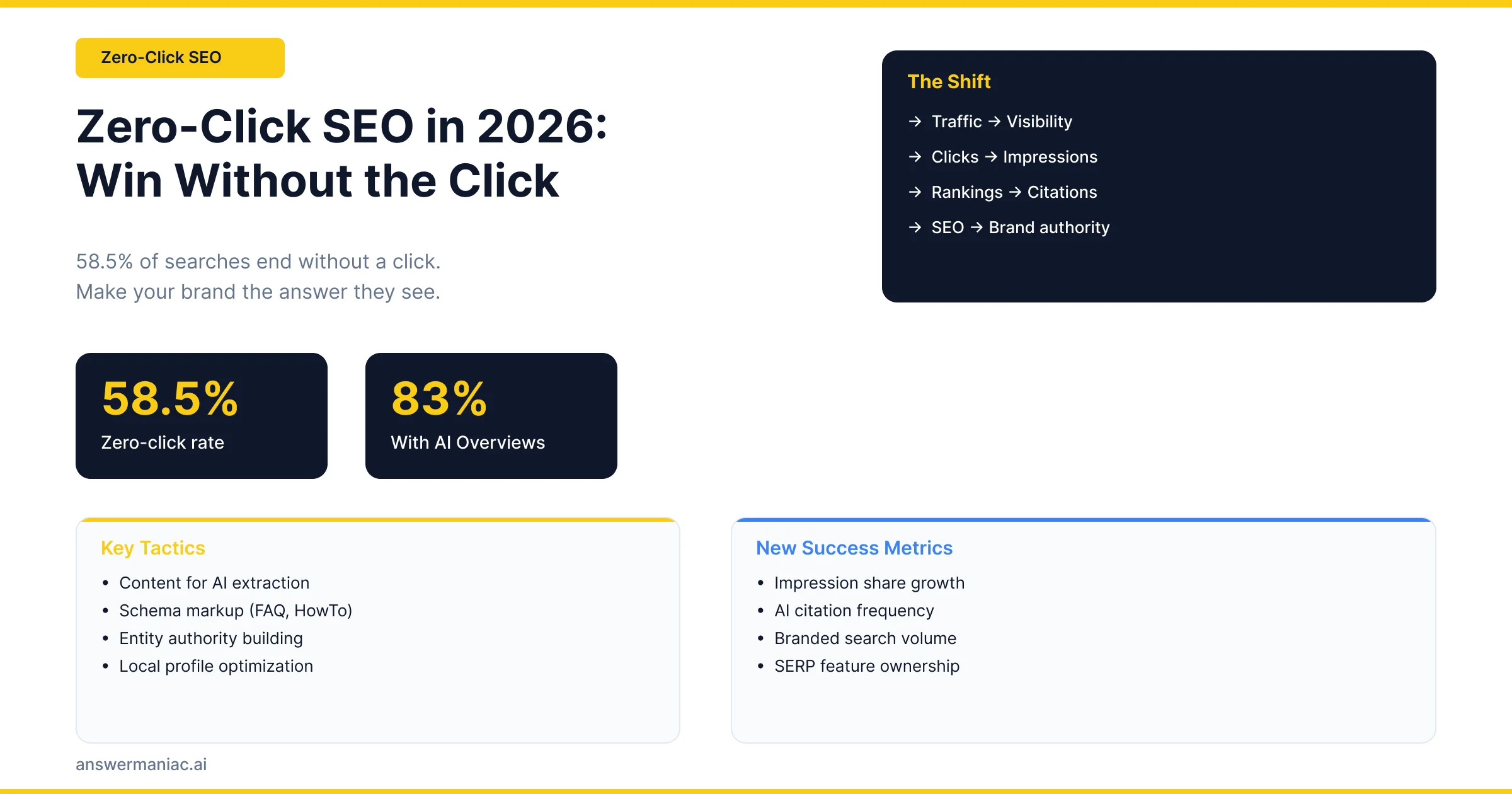
- AI Search & Assistants: Including ChatGPT, Google Gemini, and Perplexity, where visibility increasingly depends on techniques similar to a zero-click SEO strategy in 2026 that focuses on appearing directly in AI-generated summaries rather than traditional click-through results.
- Social Media: Platforms like TikTok, Instagram, LinkedIn, and Reddit. Users search directly within these apps, so content must use relevant hashtags and formats for each platform.
- Video Platforms: Such as YouTube and YouTube Shorts. This involves optimizing videos for discovery within these sites.
- Local Search: Like Google Maps and Apple Maps. This requires managing your business profile and local SEO.
- Marketplaces: Including Amazon and app stores. This focuses on optimizing product listings and reviews.
Core Components of a Unified Strategy
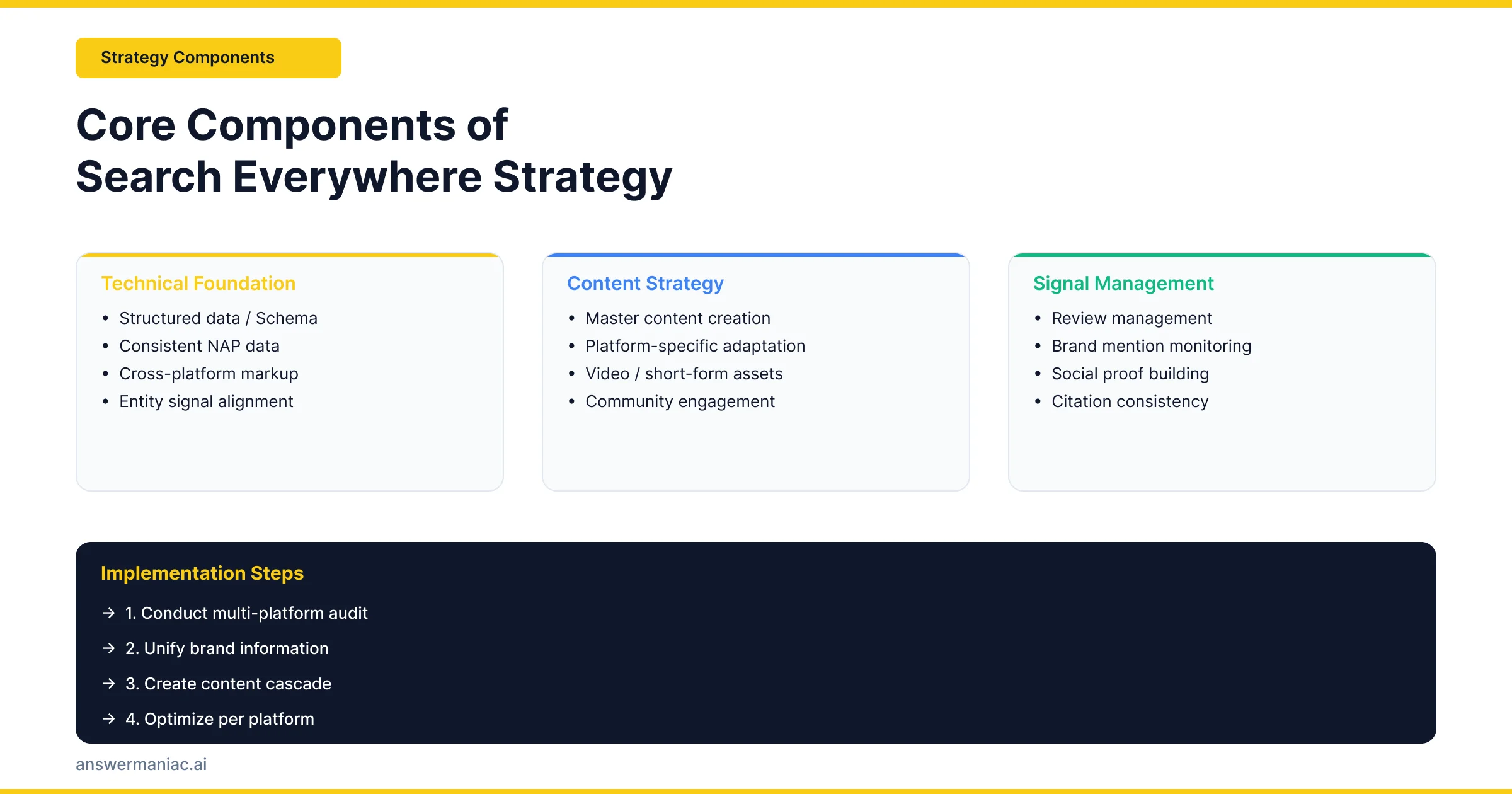
Building cross-platform visibility requires a structured plan.
1. A strong technical and data foundation. This means using structured data (schema markup) on your website. This code helps Google, AI, and other platforms understand your content. It also means keeping your core business information, like name, address, and logo, exactly the same everywhere. This builds trust with algorithms.
"The study highlights the emerging 'Citation Economy,' where digital visibility depends on entity authority, information gain, and technical machine readability rather than keywords and backlinks alone. Research indicates that AI search engines exhibit a systematic bias toward content that is fact-dense and structurally organized for LLM readability." - ResearchGate
2. A dynamic content strategy. Don't just create one piece of content. Start with a detailed, authoritative article on your website. Then, adapt it for each platform: a long post for Google, a clear FAQ for AI, a short video for TikTok, a discussion for Reddit, and a product description for Amazon. This puts your main message everywhere in the right format.
3. Active reputation and signal management. This means proactively building positive signs across platforms. Encourage and manage customer reviews on Google, Amazon, and other sites. Engage genuinely in social communities and forums. Monitor your brand mentions everywhere to see how visible you are and what people are saying. These signals help tell each platform's algorithm that you are a trusted source.
A Step-by-Step Optimization Workflow
This strategy can seem complex, but a clear, step-by-step process makes it manageable.
Step 1: Conduct a comprehensive audit. Start by mapping where your brand appears now. Check your visibility on Google, social media, AI chatbots, video sites, and marketplaces. Find the gaps. For example, ask ChatGPT questions about your field and see if it mentions you. This audit shows you your starting point.
Step 2: Unify your brand information. Claim and verify your business profiles on all key platforms like Google Business Profile, Apple Maps, and LinkedIn. Make sure your name, address, phone number, and website are exactly the same on every single one. This consistency is the essential foundation.
Step 3: Create a content cascade. Based on your audit, identify the main questions your audience asks. Create detailed, master content on your website that answers them. Then, repurpose that core message for each platform. Turn data into a TikTok graphic, use quotes in a Reddit discussion, make a video summary for YouTube, and format FAQs for your website. This distributes your content across platforms.
Step 4: Optimize and monitor continuously. Set up technical signals like schema markup on your site. Then, use monitoring tools to track your performance. Measure not just website traffic, but how often AI cites you, your visibility in social searches, and review sentiment across sites. Use this data to keep improving your approach.
The Tangible Benefits of a Diversified Approach
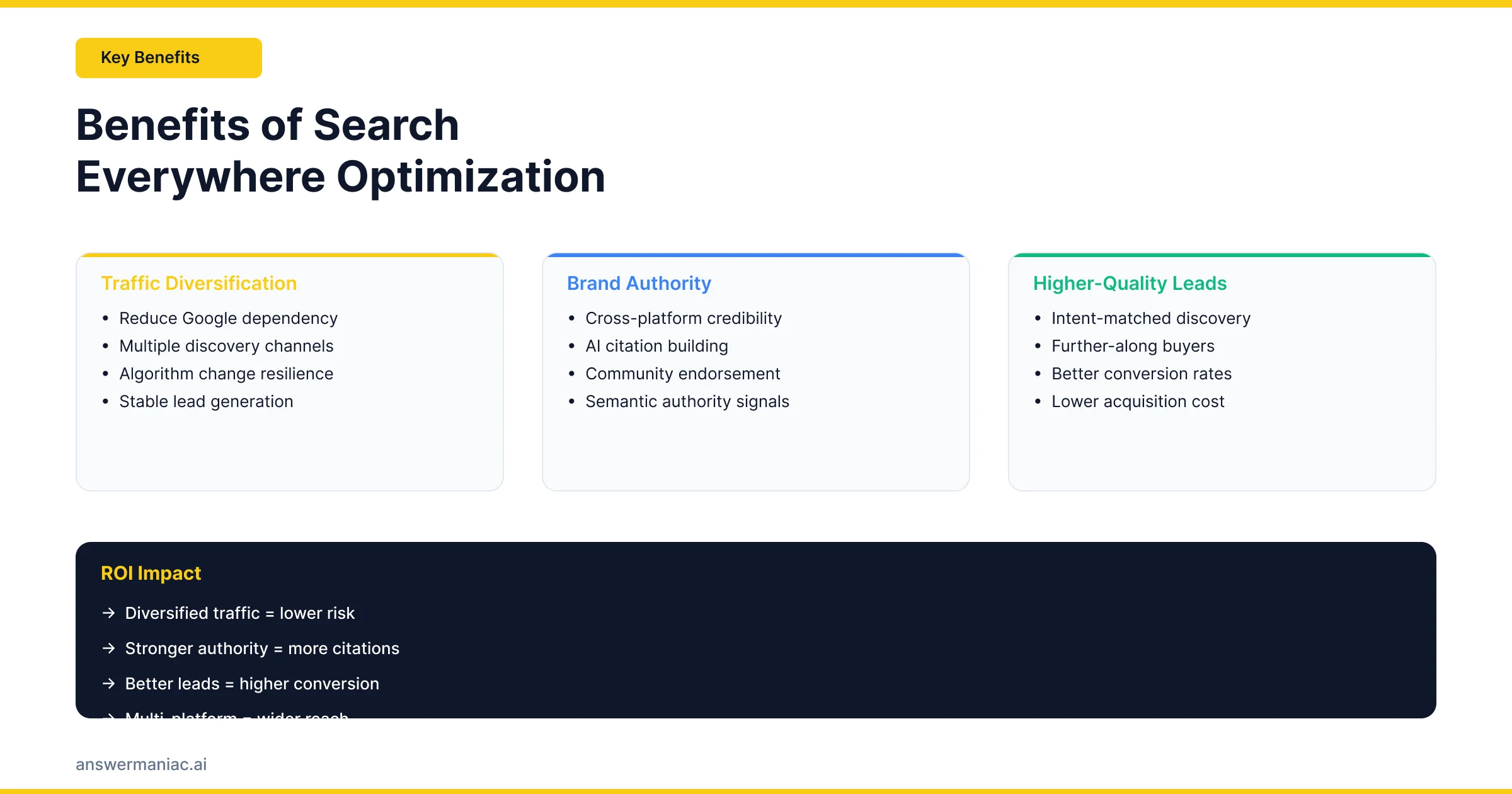
Using a Search Everywhere strategy provides clear benefits.
Traffic diversification and resilience. If most of your visitors come from Google, a sudden algorithm change can hurt your business. By being visible on AI, social media, video, and local platforms, you create multiple ways for customers to find you. This makes your marketing more stable and less risky.
Deeper brand authority, which is especially important in technical industries where AI visibility for cybersecurity companies and similar sectors depend heavily on authoritative mentions, structured information, and consistent third-party citations.
When AI cites you, social forums discuss you positively, local maps rank you well, and marketplaces show good reviews, you build stronger credibility signals. Modern algorithms, especially AI, notice this "semantic authority" and are more likely to recommend you.
Higher-quality engagement. People who find you on a niche forum or through a detailed AI answer are often more informed. They may be further along in their decision process. This can improve conversion rates and lead quality. It connects your visibility to specific needs throughout a user's journey.
Navigating the Implementation Challenges
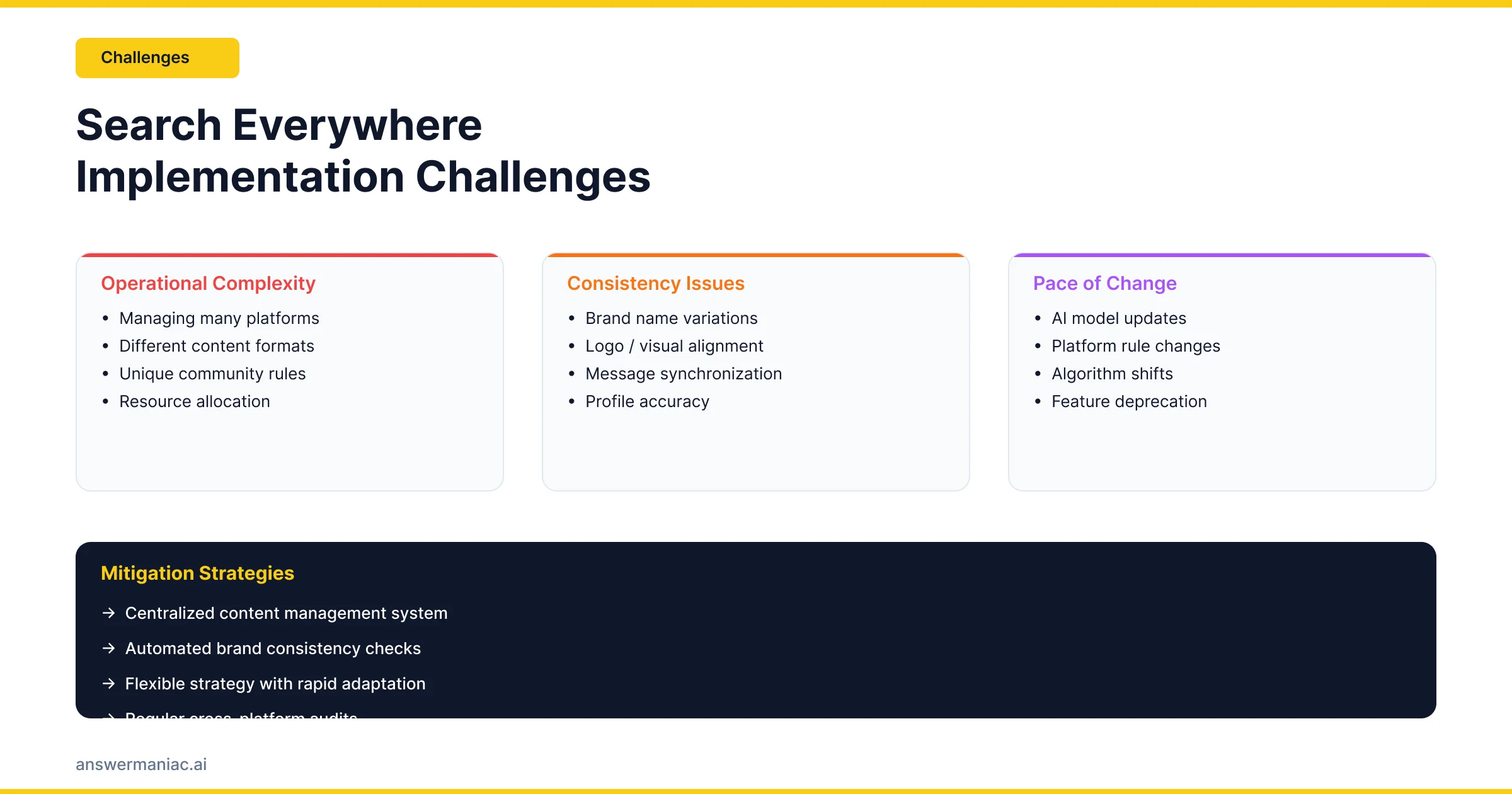
This strategy is effective, but it comes with real challenges.
Operational complexity. Managing a presence across many platforms is a lot of work. Each one has its own schedule, content style, and community rules. This requires good coordination and can increase the workload for your team. Without clear processes and tools, it can feel overwhelming.
Maintaining consistency. Keeping your brand name, logo, and key details exactly the same on dozens of profiles is a tedious, ongoing job. Any mistake can confuse algorithms and weaken your brand. This needs careful management and often special software to find and fix errors.
The pace of change. AI search rules and social media features change quickly. What works today might not work next month as AI models update. This requires a flexible approach and constant learning. You can't set a plan once and leave it; you must watch performance and adjust as platforms change, which means ongoing testing and refinement.
FAQ
What does Search Everywhere Optimization mean for modern search strategies?
Search Everywhere Optimization expands traditional Search Engine Optimization beyond a single search engine. It focuses on building brand presence across social media, video platforms, discovery platforms, and AI-powered search environments. Businesses also optimize for AI Overviews, AI assistants, and AI chat engines while strengthening branded search visibility through consistent content marketing and strong user experience.
How does AI-powered search change SEO strategies?
AI-powered search changes how information appears in search results. AI Overviews and AI chatbots often summarize content directly on the results page. Businesses should implement schema markup and Structured Data while maintaining strong Technical SEO. These practices support SERP optimization and increase the chance of appearing in Rich Snippet results.
Why should brands optimize for platforms beyond traditional search engines?
Consumer behavior now spans multiple digital spaces, including social networks, video platforms, and online communities. People often look for product recommendations on social media, Reddit discussions, and review platforms such as Amazon reviews. Search Everywhere Optimization improves brand presence across discovery platforms, app stores, and local listings like Google Maps and Apple Maps.
How does local search fit into a Search Everywhere Optimization strategy?
Local SEO plays an important role in a Search Everywhere Optimization strategy. Businesses should maintain accurate listings through platforms such as Google Business Profile and optimize citations using a Citations Builder approach. Strong local signals improve visibility in map results and help businesses appear in the Local Three Pack area for relevant location searches.
What data helps measure the success of Search Everywhere Optimization?
Businesses measure performance using Data Analysis across multiple digital channels. Teams track branded search growth, changes in consumer behavior, and visibility across discovery platforms. Tools such as Google Trends, Brand Radar insights, and Social SEO reports help identify performance patterns. These insights guide content strategy frameworks and inbound strategies that attract high-quality leads.
Be Found Everywhere Your Audience Searches
Discovery no longer lives in one place. People search on AI tools, social platforms, video sites, and traditional engines. If your strategy focuses only on Google, you miss where real conversations and decisions now begin.
Search Everywhere Optimization shifts your presence from one ranking to many signals. By building visibility across platforms, your brand becomes easier to find, reference, and trust wherever discovery happens.
Start with a free Search Everywhere audit from AnswerManiac and see how visible your brand truly is across today's discovery platforms.
References:
- Frase.io - What is Generative Engine Optimization (GEO)
- ResearchGate - Generative Engine Optimization GEO
Related Articles:
Get AEO Insights Weekly
Join 500+ B2B marketers getting AI visibility tactics every Tuesday.
Ready to Get Your Brand Cited by AI?
See how your competitors show up in ChatGPT, Perplexity, and Gemini — and what it would take to get recommended.