How to Get Your Brand Cited in Perplexity AI: The Complete Playbook
Learn how to get your brand cited in Perplexity AI using structured content, strong authority signals, and technical SEO that improves AI answer visibility.
Getting cited in Perplexity AI means creating content that clearly answers questions and provides trustworthy information. It also helps to organize the content so AI systems can easily understand it.
Perplexity scans web pages, finds direct answers, and cites sources that provide clear explanations, reliable data, and strong authority signals.
When we structure our content well and maintain solid technical SEO, our pages have a better chance of becoming trusted sources for AI-generated answers.
Keep reading to learn practical steps that can help increase the chances of being cited in Perplexity AI.
Key Principles to Get Cited in Perplexity AI
- Structure content with direct answers, question headings, and short focused paragraphs so AI systems can easily understand and extract useful information.
- Build strong trust signals using author credentials, reliable references, data-supported explanations, and consistent high-quality content across all published articles.
- Optimize technical SEO using structured data, fast page speed, mobile responsive design, and updated metadata to improve AI parsing and citation potential.
Understanding How Perplexity AI Citations Work
To get cited in Perplexity AI, we first need to understand how the system selects sources and extracts information from web pages.
What Are Perplexity AI Citations
Perplexity AI citations are references shown below AI-generated answers. These citations indicate where the system obtained information used in its responses.
Unlike traditional search rankings, citation systems focus on content clarity and relevance. Pages that clearly answer questions are more likely to be cited.
Important factors influencing citations include:
- Relevance to the user's query
- Clear explanation structure
- Reliable and authoritative sources
- Updated and accurate information
Because of this, writing clear informational content becomes essential.
How Perplexity Extracts Information From Pages
Perplexity AI analyzes web pages using natural language models that identify concise passages capable of directly answering user questions. According to industry analysis by BrightEdge,
"AI-driven search engines increasingly prioritize structured content blocks and modular explanations that can be easily parsed into conversational responses, noting that concise, modular content improves how information is extracted and integrated into AI answers."
Several content characteristics improve extraction accuracy:
- Clear headings that describe each topic
- Structured paragraphs with focused explanations
- Explicit references and supporting data
- Simple HTML structure without excessive complexity
When our content uses predictable formatting, AI systems can interpret it more efficiently.
Key Ranking Signals for Perplexity Citations
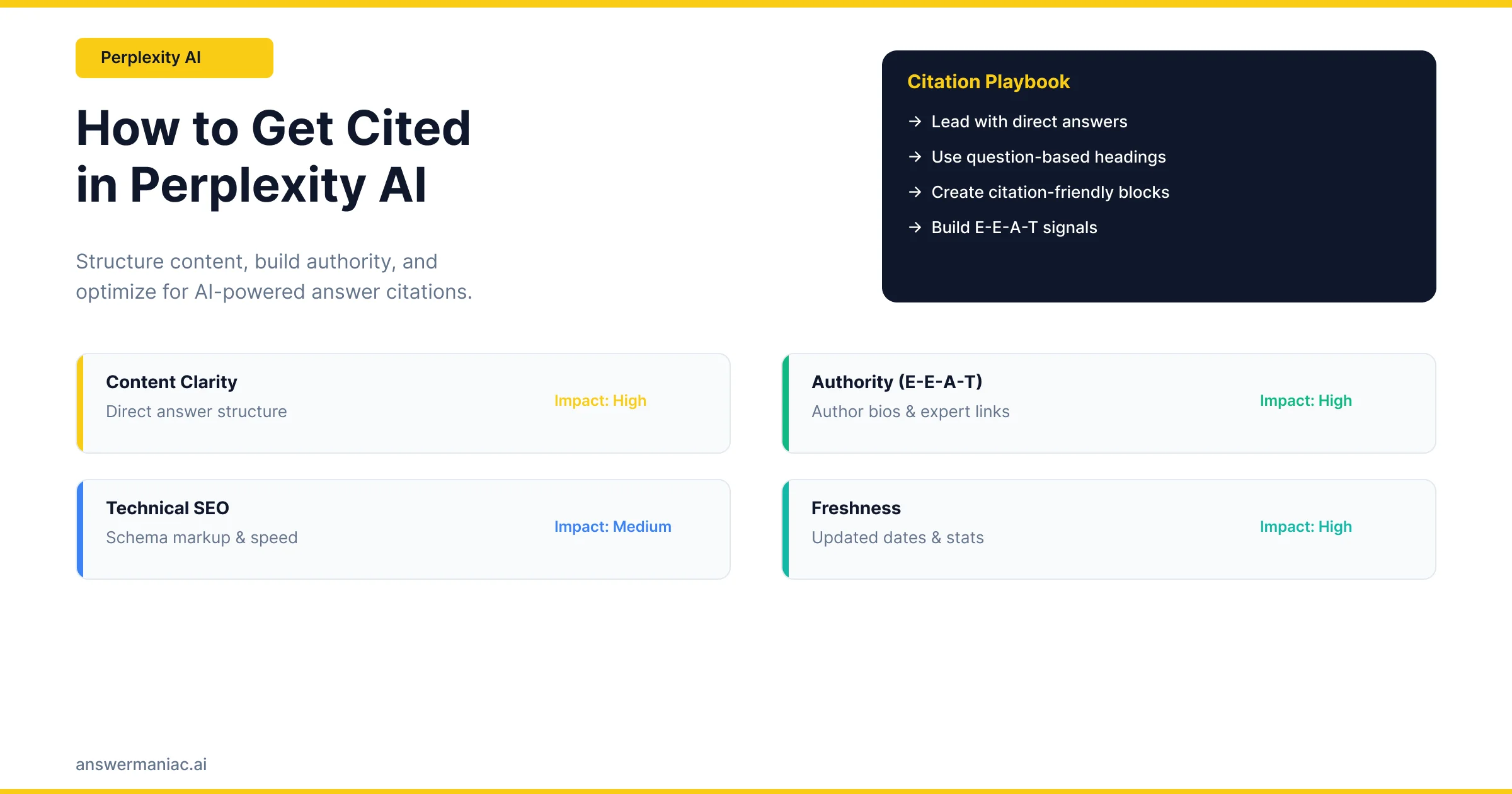
Perplexity does not rely only on keyword rankings. It analyzes multiple signals that indicate whether a page is trustworthy, clear, and helpful for answering user questions. These signals help the system determine which sources deserve citation visibility in AI-generated responses.
The most common signals include content clarity, authority indicators, technical SEO structure, and freshness signals that show information is still accurate and relevant.
| Signal Category | Key Optimization Factor | Impact on Citation |
|---|---|---|
| Content Clarity | Direct answer structure (Inverted Pyramid) | High: Helps AI extract snippets easily |
| Authority (E-E-A-T) | Author bio, credentials, and expert backlinks | High: Establishes trust in the information |
| Technical SEO | Schema markup (FAQ, Article) and Page Speed | Medium: Improves crawlability and indexing |
| Freshness | "Last Updated" dates and current statistics | High: Ensures relevance for time-sensitive queries |
Together, these signals help AI systems evaluate whether a page provides reliable information and deserves to be referenced as a source.
Structuring Content to Get Cited by Perplexity
Content structure strongly influences whether AI systems extract information from our pages. Clear formatting improves readability for both humans and machines.
Lead With the Direct Answer Structure
A direct answer structure begins with the main explanation immediately. This format helps both readers and AI systems understand the topic quickly.
Best practices include:
- Start sections with a clear definition or explanation
- Avoid long introductions before answering the question
- Provide context after the main answer
- Use simple language that is easy to interpret
This structure follows the inverted pyramid approach used in journalism, where the most important information appears first.
Use Question-Based Headings
Question headings align closely with how users search for information online. AI systems also recognize these headings as clear signals of topic relevance.
Using questions in headings helps improve content extraction.
Effective approaches include:
- Creating H2 or H3 headings that mirror real queries
- Covering related questions within the same article
- Including FAQ sections with concise answers
- Addressing common problems readers encounter
This method increases topical coverage and improves visibility in answer engines.
Create Citation-Friendly Content Blocks
Structured content blocks improve the reliability and safety of AI information extraction by helping systems identify precise passages that answer user queries without misinterpretation.
According to industry research reported by the Nielsen Norman Group,
"AI systems and large language models frequently rely on structured formats such as lists and tables because they simplify complex information and improve parsing accuracy. As the report explains, well-structured content such as lists and tables helps both humans and AI systems quickly scan, interpret, and reuse information."
Examples include:
- Mini tables summarizing key information
- Statistics supporting claims
- Short case studies demonstrating outcomes
- Step-by-step explanations for processes
These elements help AI systems locate clear evidence within the content. For more on which content formats earn the most citations, see our citation asset playbook.
Technical SEO for Perplexity AI Visibility
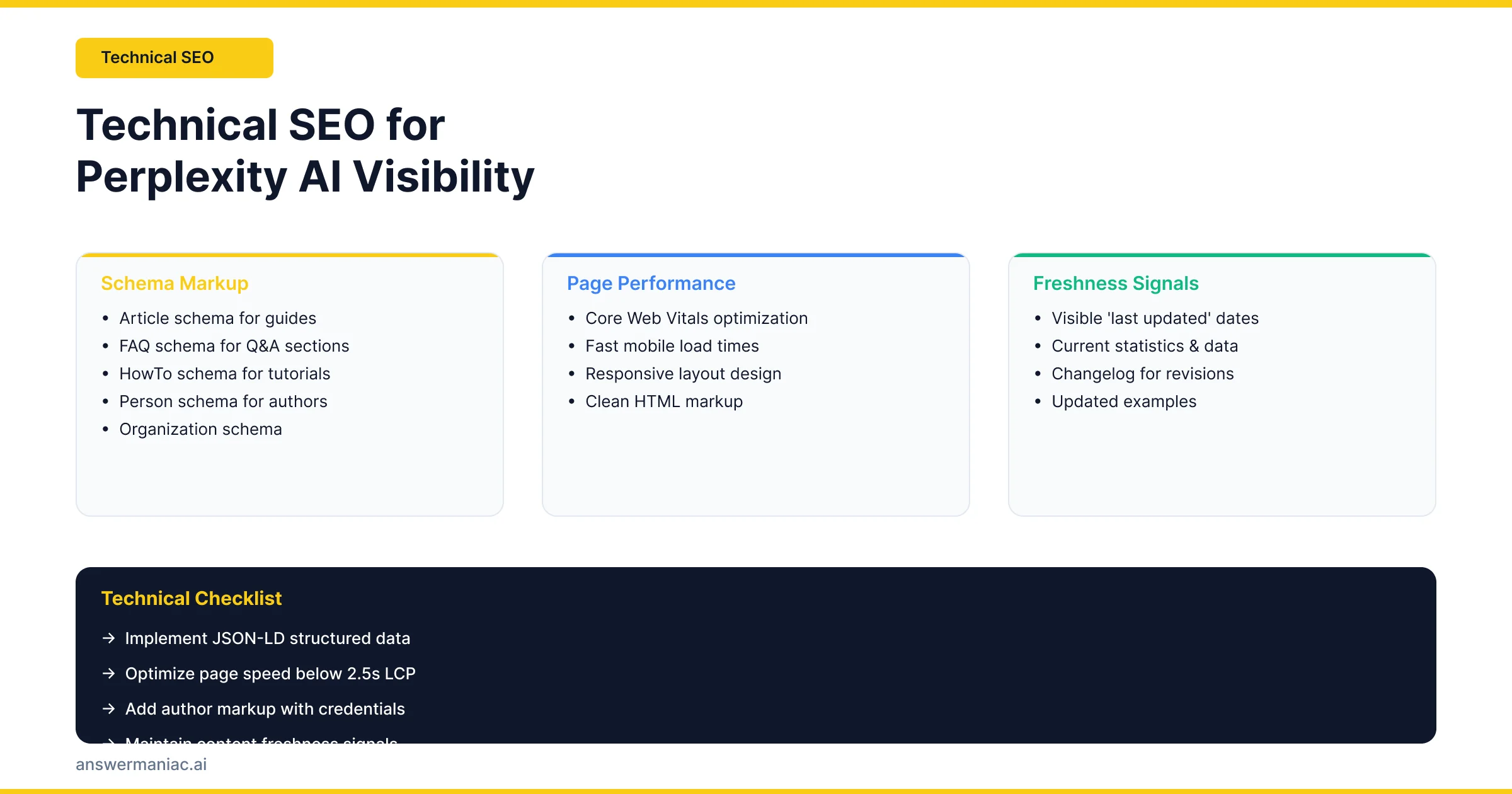
Technical optimization ensures that AI crawlers can access and interpret our content properly.
Structured Data That Improves AI Citations
Structured data provides machine-readable information about page content. Search systems use schema markup to understand page elements more clearly.
Useful schema types include:
- Article schema for blog posts and guides
- FAQ schema for question sections
- HowTo schema for instructional content
- Person schema for author information
- Organization schema for brand entities
These signals strengthen the semantic structure of the page.
Website Performance Signals
Website performance affects both user experience and AI accessibility. Faster pages are easier to crawl and process.
Key performance factors include:
- Core Web Vitals performance metrics
- Fast loading times for desktop and mobile
- Responsive layout across devices
- Clean HTML markup without unnecessary scripts
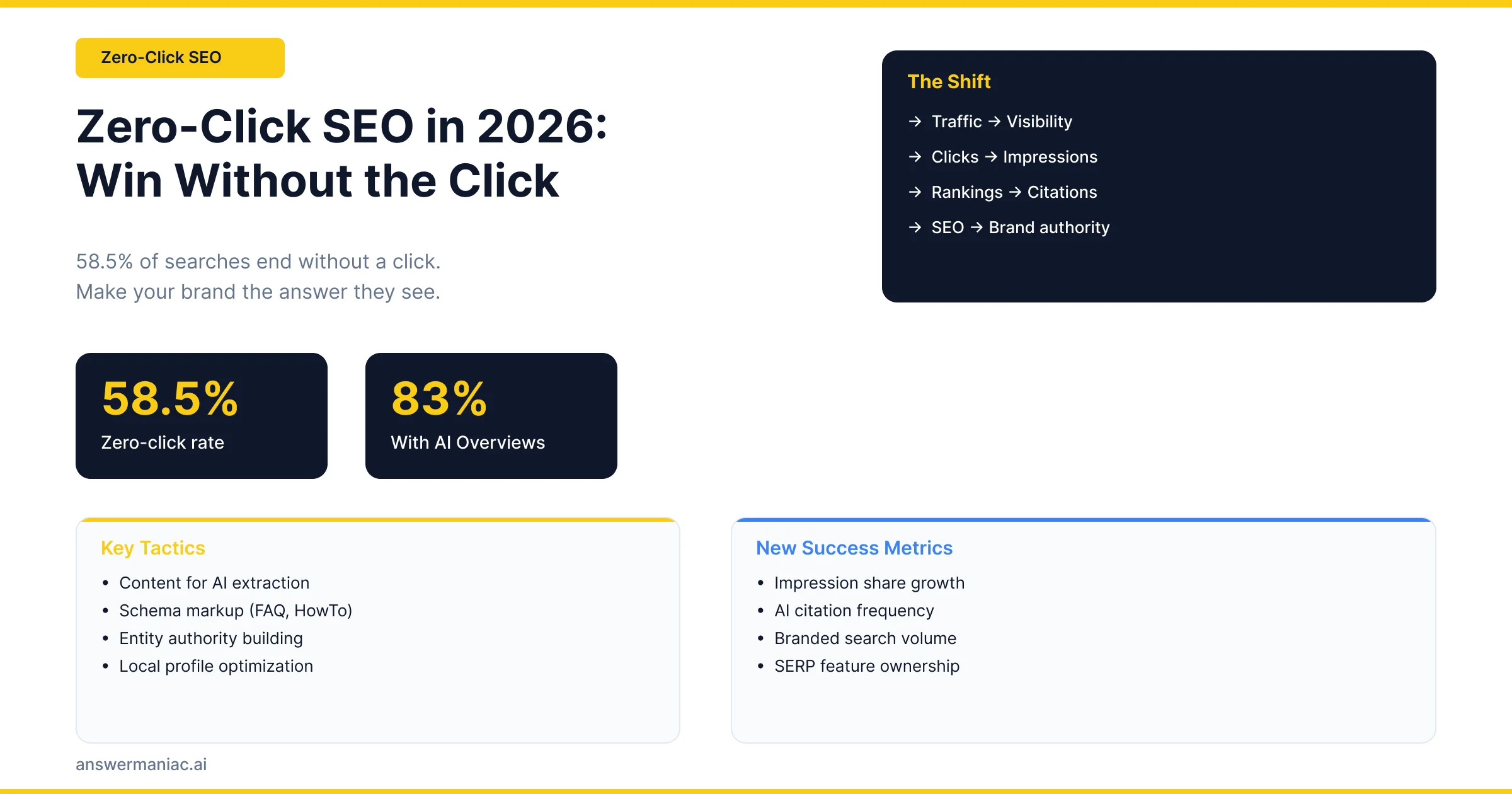
Improving these factors helps ensure the content is fully accessible. As traditional search evolves toward zero-click outcomes, strong technical foundations become even more critical for visibility.
Metadata and Content Freshness Signals
Freshness signals help AI systems determine whether information is still relevant. Updated content is more likely to be cited.
Effective freshness practices include:
- Adding a visible "last updated" date
- Updating statistics and references regularly
- Maintaining changelog updates for important revisions
- Refreshing examples and case studies
These signals show that the content remains accurate and current.
Building Authority That Perplexity AI Trusts
https://youtu.be/YoWdogtZRw8?si=429USB5yliZUThvv
Credit: Jeff Su
Authority signals increase the likelihood that AI systems view our content as a reliable source.
Author E-E-A-T Signals
Experience, expertise, authority, and trustworthiness are important credibility indicators for informational content.
To strengthen these signals we should:
- Provide a clear author biography
- Highlight relevant professional experience
- Include first-hand insights or explanations
- Maintain transparency about expertise
These elements help establish credibility.
Domain Authority and Backlinks
Backlinks remain important signals for authority across search systems. High-quality links indicate that other websites trust our content.
Effective strategies include:
- Publishing guest articles on reputable industry sites
- Participating in digital PR initiatives
- Earning links through research or data content
- Contributing to niche publications
These links strengthen domain credibility.
Reputation Signals Across the Web
Online reputation contributes to brand recognition signals used by AI systems. Managing your AI brand reputation is a key component of long-term citation visibility.
Helpful activities include:
- Participating in industry communities and forums
- Encouraging user reviews on relevant platforms
- Engaging in discussions within professional groups
- Maintaining consistent brand presence online
These activities improve entity recognition.
Content Optimization Strategies for Perplexity Citations
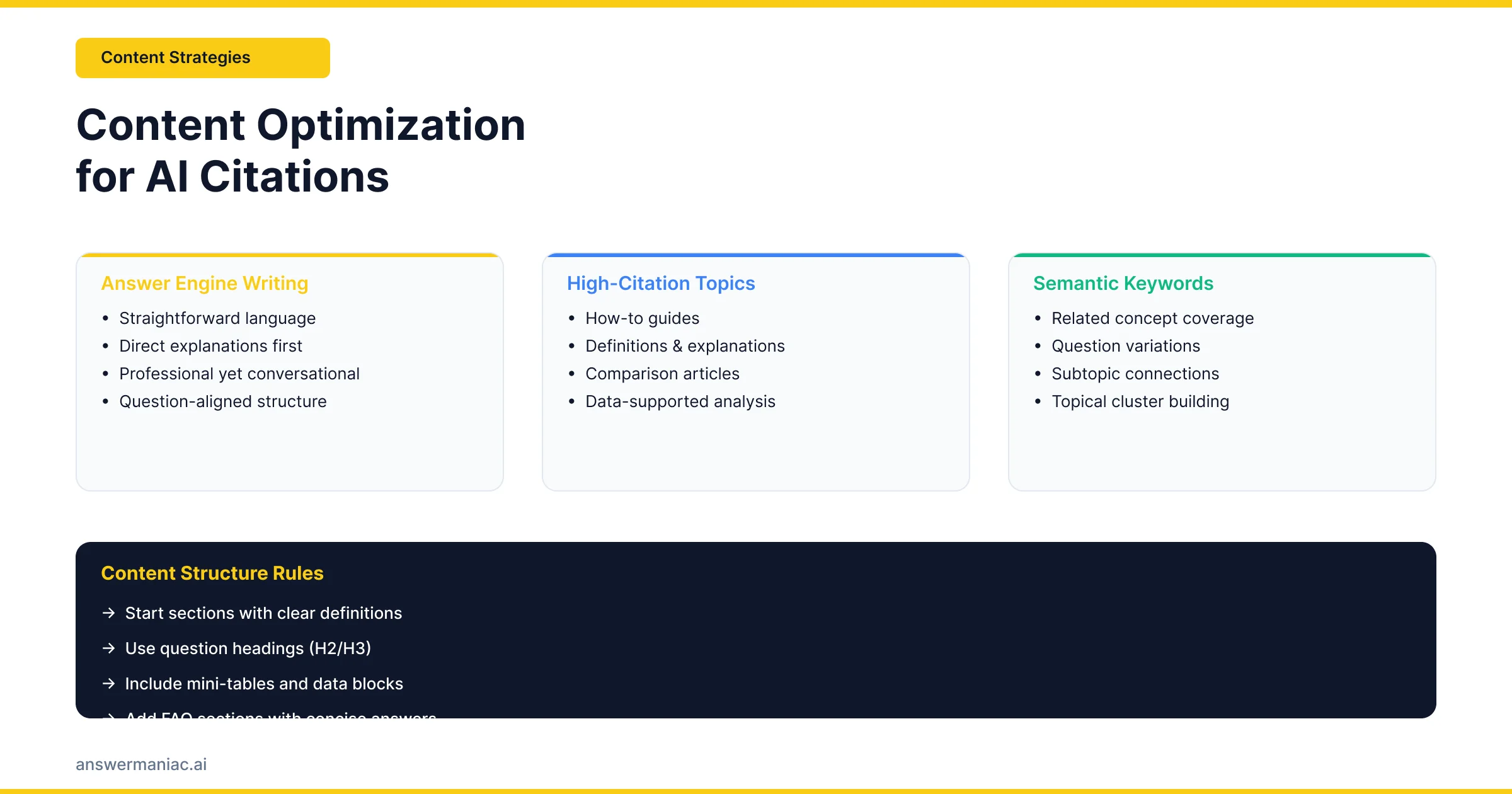
Beyond structure and authority, content quality plays a major role in AI citations.
Write Content Optimized for Answer Engines
Answer engine optimization focuses on delivering clear explanations that match user intent. Understanding the difference between AEO and GEO helps clarify how to approach content for different AI systems.
Key writing practices include:
- Using straightforward language
- Avoiding unnecessary complexity
- Providing direct explanations before detailed context
- Maintaining a conversational but professional tone
This style improves readability and comprehension.
Cover Topics With High Citation Potential
Some types of topics naturally attract more citations because users frequently ask related questions.
High-value content categories include:
- "How-to" guides
- Definitions and explanations
- Comparison guides
- Data-supported informational articles
Choosing these topics increases the likelihood of visibility.
Semantic Keyword Integration
Semantic keywords help AI systems understand the broader context of a topic.
Useful practices include:
- Including related concepts naturally
- Addressing multiple variations of a question
- Connecting related subtopics within the article
- Building topical clusters around core themes
This approach strengthens topical authority.
Advanced GEO Strategies to Increase Perplexity Citations
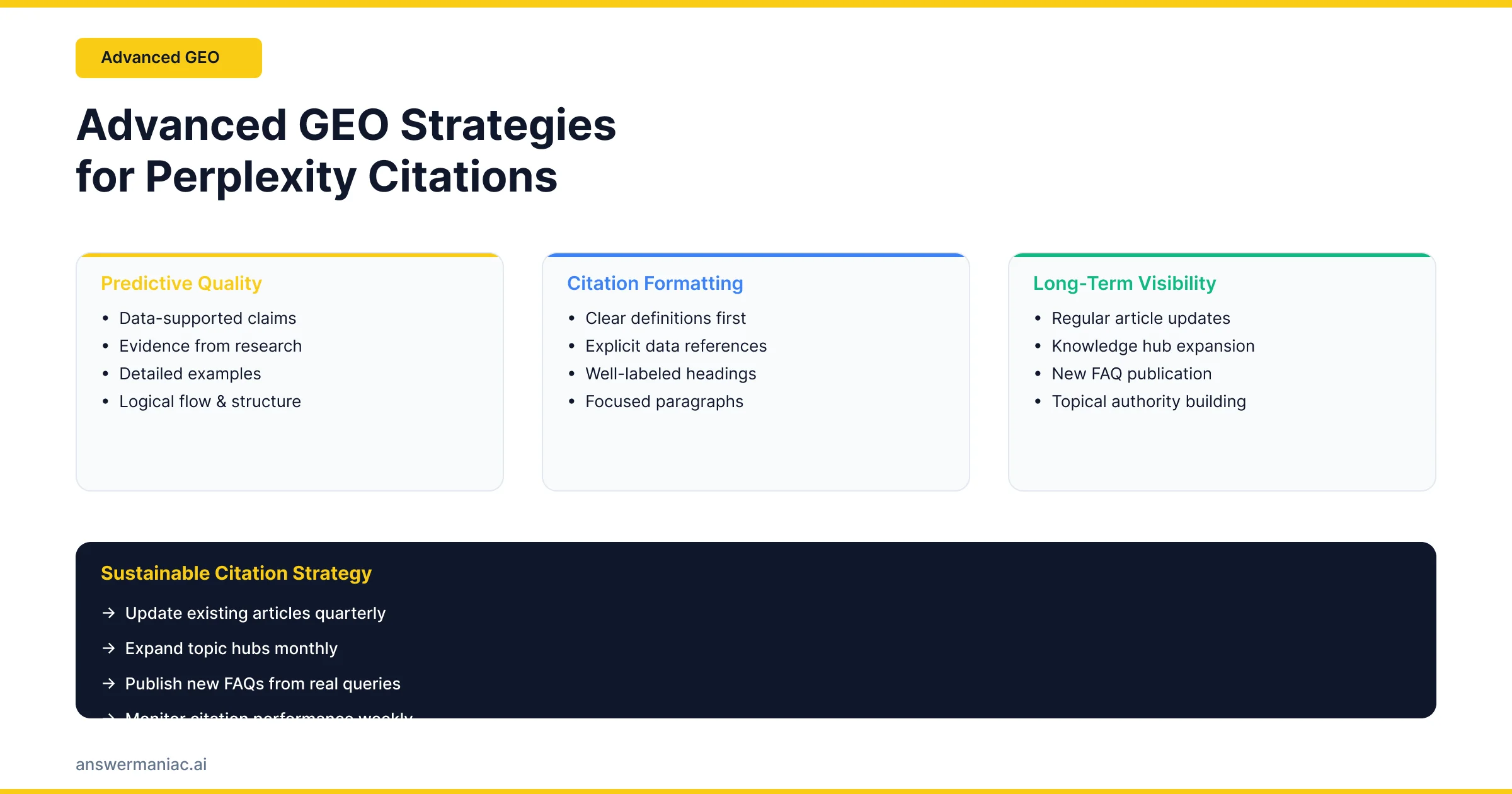
Generative Engine Optimization focuses on making content more visible to AI answer engines.
Predictive Content Quality
Predictive content quality means anticipating the information readers will need and providing it clearly.
Strong content quality often includes:
- Data-supported explanations
- Evidence from research or studies
- Detailed examples that clarify concepts
- Logical structure that improves comprehension
These elements help AI systems trust the information.
AI Output Citation Tactics
Citation-friendly formatting increases the chance that AI systems extract passages from the page.
Important formatting techniques include:
- Clear definitions at the beginning of sections
- Explicit references when presenting data
- Well-labeled headings describing each topic
- Organized paragraphs with focused explanations
This structure helps AI systems locate useful answers quickly.
Creating Long-Term Perplexity Visibility
Long-term visibility requires consistent content development and updates. Knowing how to measure AI search ROI ensures your efforts are tracked and optimized over time.
Sustainable strategies include:
- Updating existing articles regularly
- Expanding knowledge hubs around key topics
- Publishing new FAQs based on user questions
- Strengthening topical authority over time
These efforts build a stronger presence within AI search systems.
FAQ
What are Perplexity AI citations?
Perplexity AI citations are references displayed under AI-generated answers that indicate the sources used to produce the response. These citations typically come from pages that provide clear explanations, relevant information, and authoritative signals.
Why is content structure important for Perplexity AI citations?
Content structure helps AI systems quickly understand and extract useful information. Pages that use direct answers, clear headings, short paragraphs, and structured formats such as lists or tables are easier for AI systems to parse and cite.
What technical SEO elements improve citation potential in Perplexity AI?
Key technical SEO factors include structured data (such as FAQ or Article schema), fast page speed, mobile-friendly design, clean HTML markup, and optimized metadata. These elements help AI crawlers interpret page content more effectively.
How do authority signals influence Perplexity AI citations?
Authority signals such as author credentials, expert backlinks, credible references, and strong domain reputation help establish trust. AI systems are more likely to cite sources that demonstrate expertise, experience, authority, and trustworthiness.
What types of content are most likely to be cited by Perplexity AI?
Content with high citation potential includes how-to guides, definitions, comparison articles, and data-supported informational content. These formats often answer common user questions clearly and align with how AI answer engines extract information.
How to Get Cited in Perplexity AI: Long-Term Strategy
Getting cited in AI search systems like Perplexity AI requires clear content structure, strong trust signals, and solid technical SEO.
Pages that answer questions directly, include evidence-based explanations, and stay updated are more likely to be cited. Effective strategies include using structured headings, schema markup, fast page performance, and credible backlinks.
Over time, these practices build topical authority. Tools like AnswerManiac help organize scalable, question-driven content aligned with how people search.
References:
Related Articles:
Get AEO Insights Weekly
Join 500+ B2B marketers getting AI visibility tactics every Tuesday.
Ready to Get Your Brand Cited by AI?
See how your competitors show up in ChatGPT, Perplexity, and Gemini — and what it would take to get recommended.