How to Get Cited by ChatGPT: A Data-Backed Playbook for B2B Brands
A step-by-step playbook for getting cited by ChatGPT, built on Profound's 11.84B citation dataset, Semrush's ghost citation study, and Wix's format analysis.
Quick Answer
Key facts
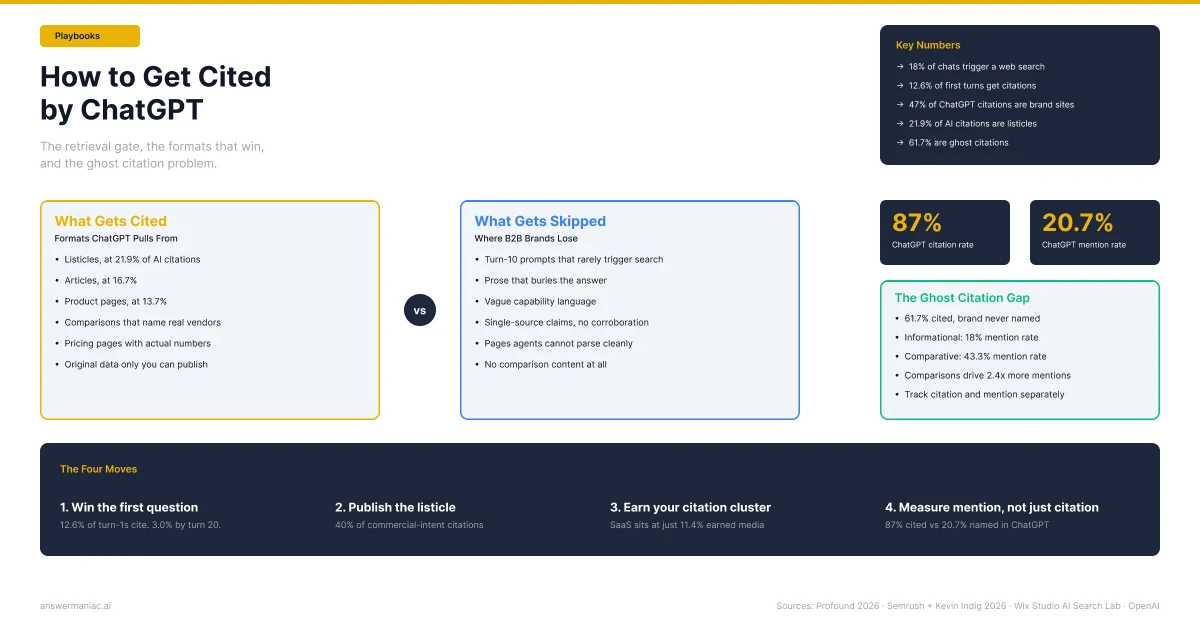
- About 18% of ChatGPT conversations trigger at least one web search (Profound, ~700K US conversations, Oct–Dec 2025)
- Turn 1 produces citations 12.6% of the time; turn 20 produces them 3.0% of the time (Profound, Feb 2026)
- ChatGPT pulls 47% of its citations from brand-owned sites and 30% from earned media, the highest earned share of the eight models measured (Profound, 11.84B citations, Apr–Jul 2026)
- SaaS and software companies see only 11.4% of their citations come from earned media, versus 59% for pharma and biotech (Profound, 2026)
- Listicles took 21.9% of AI citations, articles 16.7%, product pages 13.7% (Wix Studio AI Search Lab, 75,000 answers, via Search Engine Land)
- 61.7% of brand appearances in AI answers are "ghost citations," meaning cited without the brand being named (Semrush + Kevin Indig, 3,981 domain appearances, June 2026)
- ChatGPT crossed 1 billion monthly active users in June 2026 (Reuters). Weekly active users nearing 1 billion as of late July 2026.
The Retrieval Gate Nobody Talks About
Most ChatGPT visibility advice skips the first question you should be asking: does ChatGPT even go to the web for this query?
Profound analyzed roughly 700,000 US English-language ChatGPT conversations from October to December 2025. About 18% triggered at least one web search. The other 82% were answered from what the model already knows.
That splits your work in two, and the split matters more than any tactic below.
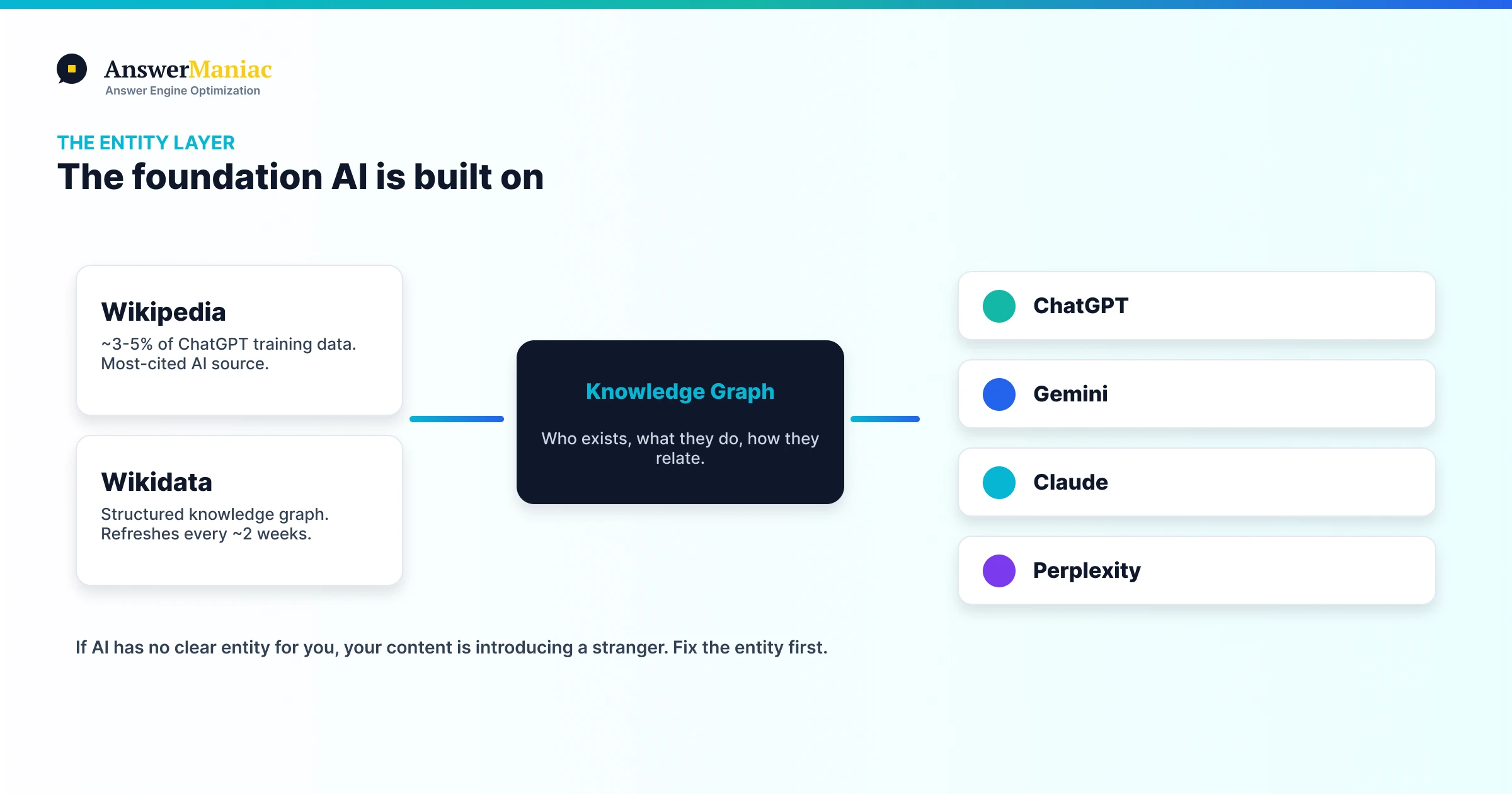
For the 82%, you're not competing for a citation. You're competing for the model's internal representation of your category: whether it knows your company exists, what it thinks you do, and which competitors it lists first. That's entity work, not content work, and we cover the mechanics in entity SEO for AI search.
For the 18%, you're competing for a link. That's where this playbook lives.
Both matter. But if your entire AEO program is "publish more blog posts," you're optimizing for a minority of conversations and hoping the rest sorts itself out.
Win Turn One or Lose the Conversation
Profound's turn-by-turn data is the single most actionable finding in the current AEO literature, and almost nobody is building content around it.
| Turn number | % of turns with citations |
|---|---|
| 1 | 12.6% |
| 2 | 8.98% |
| 3 | 7.53% |
| 5 | 6.2% |
| 10 | 4.5% |
| 20 | 3.0% |
The opening question is 2.5 times more likely to trigger a citation than turn 10, and roughly four times more likely than turn 20. Once a conversation gets going, ChatGPT stops searching and starts synthesizing from what it already pulled.
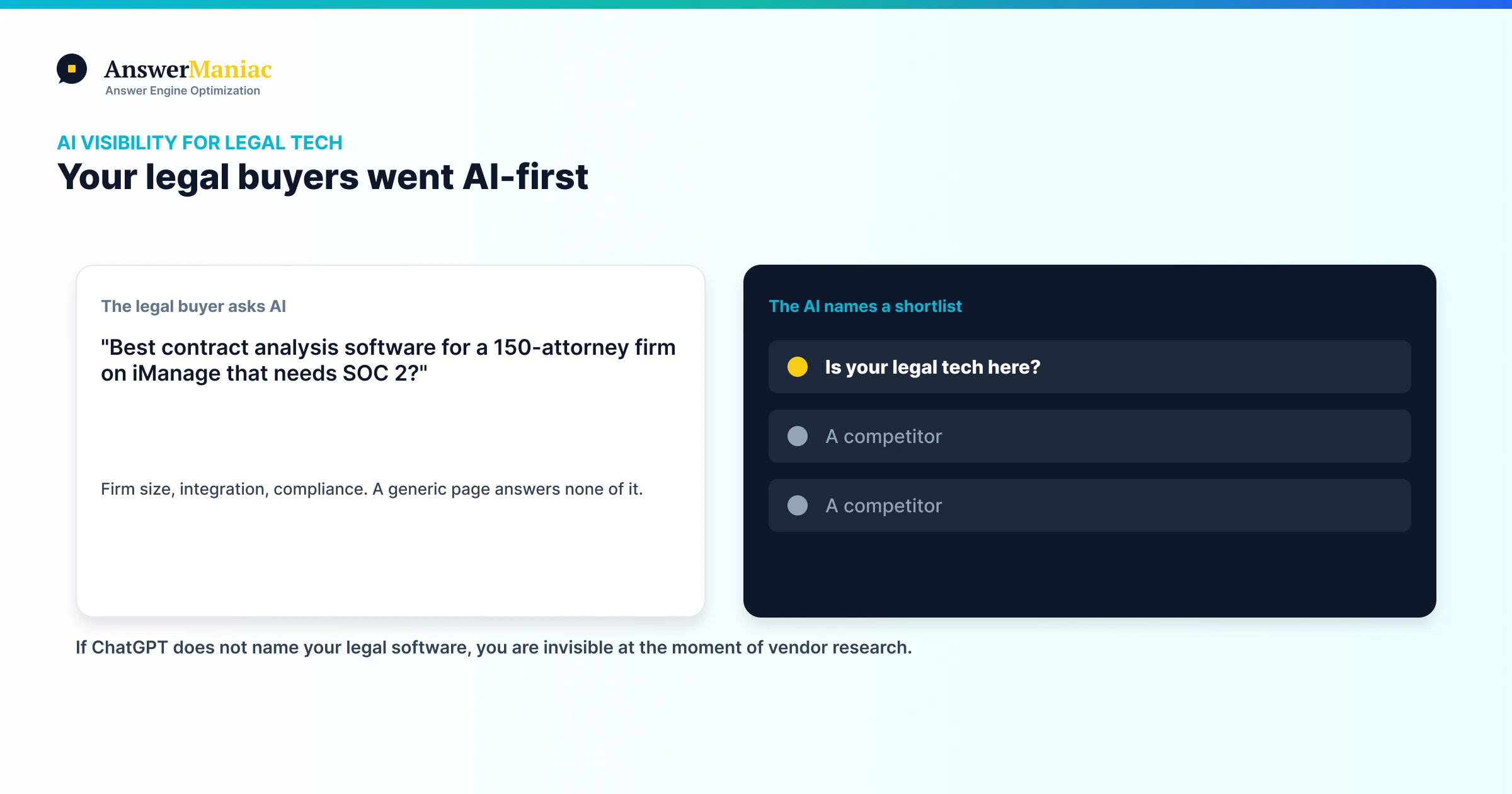
So the query you need to own isn't "compare Vendor A vs Vendor B pricing tiers for a 200-seat deployment." It's the question that starts the journey: "what software do franchise development teams use to manage the pipeline?"
Broad. Category-level. Slightly naive. The question someone asks before they know the vocabulary.
I went back through our own client prompt sets after reading this study and found we'd been tracking mostly turn-3 and turn-5 phrasings, the specific comparison prompts that feel more "buying intent." They convert better when you win them. They also trigger a web search far less often. We rebalanced the prompt set toward opening questions, and that changed what we told two clients to write next.
Your Industry Sets Your Citation Mix
Profound's July 2026 study looked at 11.84 billion citations across 29 industries and eight models, swept between April and July 2026. The headline finding reframes the whole earned-versus-owned debate.
Globally, roughly 57% of AI citations come from brand-owned sites: company websites, product pages, docs, brand blogs. ChatGPT uses them least of the major engines at 47%. Google Gemini uses them most at 69%.
ChatGPT's distinguishing feature is earned media: 30% of its citations, the highest of any model measured. Google AI Overviews sits lowest at 17.0%.
Then the industry layer flips it again. SaaS and software companies see a median of just 11.4% of their citations come from earned media. Pharma and biotech sit at 59%, the polar opposite. Cybersecurity is the most brand-heavy industry at a 74% median brand-citation share.
What that means for a B2B software company: your own site is doing most of the work, and it will keep doing most of the work. The upside is that this is the bucket you control. The risk is complacency. Profound also found the spread in earned-media share between the 25th and 75th percentile company within a single industry can reach 43 percentage points. Your category average is a baseline, not a ceiling.
Practical read: build the owned surface properly first, because that's where 47% of ChatGPT's citations land. Then use earned media as the lever that separates you from the median company in your vertical.
The Formats ChatGPT Actually Pulls From
Wix Studio's AI Search Lab analyzed 75,000 AI answers and more than a million citations across ChatGPT, Google AI Mode, and Perplexity. The format breakdown, reported via Search Engine Land:
| Content format | Share of AI citations |
|---|---|
| Listicles | 21.9% |
| Articles | 16.7% |
| Product pages | 13.7% |
| Top three combined | 52% |
Listicles alone captured about 40% of commercial-intent citations, nearly double any other format.
The study's more useful finding: query intent predicted citation format better than industry or model did. A "best X for Y" query pulls listicles regardless of whether the category is fleet management or fertility clinics. A "how does X work" query pulls explanatory articles.
Which gives you a mapping instead of a guess:
| Buyer question type | Format to publish |
|---|---|
| "Best [category] for [segment]" | Ranked listicle with named vendors, including competitors |
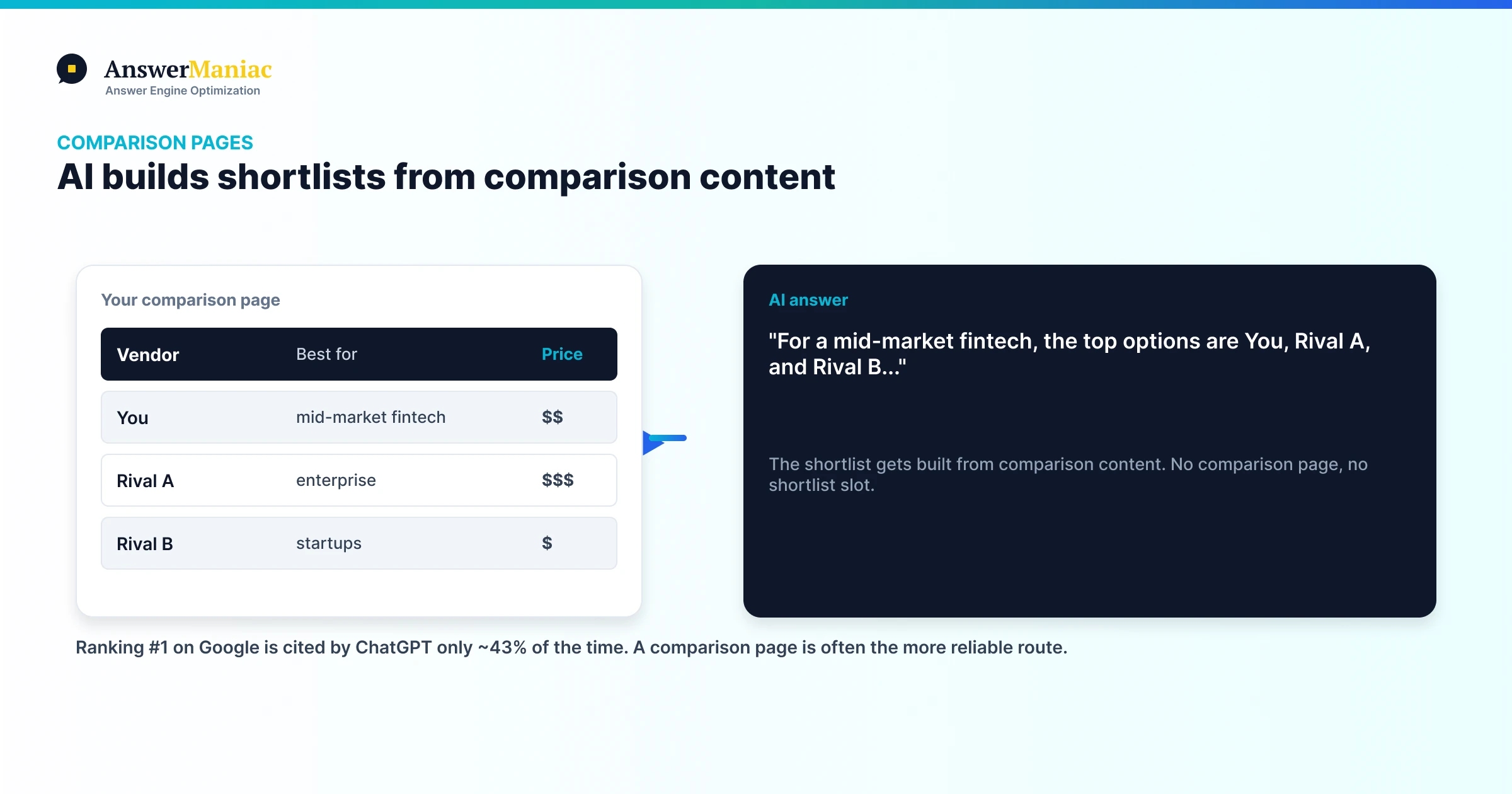
| "[Vendor A] vs [Vendor B]" | Head-to-head comparison with a spec table |
| "How does [process] work" | Structured explainer with a direct answer in the first 100 words |
| "How much does [category] cost" | Pricing page with actual numbers, not "contact us" |
| "Is [category] worth it for [segment]" | Original data or benchmark you own |
The uncomfortable part for most B2B marketers is the listicle row. Ranked lists that include your competitors feel like giving away the shortlist. They are also the single highest-citation format in commercial queries, and if you don't publish one, a review site or a competitor will — and that version won't be flattering to you. We break down the full format inventory in the AI citation playbook covering 23 content types.
Ghost Citations: Getting Cited Without Getting Named
Semrush partnered with Kevin Indig to log 3,981 domain appearances across 115 prompts, 14 countries, and four AI engines. Published June 2026.
61.7% of appearances were "ghost citations." The AI used the page as a source link. It never said the brand's name in the answer.
Broken out by engine, ChatGPT is the worst offender for B2B brands:
| Engine | Citation rate | Brand mention rate |
|---|---|---|
| ChatGPT | 87% | 20.7% |
| Gemini | 21.4% | 83.7% |
ChatGPT behaves like a footnoted research paper. Gemini behaves like a person recommending something. Kevin Indig's own summary: there's almost no overlap between which brands ChatGPT cites and which ones Gemini names for the same prompt.
Query intent moved the mention rate more than anything else in the dataset:
| Query intent | Citation rate | Brand mention rate |
|---|---|---|
| Informational ("what is", "how does") | 89.3% | 18% |
| Commercial (pricing, buying intent) | 84.4% | 35.6% |
| How-to | Not reported | 42.8% |
| Comparative ("best", "vs", "recommend") | Not reported | 43.3% |
Comparative content produced 2.4x more brand mentions than informational content.
So if your AEO scorecard is built entirely on informational blog posts, you're likely generating a high citation rate and a low mention rate. You're feeding the answer without appearing in it. The fix isn't to abandon informational content, which is what earns the citation in the first place. The fix is to pair it with comparative content that forces the model to name the players it's evaluating. More on structuring for both outcomes in content strategy for AI visibility.
The Eight-Step Playbook
This is the Structure, Write, and Earn portion of The ANSWER Framework applied specifically to ChatGPT. Run it in order.
1. Baseline your citations against a fixed prompt set. 30 to 50 prompts, weighted toward opening questions rather than deep comparison prompts. Log citation and mention separately, because Semrush's data shows they move independently. Setup details in the ChatGPT citation tracker guide.
2. Fix your entity before you write anything. Ask ChatGPT "what is [your company]" in a fresh session with no memory. If it's wrong, vague, or confuses you with someone else, no volume of new content will fix your citation rate. Consistent naming, category placement, and description across your site, Crunchbase, LinkedIn, G2, and Wikipedia if you qualify.
3. Map your prompt set to formats. Use the intent-to-format table above. Most B2B sites skew heavily toward informational articles, which is the format mix that generates ghost citations.
4. Publish the listicle you've been avoiding. Ranked, named competitors, honest about where you don't fit. It's 21.9% of AI citations and 40% of commercial-intent citations, and it's the format most B2B companies refuse to build.
5. Restructure existing pages for extraction. Direct answer in the first 100 words. H2s phrased the way buyers phrase questions. A table wherever a comparison exists. FAQ block at the end. Not clever — just cleanly liftable.
6. Add the schema layer. Article, FAQPage, Product, and Organization markup with sameAs links to your verified profiles. Schema is foundation, not differentiator, and anyone selling it as the whole strategy is selling you a checkbox. Implementation specifics in schema markup for AI and ChatGPT citations.
7. Earn third-party coverage in your citation cluster. Profound found sources travel in packs. ChatGPT cites competitors side by side rather than picking one winner. Identify the three to five domains that consistently co-appear on your category prompts (usually a review site, a trade publication, and a community thread), and get placed there. For B2B software this is where the 11.4% earned-media share has the most room to grow.
8. Optimize the click, not just the citation. A citation that nobody clicks is a brand awareness impression with no measurement. Title, description, and on-page opening all affect whether a ChatGPT user follows the link. Covered in ChatGPT click-through optimization and how to get clicks from ChatGPT.
What ChatGPT's 2026 Product Changes Mean for This
Two OpenAI shifts this year change the surface area.
OpenAI retired the standalone Atlas browser in July 2026, with shutdown scheduled for August 9, and moved agentic browsing into the ChatGPT desktop app and a Chrome extension. Agentic sessions fetch pages directly rather than relying on a search index, which raises the value of pages that render their key facts server-side and load fast.
OpenAI also refocused its commerce work from Instant Checkout to product discovery, with Target, Sephora, Nordstrom, Lowe's, Best Buy, The Home Depot, and Wayfair integrated into the Agentic Commerce Protocol for discovery. That's consumer retail today. The structural signal for B2B is that OpenAI is building dedicated discovery surfaces rather than treating everything as a generic web answer, and product-level structured data is the input.
Neither changes the fundamentals. Both raise the cost of having a site ChatGPT can't cleanly parse.
How to Measure This Without Fooling Yourself
Four numbers, tracked monthly against the same prompt set:
- Citation rate. How often you appear as a source link across your fixed prompt set. This is your retrieval health.
- Mention rate. How often your brand name appears in the answer text. Track this separately. In Semrush's dataset ChatGPT cited domains 87% of the time while naming brands in only 20.7% of answers.
- Share of voice against named competitors. ChatGPT cites multiple sources per answer. Profound found about four unique citations per cited turn, with 66% of cited turns pulling one to four sources. You're competing for share within a set, not for sole ownership.
- Branded search volume. The most reliable proxy for the invisible portion. If AEO is working, branded queries rise without a matching paid or PR spike.
A caution on tooling. Every AI visibility platform samples prompts differently, so cross-tool comparisons are close to meaningless. Pick one, keep the prompt set fixed, and measure your own trend line rather than someone else's benchmark. For a broader walkthrough of the visibility side, see how to appear in ChatGPT results.
Frequently Asked Questions
How long does it take to get cited by ChatGPT?
There's no reliable published benchmark, and anyone quoting you a fixed timeline is guessing. What we can say from the mechanics: ChatGPT's browse tool fetches live pages, so a well-structured page on an already-indexed domain can appear in citations within days of publishing. Moving the model's internal representation of your brand, the part that governs the 82% of conversations that never trigger a search, takes considerably longer, because it depends on third-party corroboration accumulating across the web. Treat citation rate as the fast metric and mention rate as the slow one.
Does schema markup actually help you get cited by ChatGPT?
Schema helps machines parse your page reliably, which is a precondition for clean extraction. It is not a ranking lever on its own, and OpenAI has never published a weighting for it. Treat Article, FAQPage, Product, and Organization markup as table stakes. The differentiating work is entity consistency and third-party corroboration, not adding more markup types.
Why does ChatGPT cite my site but never mention my brand name?
That's a ghost citation, and it's the norm rather than the exception. Semrush and Kevin Indig found 61.7% of brand appearances in AI answers were citations that never named the brand, and ChatGPT specifically cites at 87% while mentioning at 20.7%. The pattern is intent-driven: informational content gets consumed as raw reference material, while comparative content forces the model to name the players. Comparative queries produced 2.4x more brand mentions in their dataset.
Should B2B companies focus on their own site or on earned media for ChatGPT?
Both, weighted by industry. Profound found ChatGPT draws 47% of citations from brand-owned sites and 30% from earned media. But SaaS and software companies see only 11.4% of their citations come from earned media, against 59% for pharma and biotech. Build the owned surface first because that's where the volume is, then use earned placements to separate yourself from the median company in your category.
What kind of content does ChatGPT cite most often?
Wix Studio's analysis of 75,000 AI answers found listicles at 21.9% of citations, articles at 16.7%, and product pages at 13.7%, or 52% between them. Listicles took roughly 40% of commercial-intent citations. Query intent predicted format better than industry or model did, so map your formats to how your buyers phrase questions rather than to what your competitors publish.
Is it worth optimizing for ChatGPT if most people don't click the links?
Clicks are the wrong first metric here. ChatGPT crossed 1 billion monthly active users in June 2026 (Reuters), and a meaningful share of B2B evaluation now happens inside those sessions with no referrer at all. The measurable proxies are branded search lift, self-reported attribution on forms, and sales reps flagging when prospects mention having asked ChatGPT about the category. Click optimization is step eight, not step one.
How many people use ChatGPT in 2026?
ChatGPT crossed 1 billion monthly active users in June 2026, making it the fastest app in history to reach that scale (Reuters). OpenAI reports 50 million+ consumer subscribers and 9 million+ paying business users. Users send more than 2.5 billion prompts daily.
Sources
- Profound, "How ChatGPT sources the web" (February 2026)
- Profound, "Where do AI citations come from?" (July 2026)
- Semrush and Kevin Indig, "Why 62% of AI citations don't lead to brand mentions" (June 2026)
- Search Engine Land, "AI citations favor listicles, articles, product pages: Study" (Wix Studio AI Search Lab)
- Digital Commerce 360, "OpenAI reveals updates to its agentic commerce experience for ChatGPT" (March 2026)
- OpenAI, ChatGPT release notes
Get AEO Insights Weekly
Join 500+ B2B marketers getting AI visibility tactics every Tuesday.
Ready to Get Your Brand Cited by AI?
See how your competitors show up in ChatGPT, Perplexity, and Gemini — and what it would take to get recommended.