Semantic SEO for AI Visibility Builds Unstoppable Authority
Boost your content's reach with semantic SEO for AI visibility and get recognized as a trusted source by AI search tools.
Direct Answer: Semantic SEO shapes AI visibility by teaching large language models what your content means, not just what it says. The core shift is from keywords to meaning. Optimize for entities and their relationships, use clear hierarchies and schema markup so AI can parse your information, and prove your unique value with original data and expert signals.
Check your AI visibility now — our free audit shows whether AI models recognize your brand as a citable entity.
Semantic SEO shapes AI visibility by teaching large language models what your content means, not just what it says. It goes beyond keywords, focusing on entities, relationships, and user intent, helping AI engines like Perplexity and Google AI Overviews map your brand into their knowledge graphs.
When AI understands your content's context and authority, it's up to 73% more likely to cite you as a trusted source. The old SEO playbook is fading. Here's the 2026 framework.
Essential Steps to Boost AI Visibility
The core shift is from keywords to meaning. These three points form the foundation:
- Teach AI what you mean. Optimize for entities and their relationships, not just keyword strings.
- Structure for machine reading. Use clear hierarchies, schema markup, and scannable formats so AI can easily parse and extract your information.
- Prove your unique value. Combat "average knowledge" with original data, expert signals, and verifiable facts that AI can't find everywhere else.
How Semantic SEO Influences AI Answer Engines
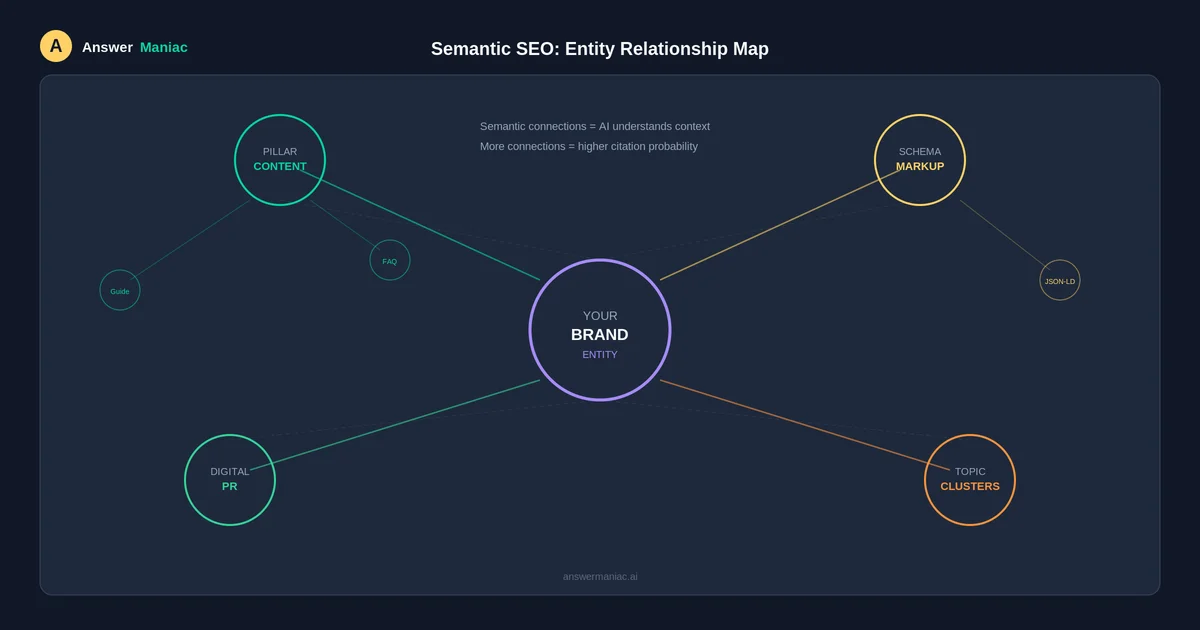
Forget keyword lists. Modern AI answer engines don't just match words — they understand concepts. This is semantic SEO. It connects your content to a network of related ideas, so AI sees it as a core, trustworthy source. When an AI engine understands your content's deeper meaning, it's more likely to cite you as an answer.
Core technical elements that drive this:
- Vector Embeddings — mathematical representations that capture your content's meaning in multi-dimensional space
- Entity Salience — how central your brand is to a topic across the web
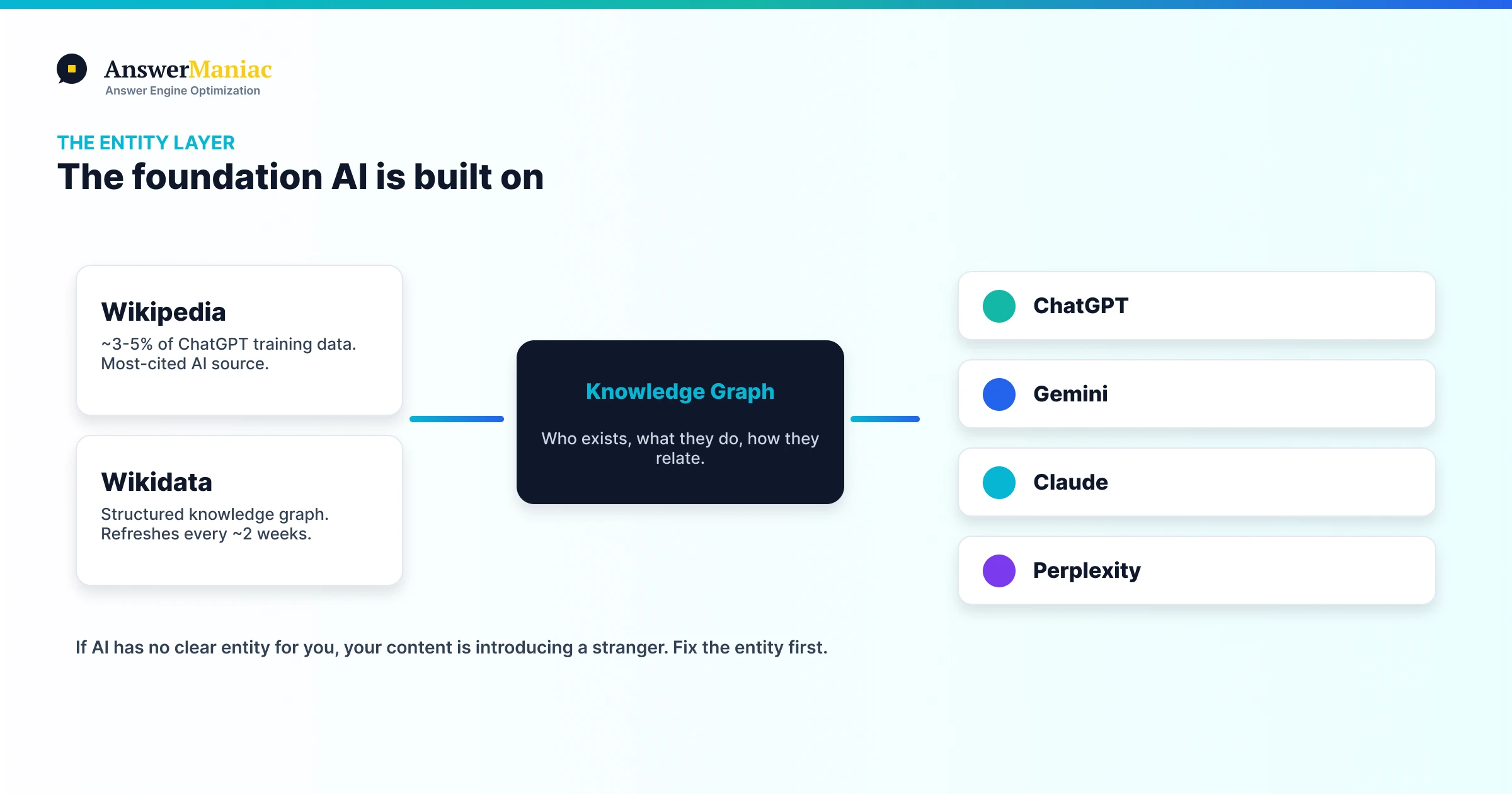
- Knowledge Graphs — the web of connected concepts AI uses to reason about relationships
The result? Content built this way can see citation chances jump by over 70%. You're not just filling a database. You're giving a reasoning engine the right connections.
The Core Pillars of Generative Engine Optimization
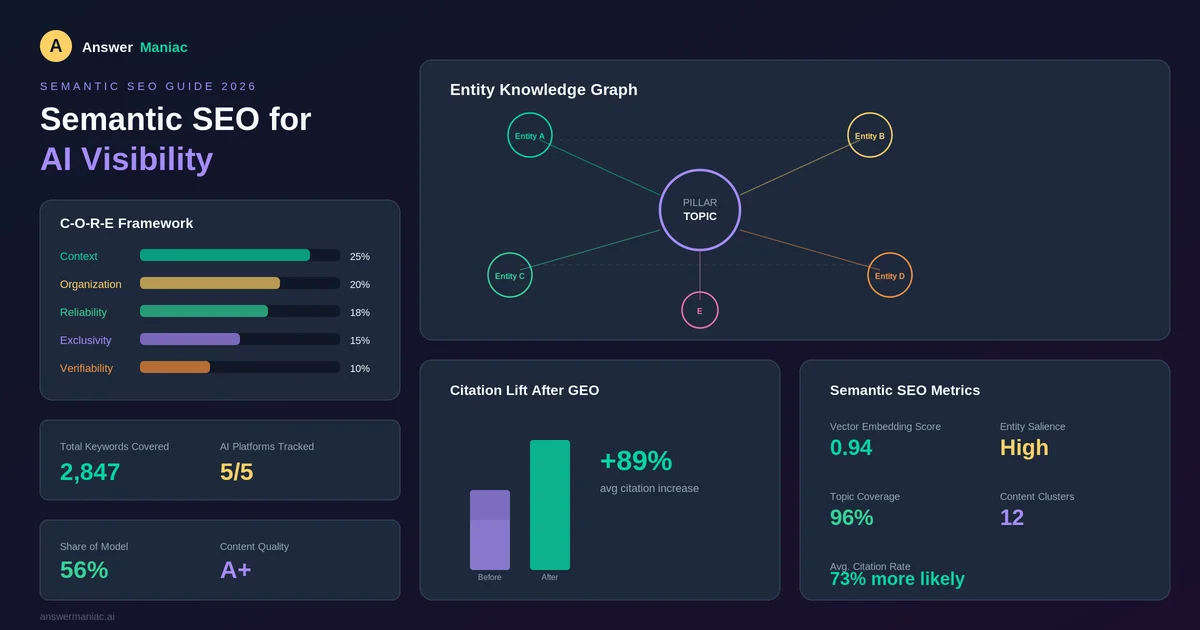
Generative Engine Optimization (GEO) is the applied practice of semantic SEO for AI answer engines. It's the tactical framework for becoming a primary source. GEO operates on what we call the C-O-R-E Framework: Context, Organization, Reliability, and Exclusivity. This system ensures your content is selected during the AI's real-time retrieval process.
Each pillar feeds the AI's need for trustworthy, structured information. Understanding how AI search engines choose sources is vital because these systems prioritize the reliability and exclusivity of your data during the retrieval process.
| Factor | Impact Weight | Optimization Requirement |
|---|---|---|
| Comprehensiveness | 25% | Cover subtopics end-to-end in detailed clusters |
| Source Authority | 20% | Establish E-E-A-T with expert bylines and citations |
| Recency | 18% | Update key data points and publications monthly |
| Structural Clarity | 15% | Use a strict H2/H3 hierarchy with clear lists |
| Verifiability | 10% | Cite primary research, stats, and official sources |
Mastering these pillars means you're building a source-ready knowledge base that AI engines can depend on. The goal is to satisfy the machine's need for reliable data, which in turn satisfies the user's query.
Building Entity-Rich Content Clusters
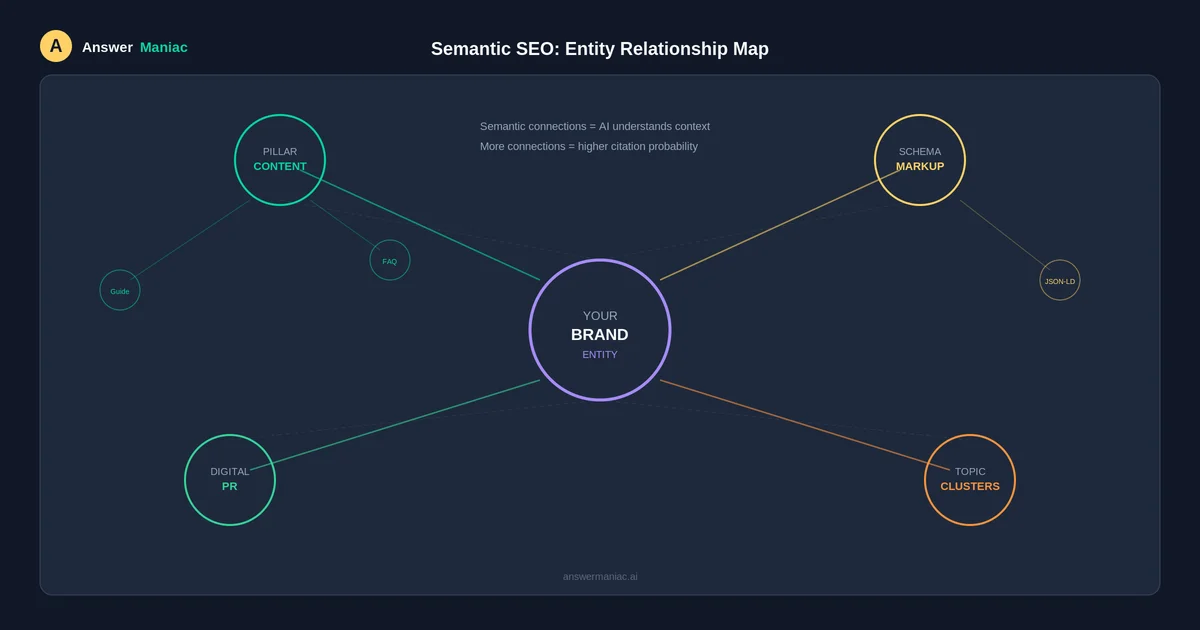
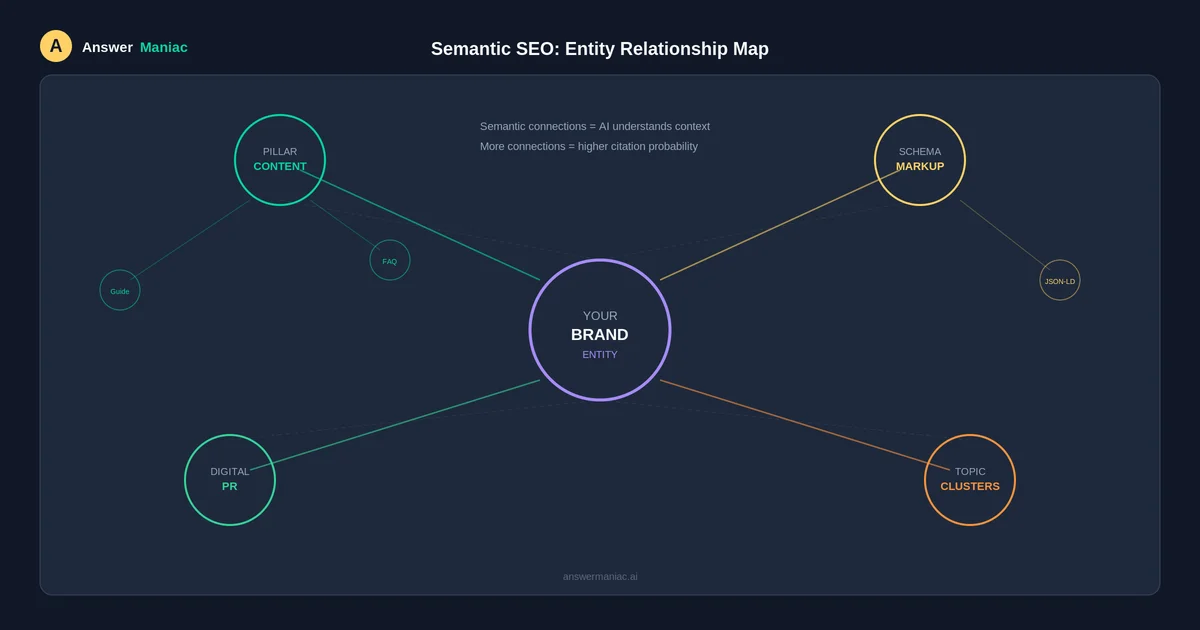
Creating a tight web of related articles — a content cluster — tells AI you're an expert. Developing entity SEO for AI search helps these clusters power brand citations in ChatGPT and Perplexity by defining clear knowledge graphs.
Pick one core service or product as your main topic. Then write supporting articles that connect directly to it with clear links. For a cybersecurity firm, the main topic could be "managed detection and response." Supporting articles would cover "threat hunting" or "SOC 2 compliance."
Technically, you need to do three things:
- Mark up your content with structured data (Organization/Person schema)
- Use specific, descriptive text for your internal links
- Mention your brand alongside established industry names
The goal is to build a dense, interconnected group of pages. This makes your entire site look like the definitive source on that topic to an AI.
Technical Formatting for Machine Parsing
AI works best with clean, predictable text. Structure your page to make the main point obvious right away. Put the core answer in the first 150 words.
Use clear headings and keep paragraphs short to help AI crawlers quickly grasp your content. Implementing schema markup for LLM citations further ensures that your technical formatting is readable for both people and machines.
Treat your page like a database record. Use bullet points, numbered steps, and tables as semantic signals. AI cites these formatted elements up to 73% more often because they're easy to extract and verify. Every formatting choice should ask: does this help a machine understand and use this information faster?
Measuring AI Visibility and Citation Performance
You can't manage what you don't measure, and traditional rank tracking is almost useless for GEO. A number one ranking means little if an AI answer box above it siphons all the intent. Success in AI search is measured by citation frequency and brand mention share within AI responses.
This requires a new set of KPIs:
- Citation Frequency — raw count of your brand appearing in AI answers
- Mention Share — your citations vs. competitor citations for a given query
- AI Referral Traffic — direct visits from AI platform interfaces
- Entity Salience Scores — tools that gauge your brand's authority on a topic
At AnswerManiac, we see campaigns where a focused GEO strategy leads to a measurable 89% lift in citations, often before traditional rankings move. The pipeline impact is direct. When AI recommends you, it's the ultimate trust signal.
Addressing the "Average Knowledge" Trap
The web is being flooded with AI-generated content that rehashes the same surface-level points. LLMs are now drowning in what we call "average knowledge." To combat this, they are increasingly rewarding exclusivity and unique value. Your content must provide something the AI can't easily find everywhere else.
Original data from case studies, proprietary research frameworks, and genuine "lived experience" signals are your armor. They prevent your content from being filtered out as redundant noise.
Practical ways to inject exclusivity:
- Integrate detailed case studies with specific metrics and outcomes
- Publish first-party survey data or original research findings
- Develop and name your own proprietary frameworks or methodologies
- Secure digital PR placements that feature unique expert commentary
This approach directly counters the "AI fluff" epidemic. It tells the language model that your content is a primary source, not a secondary synthesis. In a sea of sameness, unique insight is the most valuable currency.
FAQ
What is semantic SEO and how does it improve search visibility?
Semantic SEO focuses on meaning, not just keywords. By organizing content around entities, semantic relationships, and user intent, search engines better understand your content. This approach improves AI search results, topical clusters, and entity clarity. Using structured data and content hubs, semantic SEO also helps large language models connect your pages to relevant queries, increasing overall search visibility and the chance of appearing in rich SERP content.
How can structured data enhance AI-based content retrieval?
Structured data makes content machine-readable. By implementing schema markup, topic clusters, and content silos, you improve content extractability for NLP models and AI SEO systems. This allows search engines and large language models to understand entity connections, internal linking structures, and semantic relationships. As a result, AI search tools can better match user queries to your pages, boosting your search engine rankings and enhancing the overall user experience.
Why are entity-first indexing and entity embedding important for AI SEO?
Entity-first indexing prioritizes content based on entities, not just keywords. Coupled with entity embedding, it enables AI search systems and NLP models to understand entity co-occurrences and semantic networks. This improves search intent recognition, semantic keyword relevance, and machine learning-based content retrieval. Properly designed knowledge graphs and internal linking structures make your content more discoverable, increasing search engine results visibility.
How do topic clusters and pillar pages support search engine rankings?
Topic clusters and pillar pages organize content around core entities, linking related subtopics together. This internal linking structure signals semantic relationships to AI-based content generators and search engines. Using content hubs, semantic networks, and entity-oriented search principles, you create a cohesive knowledge graph design that improves entity recall. This structured approach enhances SERP content quality, boosts search engine rankings, and helps large language models understand your site's expertise and relevance.
Your Next Step in Semantic SEO for AI Visibility
The shift from traditional SEO to semantic SEO and GEO is no longer optional — it's essential for AI visibility. Focus on entities, structured content, and unique value to become a trusted source for both humans and AI.
If building this seems complex, AnswerManiac can help audit, structure, and create AI-ready content assets using The ANSWER Framework. See how often AI recommends you and start claiming your place as the definitive answer.
Run your free AI visibility audit and find out where you stand.
References:
Related Articles:
Get AEO Insights Weekly
Join 500+ B2B marketers getting AI visibility tactics every Tuesday.
Ready to Get Your Brand Cited by AI?
See how your competitors show up in ChatGPT, Perplexity, and Gemini — and what it would take to get recommended.